A Century-Old Veteran's New Melodic Mission
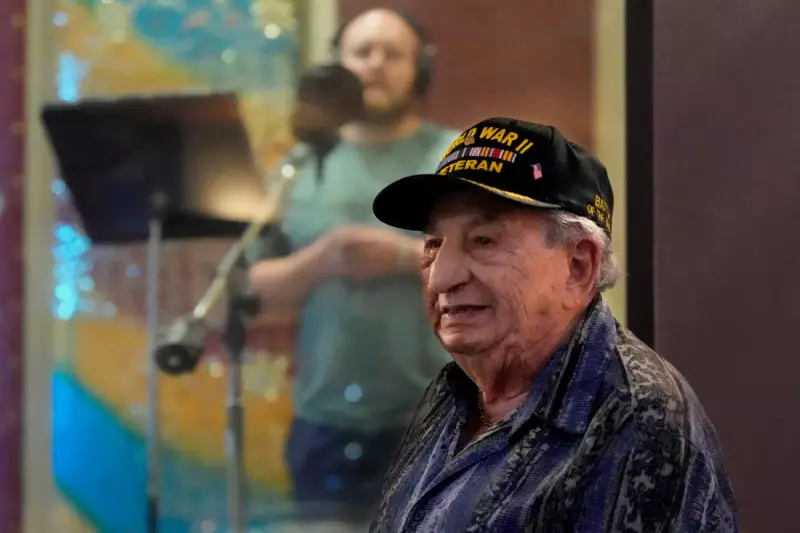
Irving Locker, a World War II veteran who bravely landed on Utah Beach on D-Day, has achieved a remarkable new milestone at the age of 101. Just one day before his birthday, he celebrated the release of his very first published song, a poignant track titled 'If Freedom Was Free'.
The song was officially released through the Big Machine Label Group in collaboration with CreatiVets, a Nashville-based non-profit organisation dedicated to assisting veterans in processing their trauma by engaging in creative and artistic pursuits.
From the Battlefield to the Recording Studio
CreatiVets played a pivotal role in this unique project, partnering the centenarian veteran with established Texas singer-songwriter Bart Crow and the musical duo Johnny and Heidi Bulford, who also provide vocals on the track.
The song's powerful chorus, "If freedom was free, there wouldn’t be a mountain of metal and men under Normandy", distils a message that Locker has passionately shared for decades. He has delivered this sobering reminder everywhere from local school classrooms to the halls of the White House.
"I have to talk about things like that," Locker stated. "I got nothing to gain. But people have to know and appreciate the fact that they’re living because of men who died. It comes from the heart, not the lips."
A Lifetime of Rhythm and Resilience
For Locker, who now resides in The Villages, Florida, the opportunity to co-write a song was an "unbelievable" thrill, a dream he never thought would come true. The project holds profound significance for him, as music has always been a central part of his life.
He revealed that he and his wife of 77 years, Bernice, are still regulars on the dance floor, continuing to enjoy the jitterbug and the cha-cha as they have for many decades. "You should see me on the floor even now," he said with pride.
Reflecting on his longevity and active lifestyle, Locker expressed deep gratitude, acknowledging his fortune when so many of his fellow veterans are no longer here. His experiences in the war fundamentally shaped his perspective on life and faith.
"To be very honest with you, I was never conscious of God until the war," he shared. "But I came so close to dying that I learned how to thank God and use the simple phrase 'But for the grace of God go I.'"