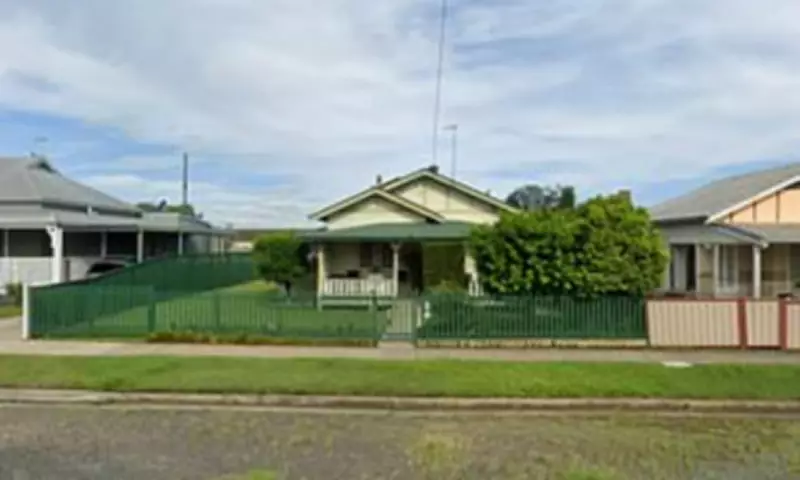
A 55-year-old woman who tripped on a footpath and then attempted to make ratepayers cover the cost of two knee replacements has lost her legal battle to hold a local council responsible. Lisa MacLean fell over a 2.3cm bump on the footpath at approximately 5:45am in March 2023 while returning from her regular morning walk in Casino, northern New South Wales.
Ms MacLean testified that she was looking straight ahead rather than at the footpath when she fell, just three doors from her home of more than 15 years. She claimed the fall aggravated her pre-existing, asymptomatic condition, bilateral patellofemoral arthritis, which then became symptomatic. Medical advice indicated she would require a double knee replacement estimated to cost nearly $50,000.
She sought future out-of-pocket expenses of up to $542,000, which included $48,348 compensation for double knee replacement surgery, up to $289,000 for pain and suffering, and future economic loss costs of $100,000. She also sought $60,573 for future out-of-pocket expenses and $92,950 for future domestic assistance.

Ms MacLean launched District Court proceedings alleging Richmond Valley Council breached its own inspection and maintenance policy by failing to address the trip hazard within the required time under its guidelines for footpaths. A District Court judge ruled in May 2025 that the council did not owe the duty of care alleged because Ms MacLean failed to exercise reasonable care on the uneven footpath.
The NSW Court of Appeal granted Ms MacLean permission to appeal but ultimately dismissed every one of her arguments and ordered her to pay the council's costs. Judge Robert Montgomery said councils were not insurers of footpaths and minor unevenness is part of everyday walking, so pedestrians must take reasonable care, especially in low light.
He upheld previous findings that the hazard was an everyday and obvious risk, and that her inattention amounted to contributory negligence. He added he found it difficult to accept Ms MacLean's claim she had never previously seen the bump on which she tripped, given her familiarity with that section of the footpath she had traversed thousands of times during daylight.
Judge Montgomery stated that councils were not required to eliminate every minor unevenness in public footpaths, and pedestrians must take reasonable care, particularly in low-light conditions. 'It was to some degree dark when (Ms MacLean) fell. But, in my opinion, the trip hazard of 23mm, vision of which by a pedestrian taking reasonable care for their own safety was not impeded in any way, was simply a risk hazard to be expected, be it day or night,' he said in his judgment.
Ms MacLean said she now watched her steps more carefully. 'Since the accident, I look at everything... I watch where I put my feet,' she said.
The case follows a decision earlier this month involving medical receptionist Grace Balacco, 67, who received a six-figure payout after she tripped on a speed bump in a Bondi Junction car park. Her payout was reduced from $385,484 to $250,000 after the owners corporation appealed the decision. Ms Balacco accepted she had driven over the first speed hump, then driven over the second one twice as she reversed into the parking space, and was aware they were there. The owners corporation denied negligence, arguing the risk of tripping over the speed hump was known to Ms Balacco and constituted an obvious risk. However, the court found that because other hazards in the car park were marked, people were entitled to expect that all similar hazards would be treated the same way.
Innova Legal principal solicitor Fadi Chahine said the two disputes were good examples of how nuanced these cases can be. 'People often assume that if a council knew about a hazard, they'll automatically be liable but that's not the law,' he said. 'The court will look at whether the risk was obvious and whether the person should have taken steps to avoid it. In this case, the hazard was considered something a reasonable person should have noticed and avoided.'
Mr Chahine noted that even if Ms MacLean had been successful, her compensation would likely have been reduced by 50 per cent for contributory negligence, as the court found she should have taken greater care in the conditions. Richmond Valley Council has been contacted for comment.