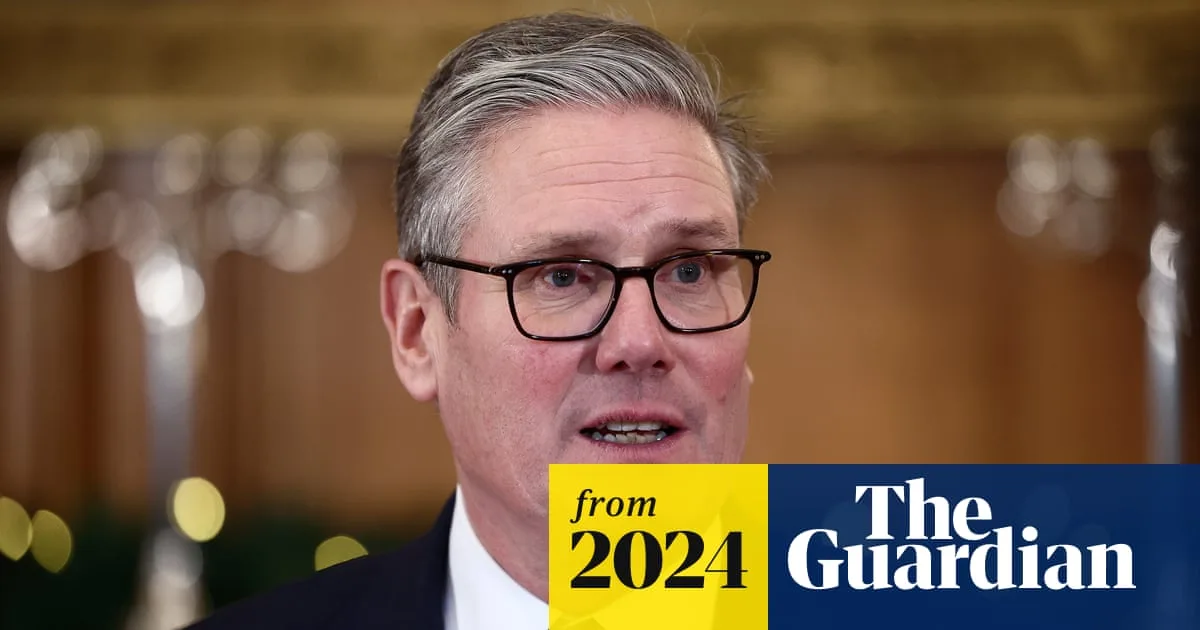
Prime Minister Keir Starmer has pledged to rebuild Britain in 2025, comparing the task to the post-war reconstruction under Clement Attlee in 1945. In his pre-recorded New Year message, Starmer said the year would be one of rebuilding, as his government seeks to recover from a turbulent first six months in power.
Starmer invoked the 80th anniversary of VE Day in May, stating: “We will have time to reflect on that this year, a chance, with the 80th anniversary of VE and VJ Day, to cherish the greatest victories of this country and the greatest generation that achieved it. But that victory, and indeed the peace and the prosperity that followed, all rested on that same foundation we must rebuild today. The security of working people, that is the purpose of this government, the goal of our plan for change. And we will push it forward in 2025.”
Labour ends 2024 with its lowest year-end poll rating since the war, at 27%, with the Conservatives at 25% and Reform UK at 22%. Surveys suggest Labour would lose 200 seats if an election were held now. However, Starmer’s aides insist voters will change their minds as improvements to public services become apparent from 2025.
Starmer spent New Year’s Eve on holiday with his family, his first break since becoming prime minister, after delaying his trip following the death of his brother Nick on Boxing Day. He faces a challenging return, including pressures on the NHS, overcrowded prisons, and continued small boat crossings in the Channel.
The Prime Minister struck a cautious note, acknowledging economic pain: “I know there is still so much more to do, and that for many people it’s hard to think about the future when you spend all of your time fighting to get through the week. So I want to be clear. Until you can look forward and believe in the promise and the prosperity of Britain again, then this government will fight for you.”
Conservative leader Kemi Badenoch gave a brief New Year message, saying: “The Conservative party is also going through a period of change. This process of renewal will be a long-term project. Things may be bumpy along the way, but the party I now lead is going to do things differently.”