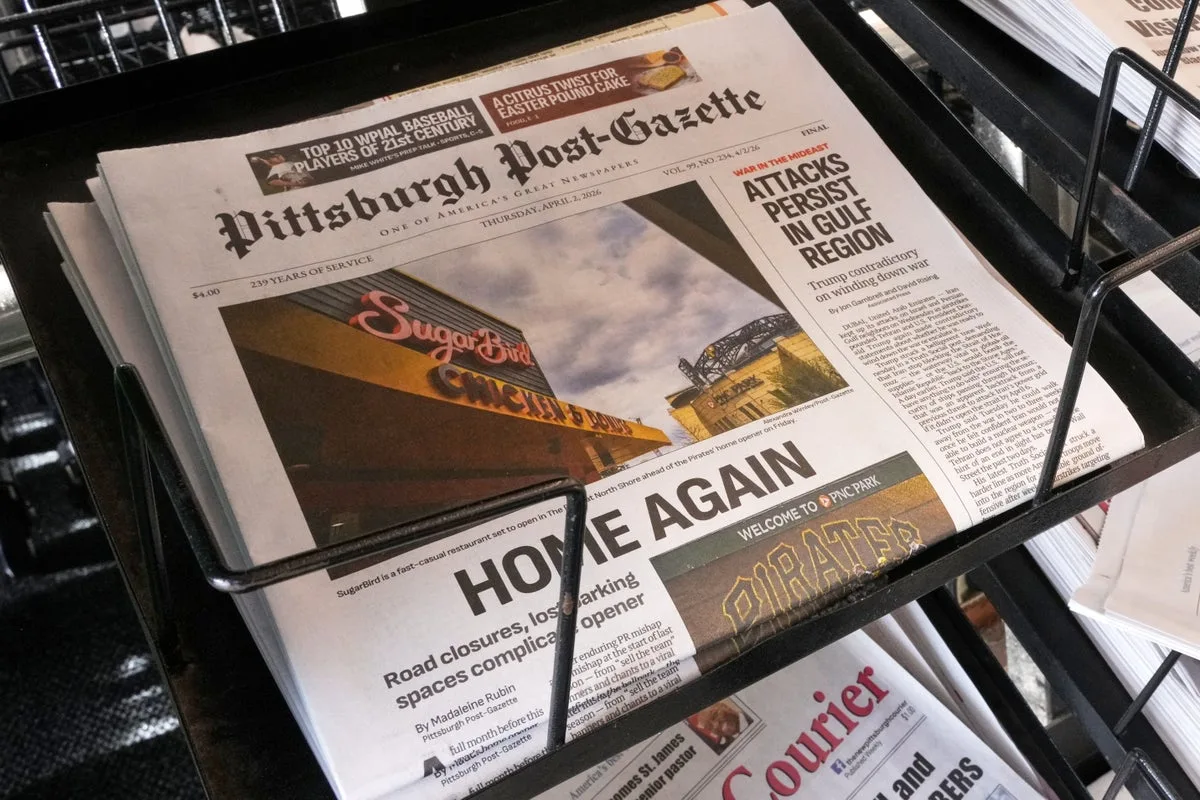
The Pittsburgh Post-Gazette, a historic newspaper on the brink of closure, has announced a last-minute rescue deal with a buyer committed to keeping its operations alive. This development comes less than a month before the publication was scheduled to shut down permanently, averting a significant loss for the local community.
Historic Newspaper Saved from Shutdown
On Tuesday, April 14, 2026, the owners of the Pittsburgh Post-Gazette revealed that they had secured a buyer who agreed to maintain the newspaper's operations. The Post-Gazette, which traces its origins back to 1786 as the first newspaper established west of the Allegheny Mountains, was set to close on May 3, 2026. Its closure would have left Pittsburgh as the largest community in the United States without a city-based newspaper, highlighting the critical role of local journalism in urban areas.
Buyer Identified as Venetoulis Institute
The sale involves Block Communications, the current owners of the Post-Gazette, transferring assets to the Venetoulis Institute for Local Journalism. This institute is known for publishing the digital Baltimore Banner, indicating a focus on sustaining local news ecosystems. Financial details of the transaction have not been disclosed, but the agreement ensures the newspaper will continue to serve its readership.
Under the new ownership, the Pittsburgh Post-Gazette will maintain a print edition on Thursdays and Sundays, while operating a digital website on other days of the week. This hybrid model aims to balance traditional print media with modern online presence, adapting to changing consumer preferences while preserving the newspaper's legacy.
Implications for Local Journalism
The rescue of the Post-Gazette underscores broader challenges in the media industry, where many local newspapers struggle with financial sustainability. By preventing the shutdown, this deal helps preserve an important voice for Pittsburgh residents, ensuring continued coverage of local news, events, and issues. The involvement of the Venetoulis Institute suggests a strategic move to bolster community-focused journalism, potentially setting a precedent for other at-risk publications across the country.
As the newspaper transitions to new ownership, stakeholders will be watching closely to see how it evolves in the digital age while honoring its rich history. This development marks a hopeful turn for advocates of press freedom and local news integrity, emphasizing the enduring value of newspapers in fostering informed communities.