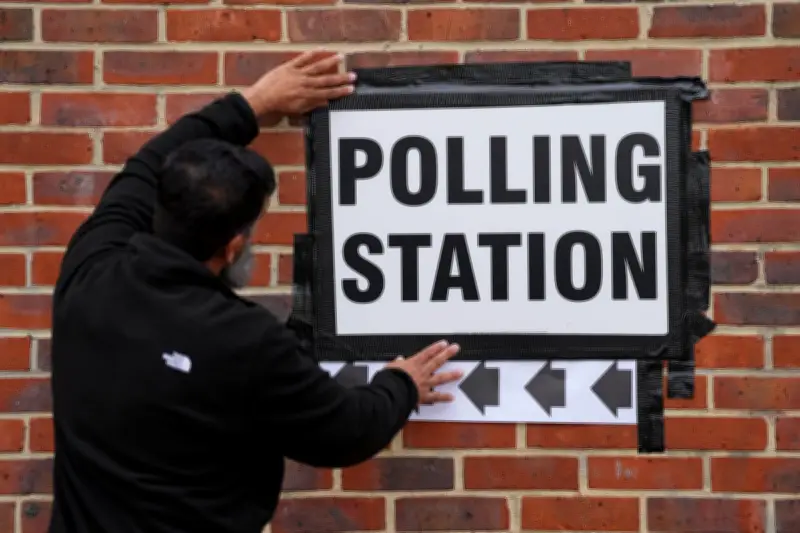
Thousands of voters across parts of Britain are preparing to return to the polls to elect replacements for dozens of councillors who have stepped down, some of whom were elected as recently as last month. More than 75 council seats are up for grabs over the next few weeks, marking an unusually busy period for local democracy.
Unusually High Number of By-Elections
While a handful of by-elections are typically held on most Thursdays throughout the year to fill vacant seats due to retirement or death, the upcoming contests in late June and early July stand out for their high number and unique circumstances. Many are linked to the large set of elections held in England, Scotland, and Wales on May 7.
The Association of Electoral Administrators has called for greater clarity and awareness of rules for prospective candidates to reduce avoidable by-elections, which are funded by local authorities and ultimately taxpayers.

Breakdown of the 77 Seats
According to official notices on local authority websites, 77 council seats are to be filled at by-elections between June 18 and July 16. Press Association analysis reveals:
- 14 seats are to replace councillors elected on May 7 who resigned soon after for personal or professional reasons.
- 14 seats are being filled because councillors won seats in the Senedd in Wales on May 7 and had to resign from their council roles due to dual-office restrictions.
- 10 seats were postponed from May 7 due to the death of a candidate.
- The remaining seats result from long-serving councillors retiring, dying in office, or stepping down for other reasons.
London and Green Party Impact
Of the 14 contests triggered by councillors who resigned shortly after May 7, nine are in London. These include seats won by Green politicians Zoe Garbett and Liam Shrivastava, who were elected as mayors of Hackney and Lewisham respectively and thus had to vacate their council positions. Three Green councillors in Camden, Hackney, and Haringey stood down due to ineligibility, with two being teachers—a profession disqualified under local government electoral law.
Two Green councillors in Ealing and Lambeth resigned due to ill health, while a Labour councillor in Haringey stepped down for personal reasons. Another Green councillor in Lambeth, Saiqa Ali, was suspended before polling day over social media posts and did not take her seat.
Reform UK and Other Cases
Outside London, five by-elections were triggered by Reform UK councillors elected on May 7 who resigned due to health, workload, or personal conduct issues. These involve seats in Essex County Council, Gateshead Borough Council, Norfolk County Council, Rochford District Council, and St Helens Borough Council. Notably, Stuart Prior resigned from both Rochford and Essex councils after offensive social media remarks, while Stephen Mousdell resigned in St Helens following the discovery of adult video content.
Cost Concerns
Peter Stanyon, chief executive of the Association of Electoral Administrators, emphasized that the spike in contests largely reflects the scale of the May 7 elections. He noted that eligibility rules vary between elected bodies and urged candidates and parties to ensure compliance. While there is no fixed cost for a by-election, publicly available data suggests local authorities typically spend between £20,000 to £30,000 per contest. If the 14 by-elections filling seats from May 7 each cost £20,000, the total would be £280,000.
Stanyon added that it is not unusual for councillors elected to the Scottish Parliament, Senedd, or Westminster to resign their council seats, a scenario electoral teams anticipate in planning. He stressed that each by-election is an important opportunity for voters to have their say.