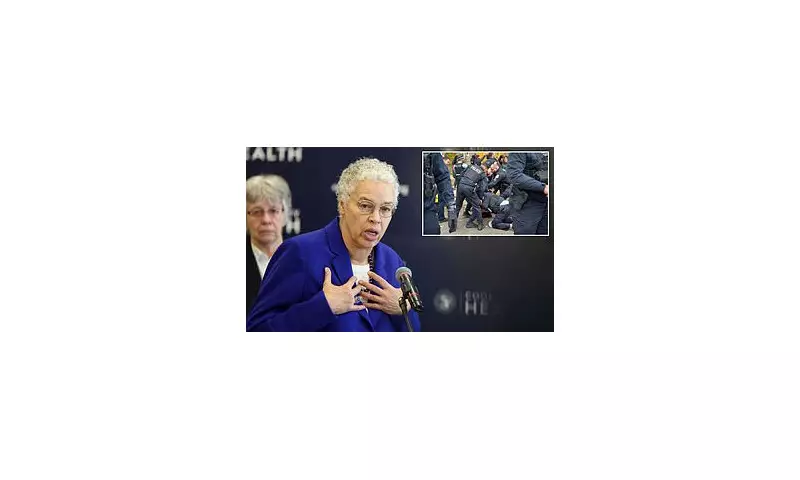
Toni Preckwinkle, the 78-year-old president of the Cook County Board, is facing intense criticism for presiding over a dramatic surge in public spending and implementing tax policies that critics argue disproportionately burden residents. As she seeks a fifth term in office, her fiscal management has become the central battleground in a heated political contest.
Budget Ballooning Under Scrutiny
Preckwinkle, who effectively serves as the county's chief executive officer with an annual salary of $198,388, has overseen a remarkable expansion of Cook County's budget during her tenure since 2010. According to available figures, the county's budget plan stood at $5.2 billion in 2018. Less than a decade later, the current year's budget has been set at approximately $10.1 billion.
This represents a staggering increase of roughly 94 percent, significantly outpacing the national rate of inflation during the same period. The budget growth has drawn particular fire from her political opponent, Chicago City Council alderman Brendan Reilly, who is mounting a direct challenge to her leadership.

Pandemic Relief and Program Funding Controversies
Reilly, a 54-year-old Democrat, has accused Preckwinkle of using federal pandemic relief funds to artificially inflate Cook County's budget. He specifically highlighted what he termed a "federal slush fund" allocation of $42 million that was directed toward a guaranteed basic income program.
The initiative, which operated from 2022 until January of last year, provided $500 monthly payments to 3,250 low-income families to assist with household expenses. While Preckwinkle has previously championed the program as potentially "leading to more financial stability as well as improved physical, emotional and social outcomes," Reilly has questioned its affordability and effectiveness.
"The far left that has been ushered into office under Toni Preckwinkle's leadership has been conducting lots of social experiments that are very expensive," Reilly told the Chicago Sun-Times. He added that Preckwinkle was directing "rafts of money" to nonprofits and social services without providing adequate "metrics or data" to demonstrate whether these initiatives were achieving meaningful results.
Property Tax Hikes Hit Homeowners Hard
Beyond budget concerns, Preckwinkle's administration has faced scrutiny for its impact on local property taxes. Data released by the Cook County Assessor's Office reveals that approximately 250,000 homeowners experienced property tax bill increases of 25 percent or more within a single year.
This translated to an average additional burden of $1,700 per homeowner, with 240,000 homeowners collectively paying roughly $500 million more in property taxes due to these hikes. Cook County Assessor Fritz Kaegi described the situation as "untenable" and "unsustainable," calling for relief measures for affected homeowners.
The long-term trend shows that since 2007, typical property tax bills on Cook County residences have increased by about 78 percent, while median property values have risen by just over seven percent. Analysis suggests that Black neighborhoods have been disproportionately affected by these tax increases.
Historical Context and Political Challenge
Cook County represents a significant portion of Illinois, with more than 40 percent of the state's residents living within its boundaries. Chicago, with approximately 2.7 million residents, serves as both the county's largest city and its administrative seat.
As board president, Preckwinkle is responsible for presenting a balanced budget, overseeing certain county departments, and appointing administration employees. Her challenger, Brendan Reilly, has pointed to what he describes as "out of control" taxes that are "doing real harm to struggling families."
Reilly has also referenced Preckwinkle's controversial "soda tax" – a one cent per ounce levy on sweetened beverages that was implemented and subsequently repealed in 2017 – as emblematic of her approach to revenue generation. Preckwinkle acknowledged that the tax was enacted "first and foremost, because of the revenue."

Additional financial pressures on residents include congestion zone fees, retail liquor taxes, and increased tolls around Chicago, further squeezing household budgets. As the election approaches, the debate over fiscal responsibility and social spending continues to dominate the political landscape in one of America's most populous counties.