
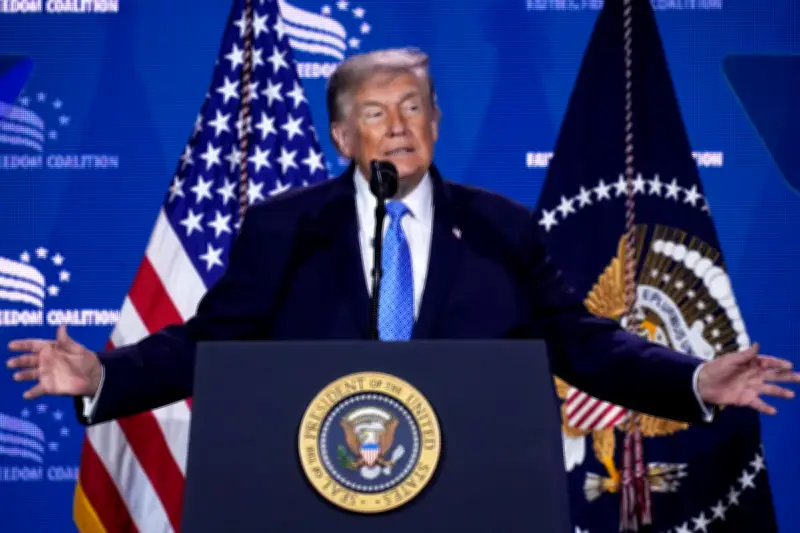
Trump reverses course on Strait of Hormuz tolls
Donald Trump has climbed down over his threat to levy a 20% toll on shipping for safe passage through the Strait of Hormuz waterway, which had been opposed by the UK. The US president said the so-called “reimbursement fee” he only announced 24 hours earlier would be replaced by “trade and investment deals” with Gulf states.
It comes after the outgoing Prime Minister Sir Keir Starmer had called for unrestricted access through the strait, while Foreign Secretary Yvette Cooper said she was against the imposition of charges. The Liberal Democrats had been more strident in their criticism of Mr Trump’s proposed cargo fee, branding it “state-backed highway robbery”, “an act of economic extortion” and “a flagrant violation of international law”.
White House opposition and Iranian tensions
Senior White House figures had repeatedly voiced their opposition to tolls being imposed by Iran. The vital sea route had been open before the conflict launched by the US and Israel on February 28. Writing on his Truth Social platform, the president said the Gulf channel was open to all vessels except for Iran “because of their lying, violent, malicious leadership”.
The US is to reintroduce a blockade of Iranian ports after renewed clashes with Tehran, amid an escalating struggle over the strait, which has led Mr Trump to declare a ceasefire over. Iran claims it controls the waterway, while this is disputed by the US and other countries, which cite international law on freedom of navigation.
Trump announces trade deals instead
Mr Trump said: “Based on highly productive conversations with Middle East leadership, I have decided to replace the 20% United States Reimbursement Fee with Trade and Investment Deals that the various Gulf States will be making into the United States. Those Investments will be massive but, at the same time, extraordinarily good for them, and their future. As everyone is aware, we have the largest Dollar Investment into the United States, of any Country in History, but these new Investments will make that Number even larger, and we will see Factories, Plants, and Equipment pour into the United States at Historic levels, which will create additional millions of High Paying American Jobs.”
UK Foreign Secretary reiterates opposition
Speaking to the Commons Foreign Affairs Committee on Tuesday, Ms Cooper said: “We continue to oppose tolls and charges. And in fact, that’s the discussion that I had with American colleagues last week while we were at Nato. We were talking about that we could not end up with tolls and with a system on the Strait of Hormuz that would undermine the freedom of navigation and the law of the sea. I think what we’re seeing happening at the moment is the escalation of rhetoric around the conflict itself and the putting on of pressure. But our position remains the same. We support freedom of navigation. We are opposed to tolls in the Strait of Hormuz, just as we are everywhere else.”
Ms Cooper blamed Iran for “an increasing of pressure on all sides” by attacking commercial shipping in the southern shipping route in Omani waters, saying the move “totally undermines the law of the sea”. Only last month, US secretary of state Marco Rubio stressed the US was against Iran charging fees for ships to use the international waterway.
G7 stance and previous negotiations
Mr Trump recently joined other world leaders at the G7 summit in France, including Sir Keir, to confirm that “the right of transit passage without restrictions or tolls is the bedrock of international trade”. Ending Tehran’s stranglehold on the sea route, which disrupted global oil and gas supplies and drove up fuel and food prices, had been a key demand in previous negotiations.
However, the initial deal reached between the US and Iran only provided for safe, toll-free passage through the waterway for 60 days, pending the outcome of a final agreement on Tehran’s disputed nuclear plans. The pact also left it to Iran and Oman, in conjunction with other Gulf states, to “define the future administration and maritime services in the Strait of Hormuz”. In the meantime, Iran has continued to try to exert leverage over the channel, including demanding ships seek permission to transit and raising the spectre of future charges.




