
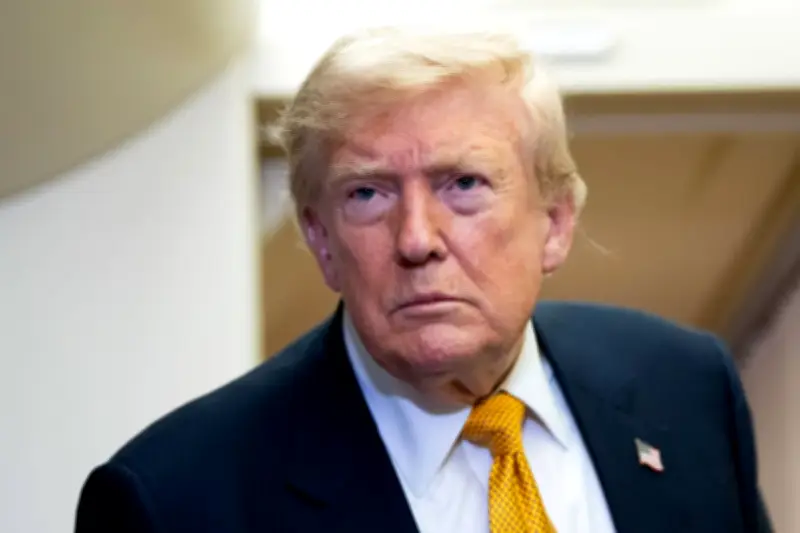
President Donald Trump has announced that the United States will begin charging a 20% toll on ships transiting the Strait of Hormuz, claiming it is necessary to cover the costs of providing security in the volatile region. In a post on his Truth Social platform, Trump declared the waterway open and stated that the blockade of Iranian ports would be reinstated.
Trump's Justification for the Toll
Trump described the levy as "a matter of fairness," asserting that the US would be reimbursed for its role as "THE GUARDIAN OF THE HORMUZ STRAIT." He wrote: "The USA will be, from this point forward, known as 'THE GUARDIAN OF THE HORMUZ STRAIT', but as such, and as a matter of FAIRNESS, will be reimbursed, at the rate of 20% on all cargo shipped, for any and all costs necessary to do the job of providing safety and security to this very volatile section of the World." The process, he added, would begin immediately.
Reactions and Criticism
The announcement has drawn sharp criticism. Liberal Democrat foreign affairs spokesman Calum Miller MP called the plan "state-backed highway robbery" and "economic extortion," arguing it violates international law. He urged the UK government to coordinate with allies to reject the toll and de-escalate the conflict. Miller said: "Donald Trump's plan to slap a 20% tax on shipping through the Strait of Hormuz is nothing short of state-backed highway robbery. Ambushing global trade at one of the world's most vital chokepoints is an act of economic extortion."
Escalating Military Actions
The toll announcement comes amid an escalating stand-off between Washington and Tehran. US Central Command (Centcom) revealed that it had used one-way "kamikaze" surface drones for the first time in combat, striking a submarine and ship maintenance facility at Iran's Bandar Abbas Naval Base. Centcom stated: "Three Corsair unmanned surface vessels hit the port at Bandar Abbas Naval Base, marking the first time American forces have employed sea drones in combat operations. Last night's strikes degraded Iran's ability to continue attacking commercial shipping."
Background and Previous Agreements
The Strait of Hormuz is a vital chokepoint for global oil and gas supplies. Iran claims control over the waterway, a position disputed by the US and other nations citing international law on freedom of navigation. An initial deal between the US and Iran had provided for safe, toll-free passage for 60 days pending a final agreement on Tehran's nuclear program, but the new US policy appears to override that arrangement. Iran has continued to exert leverage, demanding ships seek permission to transit and hinting at future charges.
Impact on Global Trade
The 20% toll is likely to disrupt global trade, particularly energy shipments, and could drive up fuel and food prices. The move reinstates a blockade on Iranian ports, further tightening economic pressure on Tehran. Critics warn that the policy risks escalating the conflict and undermining regional stability.




