
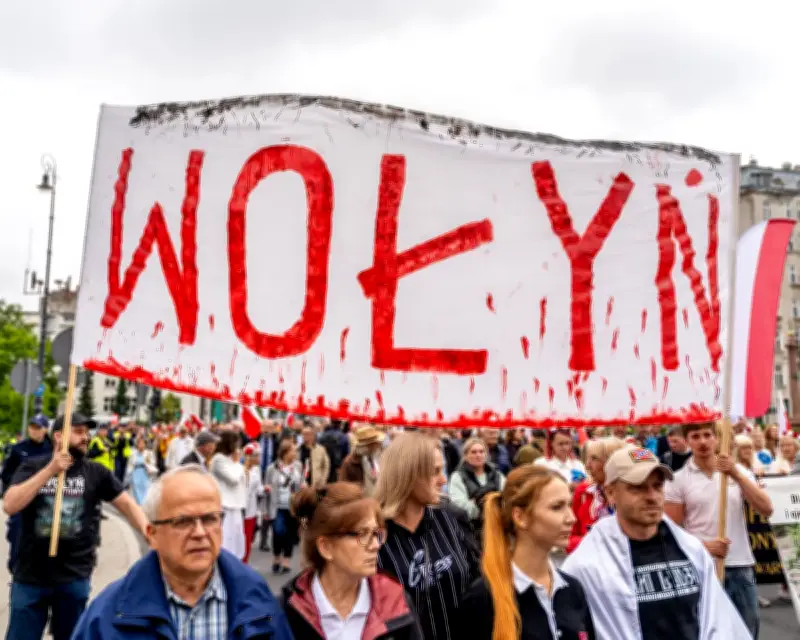
Polish-Ukrainian solidarity, a hallmark of the response to Russia's 2022 invasion, has soured as a bitter historical dispute over the 1943 Volyn massacre reignites tensions. The massacre, carried out by the Ukrainian Insurgent Army (UPA), claimed about 100,000 Polish lives. In June, Polish President Karol Nawrocki stripped Ukrainian President Volodymyr Zelenskyy of a Polish state award after Kyiv honored UPA fighters, prompting Ukrainian officials to return their Polish decorations.
Historical Context and Escalation
The UPA is remembered in Ukraine for fighting Soviet rule, while its role in massacres of Poles and Jews is downplayed. In Poland, the killings are labeled a genocide. Nawrocki, a historian and nationalist, stated, "Praising genocide or turning a blind eye is an invitation to commit further genocide." The dispute escalated when Zelenskyy named a military unit after UPA heroes despite Polish protests.
Political Fallout
Nawrocki's hardline stance has boosted his popularity; a recent Onet poll showed his trust ratings at 55%, up 8% from a month prior. Polish Prime Minister Donald Tusk announced a "wall of memory" for massacre victims and suggested Ukraine must address its history to join the EU. Ukrainian officials reacted angrily, with Kyrylo Budanov, Zelenskyy's chief of staff, declaring, "No one will ever again dictate to Ukrainians which heroes to honor."
Underlying Resentments
Beyond the historical dispute, Polish-Ukrainian relations have frayed due to issues like a 2023 blockade of Ukrainian trucks by Polish drivers and perceived mistreatment at border crossings. Olha, a Ukrainian graphic designer, said, "Every time I am entering Poland I feel my whole body shaking with rage at the way they look at us." Many Poles resent the over 1 million Ukrainians in Poland, though they are net economic contributors.
Broader Implications
Jewish groups have raised concerns about Ukraine's veneration of UPA figures complicit in the Holocaust. Historian Timothy Snyder criticized former President Viktor Yushchenko for honoring Stepan Bandera, a UPA leader whose goal was "a one-party fascist dictatorship without national minorities." Despite Kremlin propaganda, this does not indicate widespread fascism in Ukraine but reflects national consolidation against Russia.
Efforts at Reconciliation
Historian Yaroslav Hrytsak noted, "Previously, Ukraine was very divided about the UPA... Since the beginning of the war, there was an immediate consensus that they are freedom fighters." However, reconciliation efforts have stalled. Karolina Romanowska, head of the Polish-Ukrainian Reconciliation Association, said Ukrainians were often "completely shocked" by the massacre's details. A meeting between Zelenskyy and Nawrocki at a NATO summit in Turkey failed to reach agreement.
Future Outlook
Former Polish Ambassador Bartosz Cichocki predicted the relationship will recover to mutual interest but lack warmth. "There will be no more romance, no more naivety, and Poland will become very strict on Ukraine's EU integration." Hrytsak emphasized that reconciliation takes time: "All national reconciliation that occurred in Europe happened after wars, not during them." He called the previous goodwill a "miracle" that is now "shattered," with potentially dangerous consequences.




