
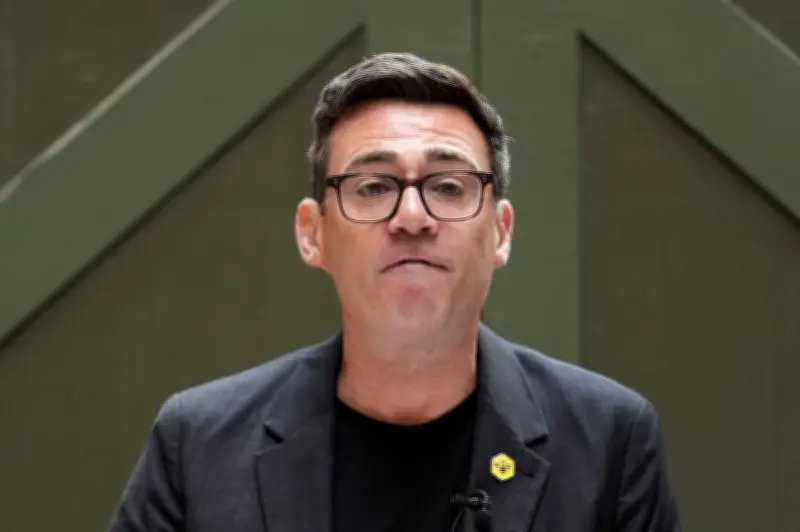
The Hillsborough Law will help shift the balance of power between the people and the state, prime minister-in-waiting Andy Burnham said.
Legislation Clears Commons
The legislation will clear the Commons on Tuesday after ministers agreed its duty of candour would apply to the intelligence services. Prime Minister Sir Keir Starmer said he was “proud” to bring back the legislation, which aims to prevent cover-ups by requiring officials to be transparent during investigations and inquiries into failures by the state.
The law takes its name from the 1989 disaster at Hillsborough Stadium, in Sheffield, when 97 Liverpool fans were killed in a crush during an FA Cup semi-final match. Families of those killed were forced to fight a long campaign to get to the truth behind the disaster in the face of obstruction by the authorities.
Starmer's Final Push
The Prime Minister will personally steer the legislation through its final Commons stages as he seeks to secure his legacy in the closing days of his premiership. He has pushed back what is expected to be his final Cabinet meeting to Wednesday in order to speak at the third reading stage of the legislation. Mr Burnham is also expected to take part in the debate, the first time he will have delivered a Commons speech since his return to Parliament in the Makerfield by-election.
The law was a key promise in Labour’s 2024 manifesto, but has been delayed by wrangling over how the measures would apply to spies. A planned debate on the legislation, formally called the Public Office (Accountability) Bill, was pulled earlier this year because of the row, with campaigners saying they could not accept a version of the law that gave the heads of the intelligence services a veto over whether their officers could disclose sensitive information.
Spies Included Under Duty of Candour
On Tuesday, ministers will amend the Bill to bring spies within the scope of the duty of candour, but with a “secure process” for disclosing information that could affect national security. Officials said the changes were the result of “months of working around the clock with the families and campaigners”.
Writing in the Liverpool Echo, Mr Burnham – who will become Labour leader on Friday and prime minister on Monday – said: “We owe this moment to the Hillsborough families. For 37 years, they refused to accept a lie. They stood firm when powerful institutions closed ranks against them. They have shown extraordinary courage, and because they never gave up, they will leave a legacy that reaches far beyond Hillsborough. They are helping to reshape the relationship between the public and the state for generations to come.”
In a sign of how he hopes to change the country when he enters No 10, Mr Burnham added: “The lesson of Hillsborough goes beyond introducing a duty of candour. It asks us what kind of country we want to be. One where power is concentrated in distant institutions, or one where it is shared more fairly with the people and places those institutions are meant to serve. If an entire city could be ignored for two decades while telling the truth about the deaths of its own people, what other communities have gone unheard? Which voices have been overlooked simply because they lacked power? For me, this has always been about changing that. It is why I believe we must continue to redistribute power, strengthen our towns and cities, and build a Britain where every community is treated with equal respect and where, in the face of injustice, nobody walks alone.”
Campaigners Hail 'Landmark Law'
The legislation, which will still need to go through the House of Lords, was one of Sir Keir’s key promises. Sir Keir said the “landmark law” was “a tribute to the incredible families and campaigners who have spent decades and decades fighting to get justice for their loved ones”. “They suffered unimaginable grief and never gave up. If it wasn’t for their dedication the Hillsborough Law would never have happened,” he added.
Hillsborough Law campaigners, including those whose family members were killed in the 1989 disaster, welcomed the return of the Bill to the Commons. In a statement, Charlotte Hennessy, Sue Roberts, Steve Kelly and Margaret Aspinall said: “We have shown that true power belongs to ordinary people. We did not stay silent, we were not ground down, we were not afraid to speak truth to power. This is not just about legislation, but about changing the way the bereaved and survivors are treated and a change in culture and it is deeply empowering knowing that this protects others forever.”




