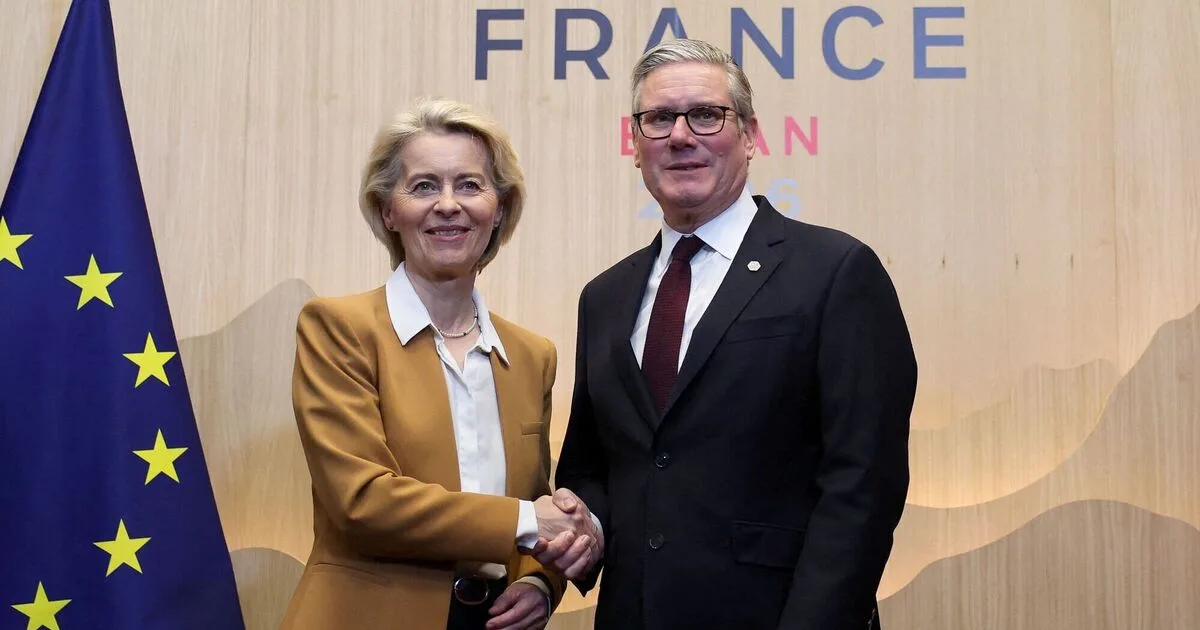
Keir Starmer Accused of Brexit Betrayal Over Single Market Alignment Plan
Starmer's Brexit 'Betrayal' as He Seeks Closer EU Ties

Prime Minister Keir Starmer has been accused of plotting a full-scale Brexit betrayal as he attempts to reset his faltering leadership and revive Labour's standing in the polls.

Political Firestorm Over EU Alignment

Sir Keir stated his intention to pursue 'even closer alignment with the single market' where it serves the national interest, a move interpreted by opponents as a major breach of his manifesto commitments. He told the BBC's Sunday with Laura Kuenssberg that the UK should 'get closer' and consider alignment if beneficial, though he explicitly ruled out rejoining the customs union or a full return to freedom of movement.

This pivot has ignited fierce criticism from across the political spectrum. Reform UK leader Nigel Farage declared it a 'breach of good faith with Labour voters', warning that tying the UK to EU Net Zero policies would harm industry and increase living costs. Conservative leader Kemi Badenoch suggested the shift exposed Starmer's 'total weakness' and precarious poll position, urging him to focus on domestic economic issues instead.

Manifesto Breaches and Internal Pressure

The controversy follows a series of perceived breaches of Labour's election pledges, including the decision to increase National Insurance and the party forcing a U-turn on raising income tax. Speculation about Labour's Brexit stance has been rife, fuelled by comments from Health Secretary Wes Streeting on the EU's 'enormous economic benefits' and a recent move by 13 Labour MPs to back a customs union.

Sir Keir justified his position by pointing to areas like food and agriculture where the UK has already matched EU rules. 'We take a sovereign decision whether we align or not,' he argued, emphasising a sector-by-sector approach. While ruling out a return to broad freedom of movement, he expressed hope for a youth mobility scheme for 18- to 30-year-olds.

A Leadership Under Siege

Amid this policy storm, the Prime Minister is battling to shore up his own authority. He insisted he would still be in Downing Street by 2027, warning that forcing him out would unleash 'utter chaos'. His comments on EU alignment mark a significant attempt to redefine his government's post-Brexit strategy, but they risk reopening deep political divisions and alienating voters who backed Labour's previous 'red line' stance against single market membership.

The Liberal Democrats, who tabled the recent vote on a customs union, plan to legally compel the government to begin talks with the EU, ensuring this debate remains at the forefront of Westminster politics.




