
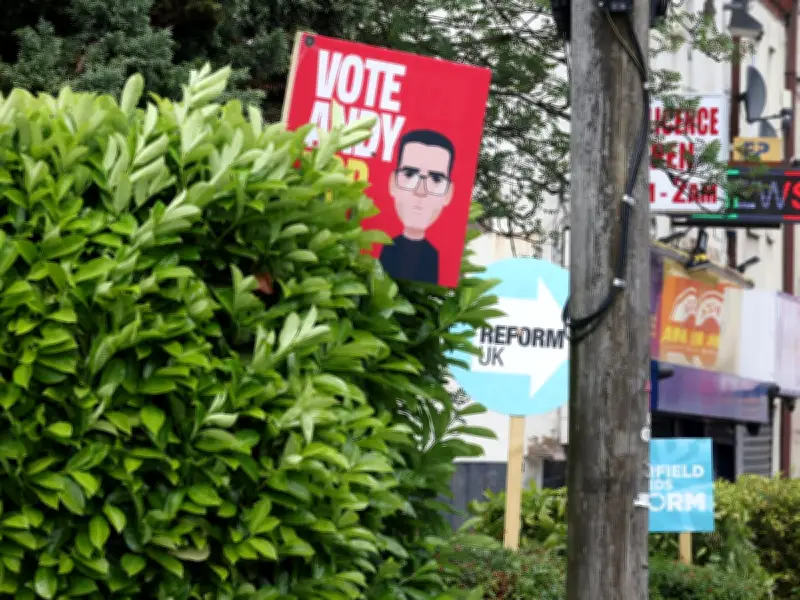
A surge of widespread misinformation has sparked urgent calls for public support of local newspapers in their battle against falsehoods, particularly in the context of the Makerfield by-election.
Misinformation Floods Facebook Groups
Misinformation targeting voters has inundated Facebook groups ahead of the Makerfield by-election, prompting a prominent news chief to speak out in defense of the vital work undertaken by local news organizations. A recent study by the Social Market Foundation revealed that nearly one in six pieces of news shared in local Facebook groups during the election campaign was false. The research also found that the misinformation "heavily targeted" the Labour Party and its candidate, Andy Burnham.
Call to Support Local Journalism
In response, Theo Bamber, chief executive of the News Media Association, has urged people to back local journalism in its fight against misinformation. In a passionate statement shared with the ECHO, Mr. Bamber emphasized the critical role of accurate information in democratic decision-making. He noted that elections are "information-rich environments" that attract intense public scrutiny, making it increasingly difficult to separate verified facts from noise.
"This can make elections fertile ground for misinformation to thrive, a trend that is only becoming more pronounced as generative AI continues on its rampant development trajectory," Mr. Bamber said. He highlighted that false claims about candidates, misleading narratives about planning decisions, and fabricated official announcements can spread rapidly through local Facebook groups, WhatsApp chats, and community forums.
The Makerfield By-Election as a Case Study
Mr. Bamber pointed to the upcoming by-election in Makerfield as a prime example of this phenomenon. "You only have to look at what’s happening around the upcoming by-election in Makerfield – which will have huge ramifications for our country one way or another – to see this in action," he said. He warned that misinformation amplified by algorithms that reward engagement over accuracy risks causing real-world damage if not challenged, including suppressing turnout, distorting debate, and undermining trust in decisions that affect people’s daily lives.
Local Journalism as a Defense
Mr. Bamber argued that the ultimate defense mechanism against misinformation already exists in the form of professional local journalism. He praised newsrooms such as the Liverpool ECHO for their painstaking work in verifying claims, correcting falsehoods, and providing reliable reporting rooted in their communities. "They know the local context, the people, the history – and they are often best placed to see when something simply isn’t right," he said.
He cited the example of Belfast, where local journalists worked around the clock to report verified facts and challenge misinformation during violent unrest. Government-backed research into the 2024 Southport unrest found that trusted local journalism helped de-escalate tensions by reporting verified facts and amplifying authoritative local voices.
Trust and Reach of Local News
Mr. Bamber highlighted that trust in UK local news brands remains high, with 80 percent of UK adults saying they trust what they read in their local media. Additionally, 42 million people engage with local journalism every month across print and digital platforms. He stressed that discussions about the information ecosystem often fail to acknowledge the role local journalism plays in the lives of a huge number of people every day.
Challenges and the Need for Change
The challenge facing local news, according to Mr. Bamber, is not a lack of demand for trusted news or a failure of journalism itself, but a digital marketplace that does not adequately reward the production of accurate, original reporting. He called for change to ensure that organizations producing journalism can sustain it in a digital market where advertising revenues have increasingly flowed to global tech giants rather than to publishers.
"There is no time to waste. Misinformation is becoming harder to detect with AI deepfakes increasingly becoming indistinguishable from reality," he warned. He concluded that professional journalism is the last line of defense against the rising tide of misinformation on social networks, and that if government continues to treat journalism as a luxury rather than democratic infrastructure, these defenses will only hold for so long.




