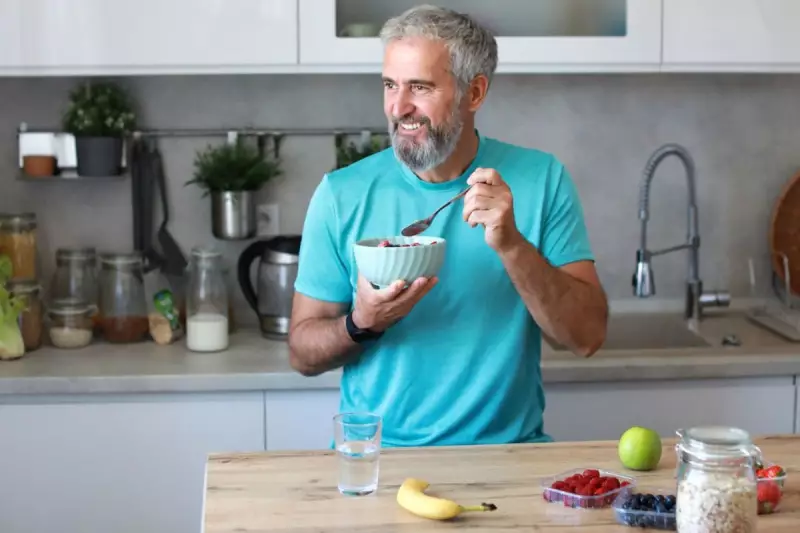
While exercise remains one of the most beneficial activities for maintaining health, a leading coach specialising in clients aged forty and above argues that several lifestyle adjustments can yield more immediate and noticeable positive impacts. These range from reducing bodily pain to enhancing energy levels, offering quicker rewards than fitness regimes alone.
The Framework for Faster Results
Hong Kong-based gym proprietor Ed Haynes, a former international rugby sevens player who describes himself as a "broken athlete" due to career injuries, has developed a proven methodology through eighteen years of coaching. He initially trained family members, notably helping his mother progress from being unable to hold a plank at fifty-nine to performing press-ups and pull-ups at seventy-six. Haynes now assists hundreds of clients in their forties, fifties, sixties and beyond to transform their health and fitness.
"If you walk ten kilometres into the woods, you have to walk ten kilometres out of it," Haynes illustrates. "This means if you've maintained poor nutrition, sleep, and exercise habits for two decades, reversing that damage requires time."

He emphasises that while exercise is excellent for improving fitness and physical function, refining lifestyle factors typically delivers a more rapid enhancement to overall health and wellbeing. "Previously, my primary focus was attempting to rectify people's dysfunction through exercise," Haynes explains. "Now I investigate lifestyle factors immediately and observe really quick victories. We can lower bodily inflammation and diminish pain almost instantly. By increasing sleep duration and protein consumption, we can support muscle growth, which becomes critically important for enhanced function as we age."
The Six Pillars Assessment
Haynes employs a scored lifestyle evaluation to identify areas for improvement, dividing it into six fundamental pillars: sleep, hydration, step count, diet, protein intake, and intentional movement. For each category, he establishes a gold standard target. "I've practised this for sixteen years, and truthfully only a handful of individuals have ever achieved all the gold standards," he concedes. "The crucial point is that each represents a sliding scale; any progression in the correct direction will benefit your health and wellbeing."
The authentic gold standard involves cultivating a sustainable lifestyle that permits consistently good scores in every section, adapting this approach over time to accommodate life's inevitable curveballs. "Biologically, circumstances do become more challenging as you age," Haynes states. "Life transforms, different seasons occur—you undergo divorce, experience illness, retire, or transition through perimenopause and menopause. Each significant change resembles dealing with a new person, necessitating evolving protocols."
He stresses that this represents constant, lifelong work rather than a one-time achievement. "It's not about having a perfect day, ticking that box, and never worrying again—this is persistent effort you'll need to maintain throughout your life."
Detailed Breakdown of the Six Pillars
1: Sleep Enhancement
"Can we advance you from sleeping six hours nightly to six and a half hours?" Haynes proposes. This suggestion isn't because six and a half hours constitutes a magical figure for better health, but simply because it represents more sleep than previously managed. "Will doing this decrease bodily inflammation and the pain you experience? It almost invariably does, because recovery occurs during sleep."
Gold Standard: For individuals aged forty and above, the gold standard involves building sleep to a minimum of eight hours per night. However, this can be accomplished through small increments over time, as someone accustomed to six hours nightly will unlikely find an additional two hours easily attainable. "If someone currently sleeps five hours nightly, we aim for five and a half. When that feels comfortable, we consider six, then six and a half," Haynes outlines.

2: Hydration Optimisation
"Most people don't drink sufficient water," Haynes observes. "If you can keep a water bottle accessible and consume just one extra bottle daily, we know that drinking adequate amounts relative to your bodyweight and activity levels reduces inflammation. When inflammation decreases, pain diminishes."
He acknowledges this proves easier said than done. Modifying habitual behaviours can be difficult, particularly for individuals whose life choices have been ingrained over decades. Yet the payoff for succeeding is substantial.
Gold Standard: "The gold standard involves drinking thirty-five millilitres of water per kilogramme of body weight daily," Haynes adds. "If you're a sweaty individual, an active person, or reside in a hot climate, you'll probably require slightly more."
3: Step Count Increase
"Our daily step count can significantly contribute to the number of calories we burn daily, but we don't value it solely from a body fat perspective," Haynes remarks. "Most people lose walking ability as they age. The most fundamental preventive action involves examining how much you actually walk. If you don't walk regularly, your body will gradually forget how to walk—that partly explains why some individuals begin feeling discomfort descending stairs."
The cause of sarcopenia, or age-related strength and muscle loss, has been deemed "multifactorial," but declining activity levels represent a major contributing factor. Remaining active and practising fundamental movements like walking and bending to pick objects from the floor helps your body recognise the necessity to maintain the strength and skill required to perform them safely.
Gold Standard: Although scientifically arbitrary, Haynes states that walking ten thousand steps daily represents a good gold standard, ensuring you remain on your feet and practise walking skills adequately. A more accessible starting point involves simply taking stairs where possible instead of lifts and escalators. "If you, at age forty, take stairs daily, your body won't forget how to ascend and descend stairs," Haynes asserts. "It will maintain necessary motor patterns, strength, and mobility in your quads, hips, and ankles so that, at eighty, you'll still manage it."
4: Dietary Quality
Food quality also closely correlates with inflammation and, consequently, bodily pain and discomfort. Haynes provides basic guidelines that, if followed, can help substantially improve nutrition. "We could individualise macronutrients and instruct people exactly what to eat, but that isn't necessary relative to what most people in this demographic require," he clarifies.
Instead, Haynes recommends constructing the bulk of your diet around colourful whole foods and aiming to achieve adequate protein for your age, frame, and lifestyle. "Our parents told us this from childhood, but if you obtain sufficient colours on your plate through fibrous vegetables you'll support your gut microbiome," he says. "If you desire less pain, it begins with the gut—healthy gut, reduced inflammation, diminished pain."
Gold Standard: Aim for eighty-five percent or more of your foods to be unprocessed, Haynes advises. This includes items like fruits, vegetables, meats, legumes, and pulses. Alternatively, you could simply reduce consumption of ultra-processed foods, which a Lancet review associated with "many non-communicable diseases."
5: Protein Intake Sufficiency
"Most people we work with in this demographic train diligently in the gym, but they don't consume enough protein, so they deny themselves opportunity for bodily repair and replenishment," Haynes notes. Protein supplies building blocks needed for positive training adaptations, like growth and repair of bodily tissues including muscles, bones, tendons, and ligaments. It also supports several other vital processes, such as hormone regulation and immune system function.
Gold Standard: For a gold standard figure, Haynes references Professor Javier Gonzalez, professor of nutrition and metabolism at the University of Bath's Centre for Nutrition, Exercise and Metabolism. "The recommended nutrient intake for protein in the UK is 0.75 grams per kilogram of body weight," Gonzalez states. "Strong arguments suggest slightly higher intake—up to 1.2g/kg—may provide additional benefits for muscle health and weight control. Requirements for athletes or regular exercisers can be even higher—up to approximately 1.8g/kg."
6: Intentional Movement
The phrase "intentional movement" encompasses any exercise type—time deliberately allocated to move your body. "Yoga qualifies; pilates qualifies; strength training qualifies; running qualifies," Haynes specifies. "Running for the bus or walking around supermarkets doesn't qualify."
These activities serve to strengthen the body, improve mobility, and elevate mood. "If you injure yourself, you not only lose physical function but may also become separated from your social circle," Haynes comments. "Strength training constitutes our main activity with clients because muscle essentially functions as body armour."
Muscle increases physical capacity and protects against falls. It also raises total daily energy expenditure to aid weight management, helps regulate blood sugar to combat diabetes, and increases bone density to fight conditions like osteopenia and osteoarthritis.
Gold Standard: "Four weekly sessions, each lasting at least twenty minutes, represents the gold standard here," Haynes declares. But if you currently perform no structured exercise, he recommends beginning by introducing one weekly session. When this feels manageable, progress to two weekly workouts, with the ultimate goal of advancing to the gold standard of four, provided your life circumstances permit.
By systematically addressing these six lifestyle pillars, individuals over forty can achieve more immediate health improvements than through exercise alone, building a foundation for sustained wellbeing throughout later life stages.