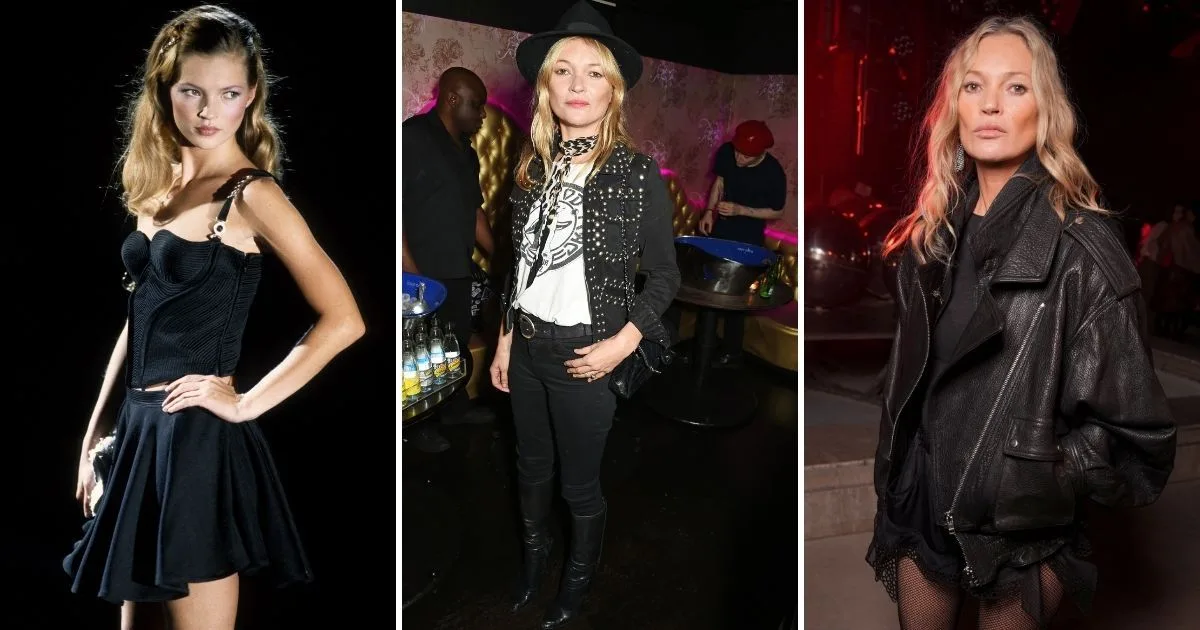
Kate Moss turns 52 today, a milestone that feels almost beside the point. Not because she looks implausibly young—though she does—but because she has always existed outside fashion's usual sense of time. Her style is not of the moment so much as gently brushing up against it.
For three decades, the fashion world has attempted to reverse-engineer her magic: the blazer and skinny jeans combo, leopard print and leather hotpants, and an unexpected allegiance to butter yellow. Yet Moss remains stubbornly uncopyable. Her genius never lay in adopting trends early, but in making them feel incidental—a fur coat over bare legs simply read as if she had grabbed the nearest thing on the way out.
There is something quietly British about Moss's fashion authority. It is not aspirational in the glossy, transatlantic sense; it is dry, ironic, perhaps even faintly amused by its own influence. The enduring party-girl mythology adds to this: her clothes, worn not without care, but not overly careful either, always suggest a life being led. Kate Moss made messiness chic long before 'indie sleaze' became a catchall term.
Now at 52, Moss represents a kind of style freedom that feels radically refreshing. In an era obsessed with optimisation—sleep, skincare, workouts, wardrobes—her refusal to explain herself, guided by the motto 'never complain, never explain', is the ultimate flex. 'If you know who you are, you can get through,' she has said, and that unwavering commitment to being oneself is perhaps her real legacy.
This is why Moss has endured while aesthetics churn. The boho revival, the indie sleaze resurrection, and endless 'Kate-core' TikToks all misunderstand her appeal. They treat her style as a checklist rather than the much more amorphous mood. You can buy the slip dress or the fuzzy fur coat, but capturing that innate Kate Moss essence—the sense that you would look exactly the same if no one were watching—remains elusive.