In a seismic shift for American public health, the Trump administration has dramatically scaled back the nation's recommended childhood vaccination schedule, a move experts warn will leave the United States lagging behind its international peers and heighten the risk of disease outbreaks.
A Historic and Controversial Rollback
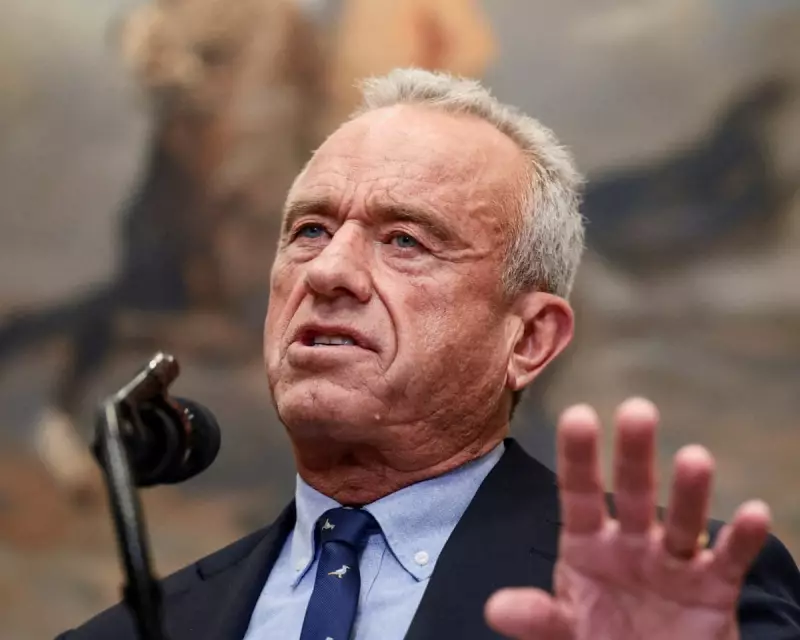
The decision, spearheaded by Health and Human Services (HHS) Secretary Robert F Kennedy Jr, a long-time vaccine sceptic, marks the most significant change to the US immunisation schedule in modern history. It sees the government no longer fully recommending approximately a third of vaccines previously advised for all children.
Infectious disease specialist Dr Jake Scott of Stanford University called it "the largest change in our vaccination schedule in modern American history." Meanwhile, former CDC official Daniel Jernigan labelled the move "astounding," criticising it for lacking scientific evidence or public consultation.

New Rules: From Universal to 'High-Risk' Only
Under the new guidance, several key immunisations will now be offered only to children deemed "high-risk." This list includes vaccines for hepatitis A, respiratory syncytial virus (RSV), hepatitis B, and two types of meningitis. The dengue vaccine will remain recommended only in high-risk areas.
Other crucial shots, including those for influenza, rotavirus, and meningococcal disease, have been moved to a category called "shared clinical decision-making." This previously rare designation typically requires a specific doctor's recommendation and is expected to create significant barriers to access. The CDC will also now recommend just one dose of the HPV vaccine instead of two.
US Now an Outlier Among Developed Nations
Administration officials claimed the change aligns the US with "peer, developed countries," following an instruction from former President Donald Trump in December. However, public health experts strongly dispute this assertion.
In reality, the move positions the US far behind most other high-income nations. Countries like the UK, Canada, Australia, Japan, and most in Europe maintain universal childhood recommendations for flu, rotavirus, and hepatitis B vaccines. Most routinely recommend meningococcal vaccines for children, and many, including Canada and Japan, recommend the RSV shot for all newborns.
"The US policies used to be considered leadership in the public health policy space," Jernigan said. Dr Scott noted that many nations are "moving towards more protection" and have historically looked to the US schedule for guidance, as when Japan added the rotavirus vaccine in 2020.
Flawed Process and Potential Consequences
Experts have raised alarm over the opaque process behind the decision. There was no public comment period, no discussion by the independent Advisory Committee on Immunization Practices (ACIP), and no feedback sought from bodies like the American Academy of Pediatrics.
Instead, the policy appears based on a 33-page report authored by two individuals, including Tracy Beth Høeg, a frequent vaccine sceptic now leading drug regulation at the FDA. Jernigan criticised this, stating, "You end up with what is really an opinion piece."
The consequences, experts warn, will be severe. In a vast, fragmented healthcare system where nearly a third lack access to primary care, moving vaccines to "high-risk" or "shared decision" categories will make them harder to obtain for the very children who need them most. This is predicted to lead to increased outbreaks of preventable diseases.
"We cannot let this be the new normal," Jernigan urged, hoping providers will continue to recommend vaccines. "You don't want to be that parent of a child who goes to a college where they have a meningitis outbreak and then ends up losing a limb or dying."