

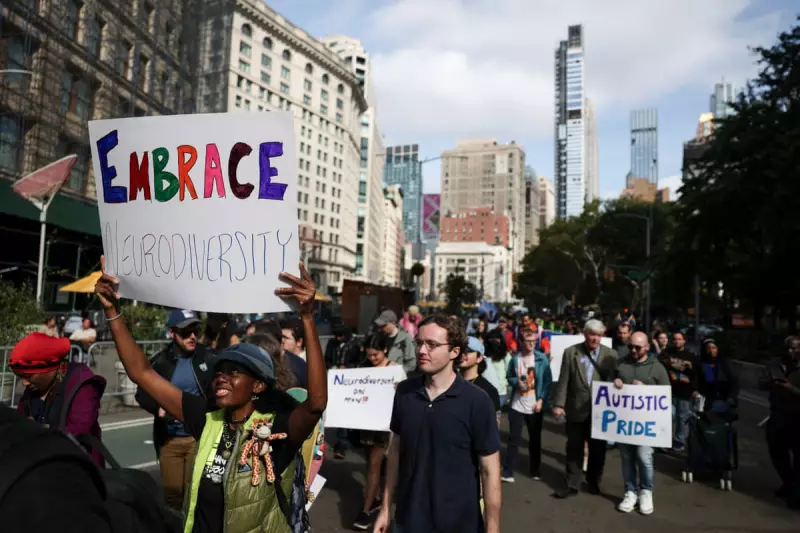
US presidential candidate Robert F. Kennedy Jr is facing a storm of criticism and political backlash following controversial remarks he made about the causes of autism. The independent candidate, known for his long-standing scepticism of vaccines, made the comments during a campaign event in New York, reigniting a fierce debate about scientific misinformation and its impact on public discourse.
A History of Controversial Claims
Kennedy's latest controversy stems from a statement made on Thursday, 5 December 2025. While speaking to supporters, he suggested a direct causal link between what he termed "chemical contaminants" and rising autism diagnoses. Although he did not explicitly name vaccines in this specific instance, the implication was clear to many, given his decades-long promotion of the debunked theory that vaccines cause autism.
This is not an isolated incident for the candidate. For over twenty years, Kennedy has been a leading figure in the anti-vaccine movement. He founded the anti-vaccine group Children's Health Defense and has consistently used his platform to amplify fears about vaccine safety, despite overwhelming scientific consensus to the contrary. Major medical bodies, including the US Centers for Disease Control and Prevention (CDC) and the World Health Organisation (WHO), have repeatedly stated there is no link between vaccines and autism.

Swift Condemnation from Advocacy and Political Spheres
The reaction to Kennedy's New York comments was swift and severe. Leading autism advocacy organisations were among the first to condemn his rhetoric. The Autistic Self Advocacy Network (ASAN) issued a strong statement, accusing Kennedy of spreading harmful misinformation that stigmatises autistic people and endangers public health. They emphasised that autism is a natural neurological variation, not a disease caused by toxins.
Political rivals also seized on the remarks. Representatives from both the Democratic and Republican campaigns criticised Kennedy. A spokesperson for the Democratic candidate labelled the comments "dangerous and irresponsible," while a Republican campaign adviser stated that such rhetoric "undermines trust in essential medicine." The bipartisan nature of the criticism highlights how Kennedy's stance places him outside the mainstream of both major parties on this issue.
The controversy comes at a critical juncture for Kennedy's campaign. Having secured ballot access in several key states, including the crucial battleground of Michigan, he is positioning himself as a potential spoiler in what is expected to be a close election. His ability to draw support from disaffected voters on both the left and right is a significant concern for the major party campaigns.
The Lasting Impact of Misinformation
Experts warn that the persistent promotion of anti-vaccine rhetoric by high-profile figures like Kennedy has real-world consequences. Public health officials link the decline in childhood vaccination rates in some communities directly to the spread of such misinformation, leading to resurgences of preventable diseases like measles. This erosion of trust in medical science complicates efforts to manage public health crises.
Furthermore, advocates stress that framing autism as a preventable injury caused by environmental poisoning is deeply offensive to the neurodiverse community. It promotes a narrative of tragedy and loss, rather than one of acceptance and support, which can affect policy priorities and societal attitudes towards autistic individuals.
As the 2024 US presidential race intensifies, Kennedy's comments ensure that the topics of scientific integrity, public health, and the rights of disabled communities will remain firmly in the political spotlight. The widespread condemnation he faces underscores the growing pushback against misinformation, but also reveals the enduring challenge of combating it when amplified by a political candidate.






