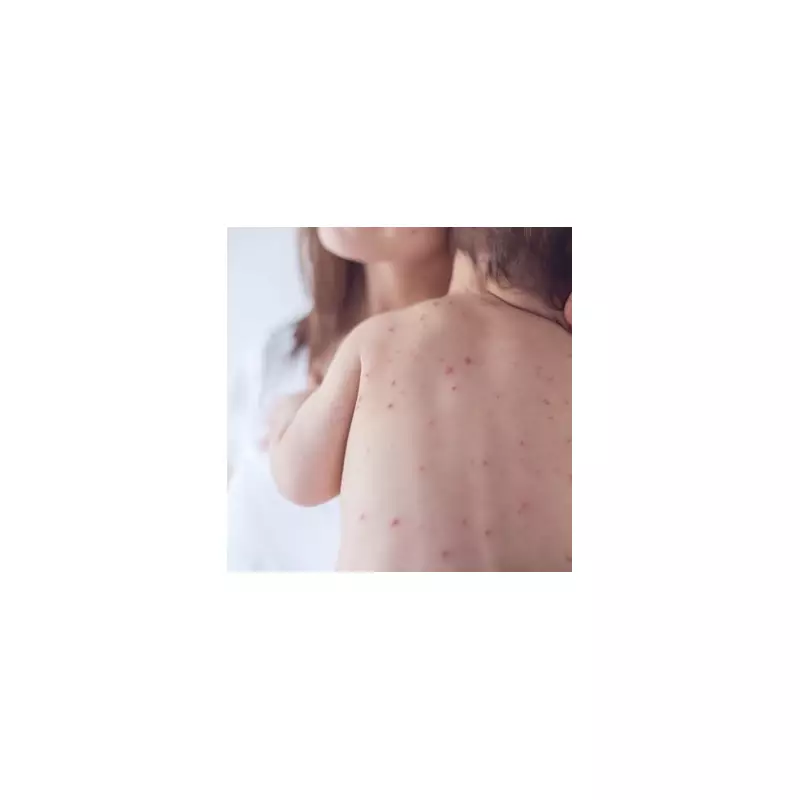
The NHS has launched a major new vaccination programme, offering young children a combined jab that protects against measles, mumps, rubella, and for the first time, chickenpox.
What is the new MMRV vaccine?
From January 2026, a new MMRV vaccine is being offered routinely on the NHS. This single injection combines protection against measles, mumps, and rubella (MMR) with a vaccine for chickenpox, also known as varicella.
Dr Gayatri Amirthalingam, Deputy Director of Immunisation at the UK Health Security Agency (UKHSA), confirmed the rollout. She stated that the move aligns the UK with countries like the US and Germany, where routine chickenpox vaccination has been standard for years.

Is my child eligible for the chickenpox vaccine?
Eligibility depends on your child's age and their previous vaccination history. Crucially, children who have already had one or both doses of the old MMR vaccine are still included in the new programme.
For babies born on or after 1 January 2025, the schedule is straightforward: they will receive their first MMRV dose at one year old, and the second at 18 months.
If your child has already had one MMR dose, the next steps vary by birth date:
- Born between 1 July 2024 and 31 December 2024: They will get an extra MMRV at 18 months and a second MMRV at three years and four months.
- Born between 1 September 2022 and 30 June 2024: They will receive the new MMRV vaccine for their next scheduled dose instead of the standard MMR booster.
If your child is fully up to date with both MMR doses but has never had a chickenpox vaccine, they fall into a special 'catch-up group'. This group will be offered a single dose of the full MMRV vaccine during a catch-up campaign launching in November 2026.
Parents of children born on or after 1 January 2020 who have never had any MMR vaccinations and have never had chickenpox should contact their GP, as they will be eligible for the new MMRV jab.
Why has the NHS introduced this vaccine?
The decision follows extensive research by the NHS and UKHSA. While chickenpox is often a mild childhood illness, it can lead to serious complications such as bacterial infections or pneumonia, and in rare cases can be fatal.
Dr Amirthalingam emphasised the positive impact this will have, telling the Mirror: "It is excellent news that from January 2026 we will be protecting children against chickenpox through the NHS routine vaccination programme... This programme will have a really positive impact on children's health and lead to fewer missed nursery and school days."
The NHS has opted for the combined MMRV jab for all eligible groups to simplify the rollout, with research confirming this approach is clinically safe.