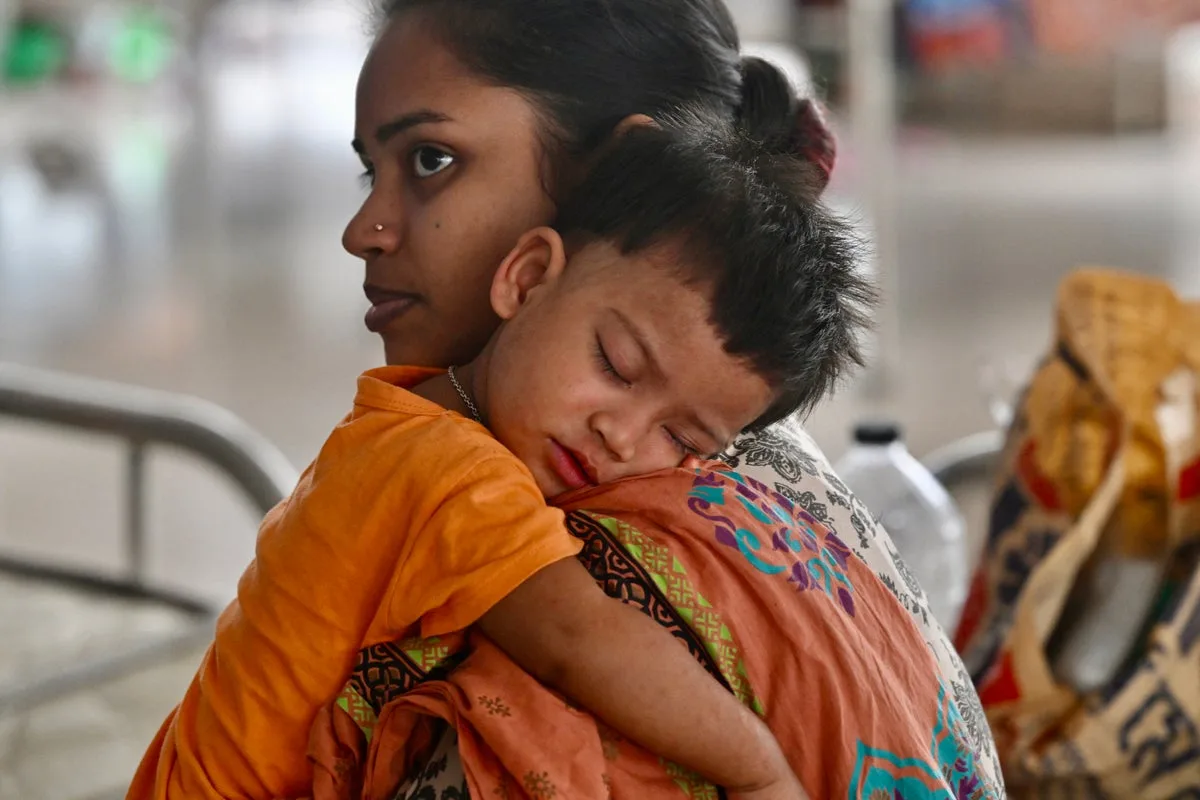
At least 194 children have died in Bangladesh since March from a measles outbreak, with 28,000 suspected cases hospitalised, officials in Dhaka confirmed on Friday. The outbreak, declared on 15 March, is the worst in decades for the South Asian nation.
The government has launched a nationwide vaccination campaign targeting 18 million children, but only about a quarter have been reached so far. Health department spokesman Zahid Raihan said it may take another two weeks to see the impact of the programme.
The World Health Organization (WHO) reported widespread transmission across all eight divisions, affecting 58 of 64 districts. Between 15 March and 14 April, 19,161 suspected cases and 2,973 lab-confirmed cases were recorded, with 12,318 hospital admissions.
Newly-inducted Prime Minister Tarique Rahman blamed the previous government of Sheikh Hasina for failing to procure vaccines, citing mismanagement and the political turmoil that toppled the administration in June 2024. He noted a shortage of testing kits despite assistance from the UN children's agency.
Parents described their grief. Mohammad Sajib, who lost his three-year-old son, said: 'After noticing a rash on our son’s skin, we rushed him to the hospital. Five days later, we brought him back dead.' His wife Afsin Meem added that the child had high fever and breathing difficulties.