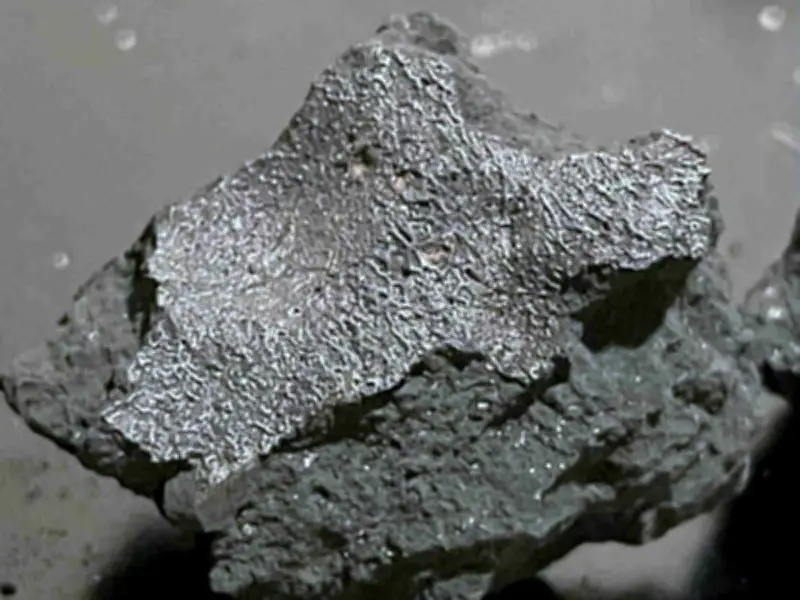
A meteorite that struck a house in New Jersey has been found to contain salty fluids from outer space, which scientists believe could hold the building blocks of life. The space rock, which created a sonic boom over New York City before crashing through a roof in Hillsborough, New Jersey, on July 16, 2024, has been analyzed by researchers from the SETI Institute and other institutions.
Discovery of Salty Fluids
Lead author Dr. Peter Jenniskens of the SETI Institute stated: “A forensic study of the fragments revealed that they contained preserved bits from near the surface of a primitive asteroid where it experienced concentrated salty fluids – a process not previously known from this type of proto planet world.” The meteorite, weighing about 2 pounds and the size of a heavy airline bag, entered Earth's atmosphere at 32,000 miles per hour.
The American Meteor Society's operations manager, Mike Hankey, noted that cameras in Connecticut, Pennsylvania, and New Jersey captured the meteor, tracing its path back to the asteroid belt. The rock was fragile and broke apart, with Doppler weather radar at Newark Airport detecting a cloud of falling pebbles stretching from Staten Island into New Jersey.

Homeowner's Quick Action
The only recovered fragment hit a house in Hillsborough. The homeowner reported: “I was at home at the time, heard a loud crash and found a hole in the ceiling of the master bedroom. I smelled a strong sulphur-like odour and saw many black fragments along with debris and black dust that covered my bed, carpet and surrounding areas.” He preserved the scene using disposable gloves and placed meteorite fragments in glass jars.
Scientists identified the meteorite as a CM-type carbonaceous chondrite, similar to the Mighei meteorite that fell in Ukraine in 1889. Dr. Jenniskens said: “Thanks to the homeowner’s quick reaction, these are the most pristine CM1/2 meteorites we know of.”
Chemical Composition and Significance
Dr. Zolensky and Dr. Jangmi Han found small salt-rich CM1 fragments, suggesting they originated from a near-surface region of the parent asteroid where liquid water evaporated and concentrated salts. The high salt concentration in briny fluids can potentially create molecules crucial to life on Earth, as brines allow phosphate to remain in solution and catalyze chemical reactions between organics.
Cosmochemist Dr. Queenie Chan from Royal Holloway University of London explained: “Isotope studies of carbon and nitrogen suggest that primitive carbonaceous chondrites, including CM-types, delivered organic matter to the early Earth. The Hillsborough meteorite contained 1.8% by weight of carbon and 0.07% nitrogen, and had carbon and nitrogen isotopes typical for CM-type meteorites.” She added that the meteorite contained a wide variety of soluble organic compounds and was more altered by water than most other CM-type meteorites.
Organic mass spectrometry specialist Professor Phil Schmitt-Kopplin of Technical University Munich said: “A high fraction of compounds were the product of organic chemistry with minerals. We do not know if these magnesium organic compounds were contributed by brine chemistry or were simply left over from earlier impact shock processes.” In living organisms, organo-metallic compounds are found in blood and used in photosynthesis.
Amino Acids and Implications for Life
Among the soluble organic compounds were many amino acids. NASA astrobiologist Dr. Danny Glavin and his team concluded that the delivery of amino acids, carboxylic acids, and other soluble organic molecules by CM-type bodies may have contributed to the prebiotic organic inventory that preceded the emergence of life on Earth. Their analysis suggests the complex distribution of amino acids in the Hillsborough meteorite formed within the parent body, likely assisted by brine fluid chemistry.
Some meteorite fragments will be displayed at the American Museum of Natural History in New York City. Curator Denton Ebel said: “We are thrilled that nature delivered such a precious asteroid sample on our doorstep.”