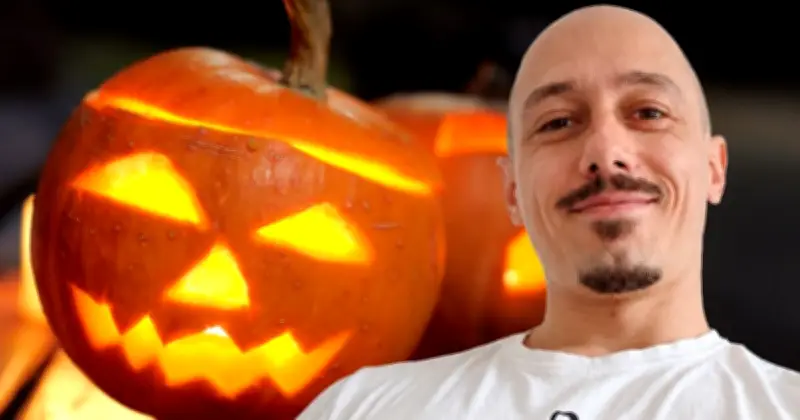
A good scare this Halloween could make people more resilient to real-life challenges, according to a fear expert. Research suggests activities such as watching horror films or visiting haunted houses are enjoyable when they hit a “sweet spot of fear” that is not too overwhelming.
More than half a million people visit UK scare attractions such as haunted houses and mazes every year, according to the Halloween and Scare Attraction Association. Armin Stefanović, a researcher at Aarhus University’s Recreational Fear Lab in Denmark, says these experiences may have positive effects.
Why people enjoy being scared
From an evolutionary perspective, recreational fear can be understood as a form of play. Children are often motivated to play when an activity is challenging enough to develop and sharpen their skills, but not so challenging that it becomes overwhelming. Research at the Recreational Fear Lab shows a similar tendency when people play with fear.
Recreational fear activities simulate dangerous scenarios and may help people develop skills to prepare for them and regulate intense emotions. But when fear becomes too intense, it can stop being enjoyable, so people tend to look for their own “sweet spot of fear.”
True fear versus recreational fear
Recreational fear activities include reading horror novels, watching horror films, visiting haunted houses, and playfully jump-scaring friends. What these activities have in common is that people voluntarily engage with frightening experiences for enjoyment. The fear itself can be quite real, but the danger is usually fictional or staged, making recreational fear a form of playful engagement with fear rather than a completely different emotion.
Fear and excitement can involve very similar physiological responses. For example, an increased heart rate, sweating, and faster breathing while anticipating the return of a loved one from a trip might be experienced as excitement, while similar bodily reactions while walking alone at night might be experienced as fear. The emotional experience depends partly on how the brain interprets those bodily changes in context.
Potential benefits of recreational fear
Two important potential benefits are preparing for dangerous situations and learning how to regulate intense emotions. By engaging with frightening scenarios in relatively safe environments, people may develop coping skills that could help them deal with real-life challenges.
This is especially relevant today, as some researchers have raised concerns that children and young adults have fewer opportunities for independent, challenging play. While protecting children from serious danger is obviously important, experiencing manageable challenges can also contribute to their development.
In his PhD, Stefanović argued that supernatural agents, objects, spaces, and abilities can give concrete form to emotional states. His main examples were the Harry Potter novels and films, in which encounters with creatures such as Dementors materialise experiences of depression and traumatic memories. He proposed that engaging with supernatural agents in fictional settings may help audiences recognise, understand, and potentially regulate their own emotional states.
At the Recreational Fear Lab, he is currently developing a survey to investigate psychological differences between horror consumers who prefer supernatural horror, featuring ghosts, demons, witches, vampires, and werewolves, and those who prefer naturalistic horror, featuring human killers and animal attacks. He is particularly interested in whether these preferences are associated with differences in how people experience and understand emotions.