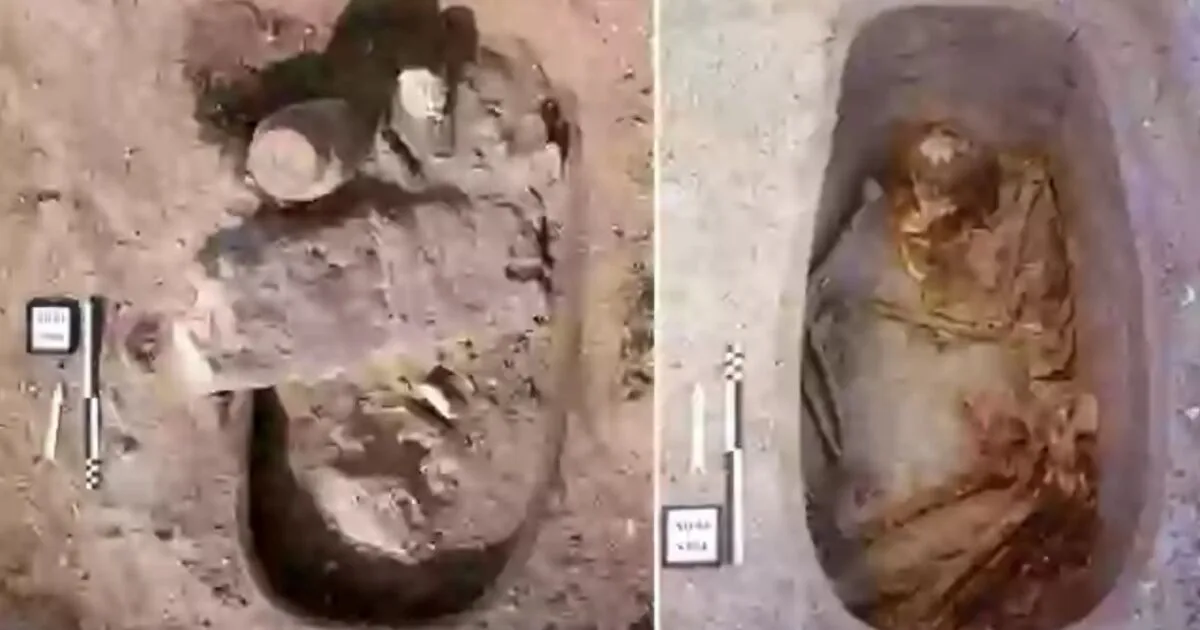
A study of over 500 recently excavated ancient Egyptian tombs has shed light on grim burial practices, including the removal of body parts and celestial alignments. The research, led by Ameline Alcouffe of the University of Toulouse, analysed the tombs to uncover religious rituals that shaped early Egyptian beliefs.
In one notable discovery, tomb S166 contained the remains of a teenage girl whose left arm had been cut off and placed across her chest. Her body was positioned to face the setting sun at the winter solstice and aligned with the rising of Sirius, the brightest star in the sky. The team described this as an early connection between agricultural cycles, celestial events, and death.
Other tombs offered further insights. In tomb S837, a woman was buried with fine jewellery and a ceramic vessel, motifs later seen in the Pyramid Texts, the oldest Egyptian funerary texts. In tomb S874, another woman was found with a fibre wig perfectly aligned to the summer solstice, marking a shift in celestial focus.
Researchers noted that these practices deviated from traditional burial methods, highlighting an innovative cultural shift. The study suggests that rituals such as limb removal were later incorporated into myths like that of Osiris, the god of the afterlife and fertility.