
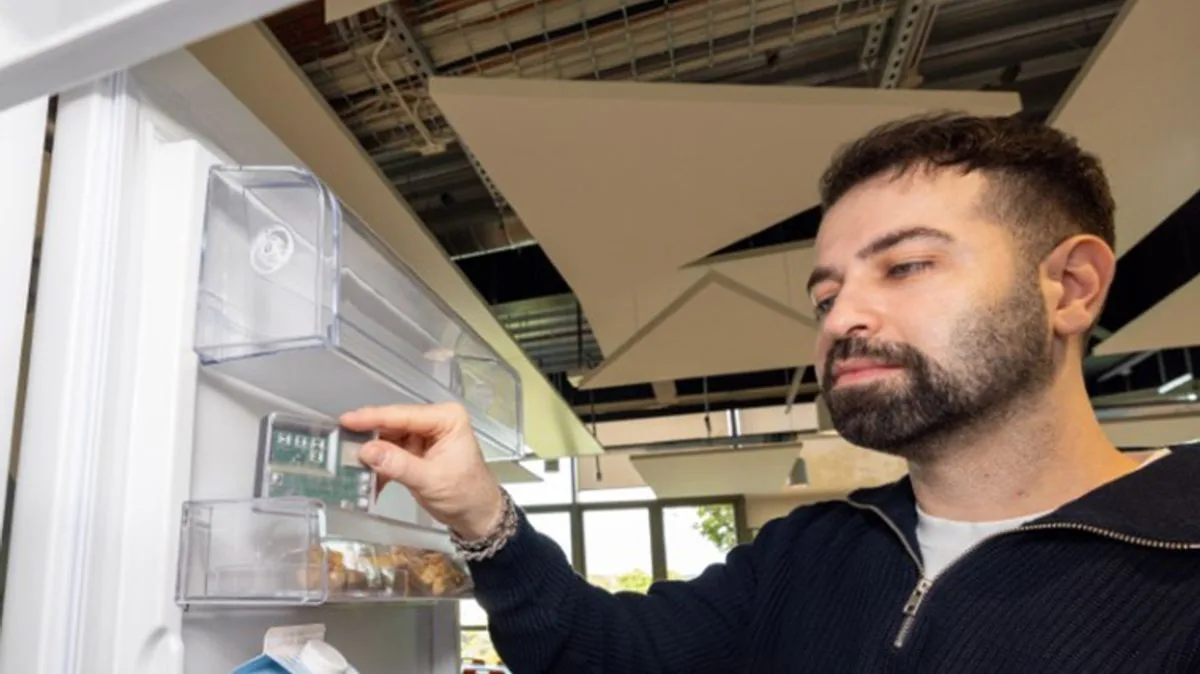
Newcastle University has created an 'artificial nose' that can detect when food in a fridge is about to spoil. The device uses low-power, low-cost AI sensors to identify odours and gases associated with food degradation, and has been validated across fruit, vegetables, meat and dairy.
Dr Oktay Cetinkaya, who led the study, explained that the system functions as an artificial nose by combining multiple sensor signals to detect early spoilage signs, including odours invisible to humans. The sensor module integrates gas, light, temperature and humidity sensors, and data is processed using lightweight machine learning models trained on both lab and real-world datasets.
The system connects to a mobile app called Waste-Not!, which provides recipe suggestions and encourages community food sharing. The app combines sensor data with barcode scanning and expiry date information to give users an objective measure of freshness. Dr Cetinkaya said this approach supports more informed decisions than relying solely on expiry dates or user judgement.
Following successful lab trials, the Waste-Not! system has been tested in real-world settings including households, food banks, cafés and takeaways. The team now aims to partner with regional organisations to link surplus food sources with communities, potentially recruiting bike couriers into the app. They are seeking funding for the next stage of development.




