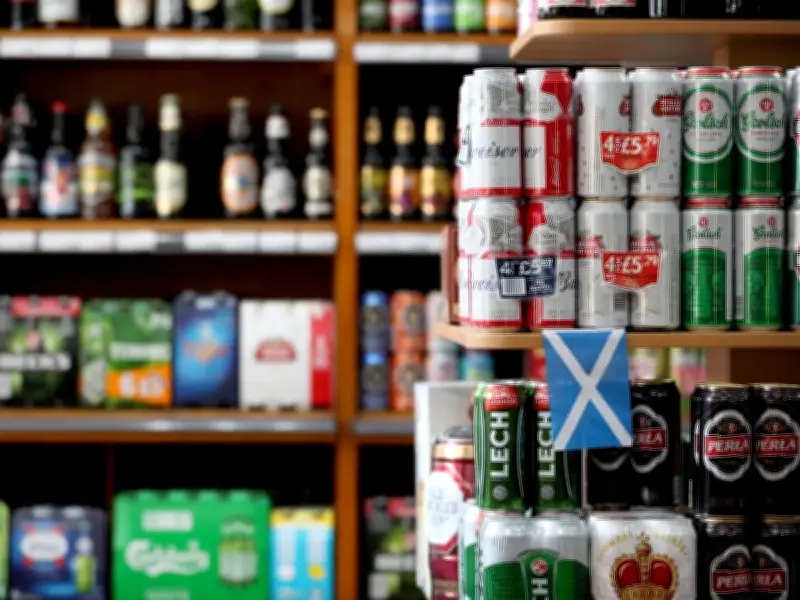
Supermarkets should pay for improved alcohol addiction services through the profits they make from minimum unit pricing, a former SNP justice secretary has claimed.
Kenny MacAskill spoke out after official figures published last week show Scots living in the poorest communities are five times more likely to die from alcohol than the richest.
While the overall number of deaths from drinking dropped by three per cent last year, they rose across 11 local authority areas, including Glasgow and Dundee.
Levy on MUP profits could raise £65 million
The Social Justice Foundation has estimated a levy on MUP profits could raise as much as £65 million per year for addiction services in Scotland.
MacAskill, a former Alba MP, said: "It is perverse that big retailers coin it in through a policy which saves lives. The solution is to allow the Scottish Government to levy a tax on those ill-gotten gains."
"The retailers have after all done nothing through hand or brain to merit it. It could also be put to a great social use if the sums raised which could be considerable were used to fund alcohol treatment."
"Alcohol treatment is already losing out to drugs in funding. Here's a chance to have a budget provided to tackle alcohol harm and funded through those who have been making millions out of it."
"It's a win win. A social good funded with no cost to the Exchequer or additional charge to the consumer."
MUP background and support
Minimum unit pricing (MUP) was introduced in 2018 as the SNP's flagship policy to tackle problematic drinking. MUP is not a tax and does not generate income for the Scottish Government and instead aims to reduce the availability of cheap alcohol by setting a minimum price.
The policy is broadly supported by health experts and charities supporting those harmed by alcohol.
Carolyn Lochhead, chief executive of Alcohol Focus Scotland, said: "Alcohol use costs the Scottish economy up to £10 billion each year, including up to £700 million in health and social care costs."
"Shops and supermarkets sell most of the alcohol bought in Scotland so they should contribute some of their profits towards meeting these costs."
"Over the last decade, there's been a 40 per cent drop in access to specialist alcohol treatment, at the same time as people's needs have grown more complex since the pandemic. If we follow the 'polluter pays' principle, then it's right that we use some of the profits from alcohol sales towards closing this gap."
Retailers reject the proposal
Ewan MacDonald-Russell, deputy head of the Scottish Retail Consortium (SRC), said an additional levy would be the wrong move.
He told the Record: "It's nonsense in principle to argue retailers, who supported the introduction of MUP in 2019, should be penalised for backing a public health intervention. Surely Government wants to find ways to balance supporting business with improving public health."
"The reason MUP has helped in reducing alcohol-related illness is because it reduced the sale of alcoholic products by retailers. Grocery retail is based on selling high volumes at competitive prices."
"When volumes are reduced that impacts on profits, not least as retailers no longer sell many of the old cheaper products. That's why the Scottish Government's own analysis found businesses didn't financially benefit from MUP."
Maree Todd, Alcohol and Drugs Minister, said: "The Scottish Government is providing record levels of funding of over £160 million this year for alcohol and drugs programmes, widening access to treatment and residential services, and improving pathways through detox, crisis care and stabilisation."
"In addition to treatment and support, we are building on the positive impacts of our Minimum Unit Pricing policy which Public Health Scotland estimated, in the years it was evaluated, has saved hundreds of lives."