
Health law experts are condemning the Trump administration's use of what they describe as 'authoritarian' and 'unconstitutional' quarantine measures for at least one individual who came into contact with a hantavirus patient. The mandatory quarantine, imposed without scientific evidence, sets a concerning precedent for how the US may handle future cases of Ebola and other pathogens, according to experts.
Experts Criticize Detention Without Scientific Basis
Lawrence Gostin, a health law professor at Georgetown University Law Center, described the detention as 'arbitrary, capricious, and unjust.' He noted that 'cavalierly detaining somebody for no good reason, no crime, and no significant public risk' undermines fundamental rights.
James Hodge, a professor and director of the Center for Public Health Law and Policy at Arizona State University's Sandra Day O'Connor College of Law, emphasized that health officials should never use 'unconstitutional, ill-advised, unproven techniques to control infectious diseases.' He warned that this incident could be 'really damaging' for public health, especially as the Ebola outbreak continues in the Democratic Republic of the Congo (DRC) and cases may arise in the US.
Case Background: Cruise Ship Passenger Quarantined
Angela Perryman, an American passenger on the MV Hondius cruise ship, came into contact with another passenger infected with Andes virus, a type of hantavirus. She has appealed a federal order to quarantine in a North Dakota facility, requesting instead to self-quarantine in Florida. The US Centers for Disease Control and Prevention (CDC) asked states to provide in-person symptom checks and round-the-clock guards for passengers—an unusual move for a pathogen like Andes virus, which is rarely transmitted between people.
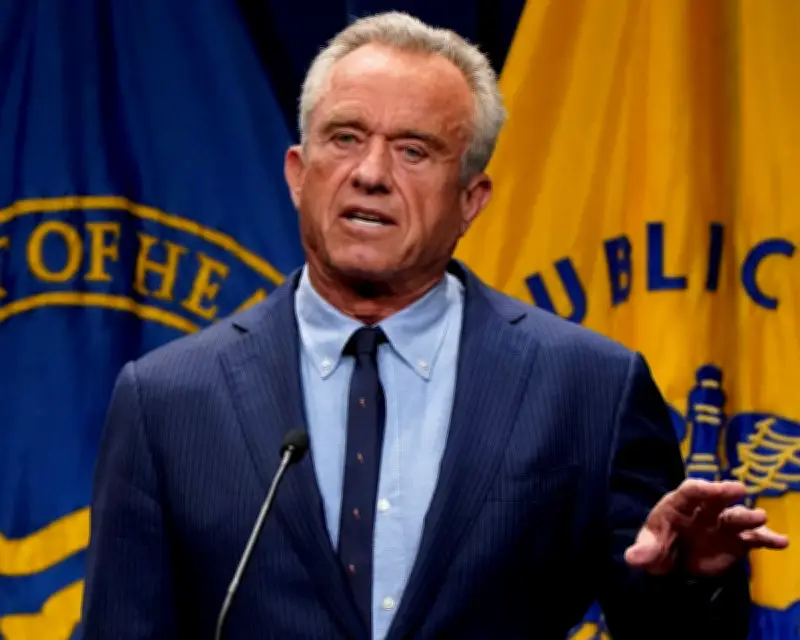
Some states agreed to the requirements, and ten other passengers returned home to self-quarantine. Florida refused the conditions. Michael Bell, deputy director of the division of healthcare quality promotion at the CDC, concluded that Perryman could effectively quarantine at home with daily remote symptom monitoring and public health support. However, on June 15, Robert F Kennedy Jr, Secretary of the US Department of Health and Human Services (HHS), overrode that conclusion and continued the mandatory quarantine without citing scientific rationale.
Unprecedented Override of CDC Medical Advice
Kennedy's decision to overrule CDC medical advice is 'unprecedented,' Hodge said, setting a 'very bad precedent for just how Americans might expect to be treated if they're coming back to the United States with highly infectious or even semi-infectious conditions.' HHS spokesperson Courtney Spencer stated that Kennedy 'specifically considered the medical recommendation before deciding to continue the current order' and that the quarantine is necessary to ensure both Perryman's and her community's wellbeing in the absence of proper home monitoring by state authorities.
Constitutional Concerns Raised
Officials are required to use the least restrictive option to contain health threats, meaning they should choose measures that are effective while minimizing civil liberties infringements. Hodge noted that the situation is 'highly atypical' for the CDC, as state and local officials usually set quarantine measures with CDC guidance. Now, even when states are willing to manage cases, the CDC has been reluctant to release individuals.
Both Gostin and Hodge were involved in drafting the CDC's 2017 quarantine rules and opposed allowing the HHS secretary to overturn medical reviews. While the rules permit this step, Gostin called it 'just unconstitutional.' He added, 'I was assured that this would be very rare, and this was not supposed to happen. There is a flagrant violation of her constitutional rights.'
Lack of Accountability and Scientific Justification
Gostin criticized the lack of accountability, noting that 'Secretary Kennedy issued the order, and he's reviewing his own order, which is outrageous.' He argued that 'a person's liberty should not hinge on a political calculation, and that's exactly what this is.' Hodge emphasized that officials must provide scientific justification for quarantine orders, as required by the Constitution and Congress.
Heavy-handed requirements like institutional quarantine for hantavirus or travel bans from the DRC, Uganda, and South Sudan may lead people to evade rules or withhold information, making it harder for public health officials to track cases and contain outbreaks. 'The threat is not knowing cases that are actually out there, because we created a climate to which people would not self-report,' Hodge said.
Hypocrisy in Approach
Experts also noted the irony of Kennedy's actions given his previous advocacy for medical freedom and opposition to lockdowns during the Covid pandemic. Gostin remarked, 'The whole raison d'etre of Secretary Kennedy's tenure has been based upon medical freedom, 'the patient gets to choose,' and yet here they're issuing immediately a compulsory deprivation of liberty.' He added that officials like Kennedy and Jay Bhattacharya, director of the National Institutes of Health, criticized the Biden administration and blue states for their Covid response, yet their first response now is not public health or science, but coercion.




