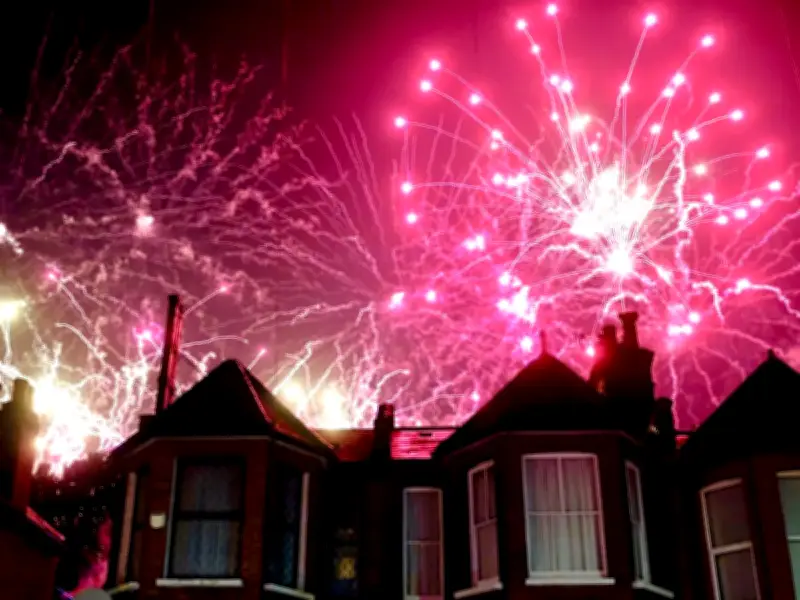
NHS England has issued a warning after a surge in hospital admissions for firework-related injuries. Health chiefs reported 85 firework-related hospital admissions across the country last November, up from 60 the year before. New data shows that a number of those admitted had sustained burns and other injuries.
Across the whole of 2025, admissions reached 161, compared with 120 the previous year. The warning comes as a family from Hartlepool urged people to stay safe after a firework accident left their son with life-changing injuries.
Teenager's life-changing injury
Aleks Stasiukiewicz, 17, lost his left eye in November 2024. He was taken to the James Cook University Hospital in Middlesbrough, where consultants said he had lost his left eye and part of his eyelid. Specialists worked to remove fragments of fireworks from his eye socket before inserting a ball-shaped prosthesis to replicate the movement of a real eye.
Aleks said: "On the evening of the accident, I attended an organised fireworks display at a local rugby club, before joining my friends at a nearby park. I remember someone lighting a firework, but it didn't go off as intended so I went over to relight it. It exploded instantly, knocking me to the floor."
His mother, Julie, went to the scene after Aleks' friend called her to say there had been an accident. She said: "When I arrived, Aleks was already lying in the ambulance, I didn't take my eyes off him, I was devastated. I had to watch as his eye leaked down the side of his face."
NHS and safety advice
Aleks said: "When people say don't play with fireworks, listen. I know it can be tempting to break the rules and have a bit of fun but fireworks are incredibly dangerous."
Professor Frankie Swords, NHS medical director, said Bonfire Night "is a great opportunity to be with friends and family" but children can be the ones paying the price when things go wrong. "Some have suffered life-changing injuries, turning what should be a night of fun into a nightmare," she said. "So it's vital you keep a close eye on children and loved ones to help prevent accidents like this, and know the NHS is available 24/7 if you need us. Call 999 in an emergency, and the NHS website also offers information on the prevention and treatment of burns, as well as first aid measures, for anyone who needs it."
The Royal Society for the Prevention of Accidents (Rospa) is urging people to enjoy fireworks at professionally-organised public displays. People buying them for home should look up and follow the firework code, which includes only buying fireworks from reputable retailers, using them one at a time, lighting them with a taper at arms length and never going back to a lit firework, it said.
Rospa and expert warnings
Becky Guy, senior policy manager at Rospa, said: "Bonfire Night should be a time for families and communities to come together safely, but these latest figures show that far too many people are still suffering serious injuries from fireworks. Particularly worrying is the increase in the number of children being admitted to hospital. Fireworks are not toys. A moment's carelessness can result in serious burns, eye injuries and permanent scarring."
She added: "We highly recommend people attend organised fireworks displays wherever possible. Not only are these much safer, they are more spectacular too. If you can't make it to an organised display and are planning fireworks at home, please remember some simple precautions. Keep children under close supervision, follow manufacturers' instructions and think carefully about the space you have available before choosing fireworks. Not every garden is suitable for every type of firework, so always check the recommended safety distance before buying. We would also encourage people to think about neighbours, pets and wildlife by letting people know about displays in advance and considering lower-noise fireworks where possible."
Anna Baker, clinical nurse specialist in children's burns and plastics, said: "Always stand well away from fireworks and dispose of sparklers in cold water buckets. Sparklers can get up to 4,000 degrees when lit and it is where we see the most common cause of injuries during fireworks seasons."