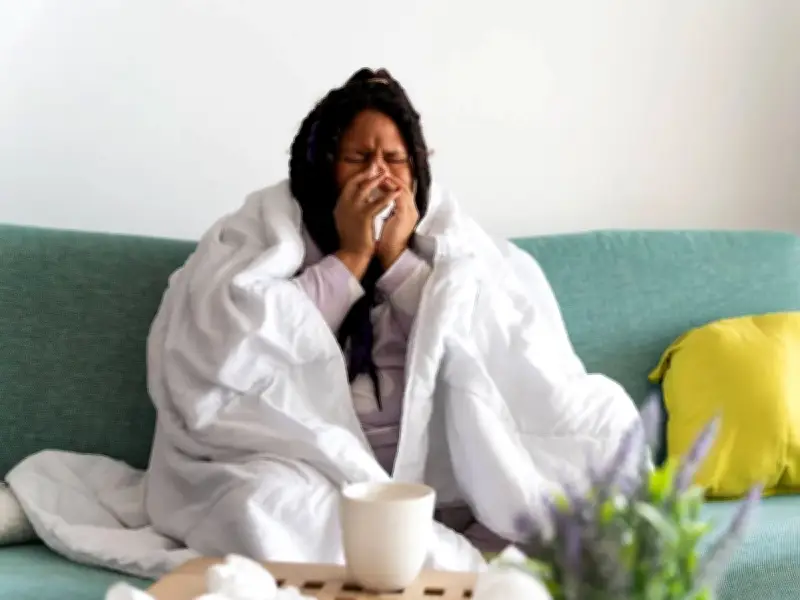
Work colleagues have been named Britain's biggest "Health Traitors", with one in six Brits (16%) believing someone from their workplace is the most likely person to pass on a seasonal bug. That figure narrowly beats partners, who were blamed by 15% of respondents.
School-age children (9%) and fellow commuters (7%) were also among those blamed when sniffles and sneezes begin to circulate. Nowhere fills Brits with more fear than a packed Tube, train or bus, with one in three (34%) worried about catching something while squeezed onto public transport.
Many Brits admit hiding illness
Despite pointing fingers at others, the nation is not completely innocent. Research among 2,000 adults for high fibre baobab brand UNROOTED revealed that 41% have deliberately hidden the fact they were poorly during the past year. The most common excuse was that it was "just a cold", while others did not want to make a fuss or decided they were well enough to carry on.
More than one in five claimed they were "just tired", one in six attempted to stifle a cough, and 13% fought the urge to sniff. Some soldiered on regardless, with 14% going into work while concealing an illness, 7% meeting friends, and 5% even attending a date.
What counts as a 'Health Traitor' offence
Brits are equally critical when they spot somebody else spreading germs. More than half (54%) believe coughing without covering your mouth is the ultimate Health Traitor offence, followed by sneezing without covering up (53%) and failing to wash your hands (49%). Kissing someone while unwell, dragging yourself into work when feeling rough, and turning up at a mate's house while sick are also deemed serious social offences.
Four in five people would feel at least somewhat let down if someone knowingly arranged to meet them while ill without giving them fair warning.
Unusual tactics and a fibre blind spot
While Brits are trying to avoid everyone else's germs, some are turning to unusual tactics to keep illness at bay. One in six have held their breath while passing someone coughing or sneezing, 15% have jumped into a piping hot bath, and 12% have gargled salt water. Others have turned to raw garlic, cold showers and ice baths. Three per cent have even slept with an onion in their bedroom, while 2% have stuffed onion or garlic into their socks.
Seven in 10 believe "man flu" is real, with more than a third utterly convinced that men make a far bigger fuss about being ill than women.
The research also exposed a blind spot around fibre, with more than half of Brits (55%) thinking about vitamin C when attempting to strengthen their immune health, yet just 16% consider getting enough fibre. While nearly half actively attempt to obtain adequate vitamin C through their daily diet and 29% focus on protein, just one in four (24%) make certain they consume enough fibre.
Registered Dietitian Nichola Ludlam-Raine said: "We can't completely control who coughs next to us on the train or what children bring home from school, but we can control many of our everyday habits."
"There isn't a magic ingredient that stops you getting ill, but eating well, sleeping adequately and supporting gut health with a varied, fibre-rich diet are sensible foundations."
"And right now, the baobab fruit is the buzz word amongst nutrition experts, thanks to its naturally high fibre content and wider nutritional benefits."
Britons expect to spend roughly nine days feeling unwell between October and the close of December, shelling out an average of £119.50 on vitamins, supplements, functional foods and drinks in an effort to ward off seasonal ailments.