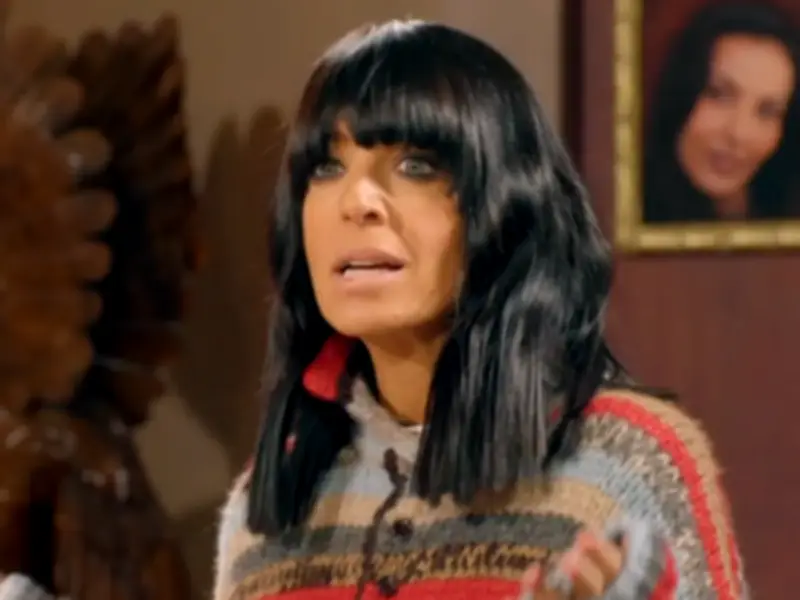
Claudia Winkleman, the 54-year-old presenter of The Traitors, has opened up about living with myopia, or short-sightedness, revealing how the condition has impacted both her personal life and television career. She has previously admitted that her eyesight problems have caused her to walk into walls, left her unable to drive, and made reading a challenge.
In 2021, Winkleman told The Sun: "I can't even begin to tell you how blind I am. It's embarrassing. I can't read the autocue. My eyes have deteriorated so badly, I'm not meant to drive. I am doing the wrong job."
Despite undergoing two operations to improve her vision, the broadcaster has acknowledged that she continues to experience difficulties, particularly when reading. She has found ways to manage the condition while continuing her television career, including using specially made glasses and contact lenses, enlarged autocue text, and memorisation techniques.
Rising Prevalence of Short-Sightedness
Her experience comes as an eye specialist warns that short-sightedness is becoming increasingly prevalent worldwide, with the number of people affected projected to reach five billion by 2050. Mr Mfazo Hove, a consultant ophthalmic surgeon and founder of Blue Fin Vision, has highlighted the growing concern surrounding myopia, particularly among children in the UK.
The condition causes distant objects to appear blurred, while close-up vision generally remains clear. According to the NHS, myopia occurs when the eyeball grows too long or the cornea curves too steeply, causing light to focus in front of the retina rather than directly on it. Moorfields Eye Hospital estimates that around one in three people in the UK have short-sightedness.
Symptoms and Risks
Explaining the symptoms to look out for, Mr Hove said: "The main symptom is the same at any age: distance vision becomes blurred, while nearer objects usually remain clearer. The difference is who notices."
Adults usually spot it quickly, because road signs, the television or faces across a room start to look soft. Children may not complain. They often assume everyone sees the way they do, so parents and teachers have to watch for clues. These include squinting, sitting very close to the TV, holding a tablet near the face, or losing interest in the board at school or in ball sports. Eye rubbing and headaches can also occur, although they have many other causes.
The surgeon warned that myopia can progress throughout childhood as the eyeball continues to elongate, potentially increasing the risk of serious eye conditions later in life. "The earlier it starts, the higher it usually ends up. Higher myopia carries a greater lifetime risk of retinal detachment, myopic macular degeneration and glaucoma," he cautioned.
He added: "That is why we monitor eye length alongside their prescription, so we can assess progression rather than simply update their glasses. In adults, myopia is usually more stable. A new or sudden change in short-sightedness in adulthood should always be checked by an eye specialist, because it can be an early sign of cataract or changes in blood sugar."
Global Projections and Management
Mr Hove also drew attention to the rising number of adults living with the condition. According to his data, around a quarter of the world's population was short-sighted in 2000, with projections suggesting that this could increase to approximately half the global population by 2050 — equivalent to almost five billion people.
"Much of this reflects short-sighted children growing into short-sighted adults, because myopia that starts in childhood does not go away," he explained. "Some adults also develop myopia for the first time, while others continue to become more short-sighted, particularly during their twenties. That is why the focus is increasingly on childhood. Slowing progression early is an important way to reduce the number of adults living with high myopia and its complications."
Moorfields Eye Hospital suggests several measures to help with myopia: spending at least two hours outdoors daily to reduce the risk of short-sightedness in children; limiting near-work and screen strain by keeping books and devices more than 35cm from the eyes and taking regular breaks; using specialist lenses such as MiYOSMART and Stellest glasses or MiSight contact lenses to slow progression; low-dose atropine drops which may help slow the worsening of short-sightedness in children; and correcting vision with prescription glasses or contact lenses, which improve clarity but do not cure the underlying eye condition.