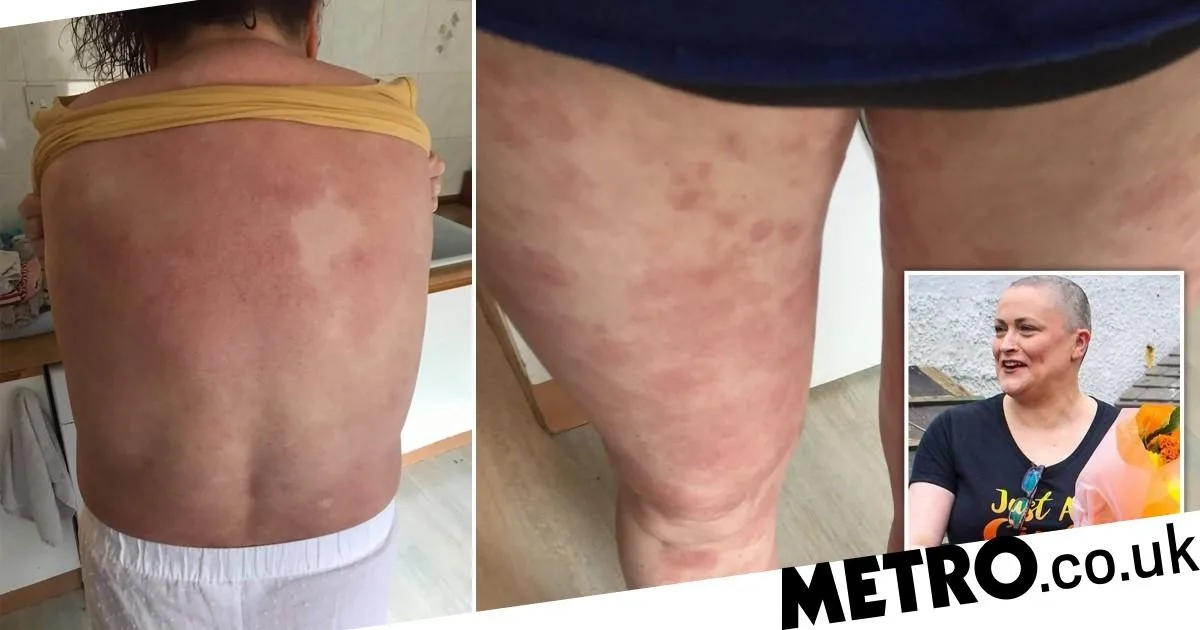
A mother from Dunfermline, Scotland, who spent two decades being treated for what doctors thought was eczema has discovered she actually has a rare form of blood cancer. Vivian Neil, 43, first noticed itchy rashes across her body in her early 20s and was repeatedly prescribed skin creams, but the condition was mycosis fungoides, a variant of cutaneous T-cell lymphoma.
Neil said: 'The doctors always thought it was eczema but now, with the diagnosis, they realised that it was the cancer all along. It steadily got worse over the years but it is so hard to diagnose.' The rash also affected her confidence, leading her to always cover her skin with clothing or tights.
In February 2018, a patch turned brown, prompting a GP referral to a dermatologist at Queen Margaret Hospital. A biopsy confirmed the cancer. 'I was in complete shock when I got told I had cancer and then to be told it was a rare incurable blood cancer,' Neil recalled. The cancer is not terminal unless tumours develop on the patches; with management, she could live another 20–30 years.

Treatment has been challenging. In 2019, UVB light therapy caused a severe allergic reaction, and subsequent PUVA therapy was delayed due to Covid. By early 2023, patches covered 90% of her body, and she was prescribed methotrexate, which caused nausea, headaches, fatigue, hair thinning, and bleeding gums. The drug was ineffective, so she is now undergoing total skin electron beam therapy at Freeman Hospital in Newcastle.
Neil shaved her hair off before starting chemotherapy and raised £1,800 for peacocks at Pittencreiff Park, where she volunteers. She said: 'The peacocks saved me. The birds were my therapy.' She also fundraised for travel and accommodation for her treatment in Newcastle, and was 'completely overwhelmed' by the public's generosity.