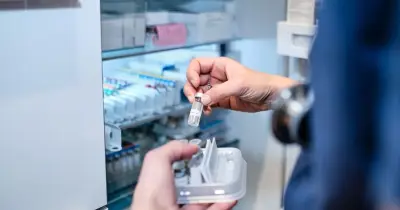
Australians living with multiple sclerosis will continue receiving cheaper access to life-changing medical treatments after an expert advisory panel decided to maintain taxpayer subsidies for key drugs. Health Minister Mark Butler confirmed on Thursday that the drugs Ocrevus, Kesimpta and Lemtrada would not be removed from the Pharmaceutical Benefits Scheme (PBS), ending uncertainty sparked by their manufacturers pushing the government to pay more.
Butler stated he supported the drugs remaining on the PBS because of their clinical benefits. However, the advisory committee has called for a rapid review of MS drug use, to be completed by the end of 2025, when a final decision will be made. This follows recent months where pharmaceutical companies have pulled drugs from the PBS or threatened to do so, raising questions about the scheme's stability.
How the PBS Works
In Australia, about 90% of medicines are subsidised through the PBS to keep prices down, enabling affordable access to treatments that would otherwise cost thousands of dollars. An independent expert body, the Pharmaceutical Benefits Advisory Committee (PBAC), first evaluates a drug's health benefits and cost-effectiveness before recommending subsidy. The government then negotiates wholesale prices with drug companies but does not buy the medicines; instead, it subsidises the retail price at pharmacies—$7.70 for pensioners and $25.00 for others. The PBS cost to the government is the difference between wholesale and retail prices.
This system gives companies access to a larger, guaranteed market: cheaper drugs see higher usage and prescription rates, offsetting price reductions through increased volume. Reference pricing also applies, where if multiple drugs treat the same condition safely and effectively, the lowest-cost drug sets the benchmark. If a cheaper treatment becomes available, the government informs other manufacturers of planned price cuts; if they refuse, the drug can be removed from the PBS.
Reference Pricing and MS Drugs Under Threat
For MS treatments Kesimpta and Ocrevus, a third drug, Briumvi (by TG Therapeutics), was added to the PBS in late 2025 at a lower cost. The government told Novartis and Roche it would now pay the same price as for Briumvi. While negotiations are confidential, reports suggest this could mean a 50% price cut for the companies. In the US, Kesimpta can cost over US$10,000 monthly; in Australia, a monthly dose costs the government $2,231, while ocrelizumab costs $16,500 per course—patients contribute just $25 under the PBS.
Roche's general manager Dr Nic Horridge stated, "This cut, should it stand, would make it impossible to keep Ocrevus on the PBS." Advocacy group MS Australia argues it is wrong to treat the three therapies as interchangeable because MS is a heterogeneous disease, and no single therapy suits all patients. Roche and Novartis claim their drugs are innovative and unique, and that price cuts punish innovation.
Dr Patricia Ranald, convener of the Australian Fair Trade & Investment Network (Aftinet), has studied the PBS for 20 years. She rejects the argument that high US prices fund research and innovation, saying, "They [drug companies] are amongst the most profitable companies in the world, and that's because they have a 20-year monopoly on medicines that people really need." She added, "What is going on at the moment is really a concerted push at the US government level and at the pharmaceutical company level to just get higher prices across the board."
US Pressure and the Future of the PBS
Donald Trump has argued that pharmaceutical companies discount drugs for foreign markets, offset by higher US prices. In 2025, he introduced the "Most Favoured Nation" drug pricing policy, requiring US prices to align with the lowest prices in other developed countries. Critics say companies will not compromise US profits, instead raising prices in smaller markets or pulling out. Other countries with similar systems, like Sweden, face similar pressures.
Adjunct Professor Terry Slevin, head of the Public Health Association of Australia (PHAA), says drug companies are leveraging this situation: "Like every business they will seek to maximise shareholder return. We need a strong government determined to protect its interest and the interest of Australian patients and taxpayers." The PHAA and Aftinet jointly wrote to Butler rejecting Trump's claim that US consumers subsidise lower prices abroad, stating, "The truth is that the US is the only advanced industrialised country which does not have a system to regulate the wholesale price of medicines."
On Tuesday, Butler described US pressure as "a significant concern." He acknowledged in June that while the PBS is world-leading, "the PBS needs reform." On Thursday, he accepted the PBAC's recommendation for a rapid review of MS drug use to be completed by December 2025. The drugs will remain on the PBS while the health department works with companies on future supply.
Evidence and Innovation Challenges
In 2024, the government published findings from the Health Technology Assessment (HTA) Review, which examined how health technologies, including drugs, are assessed. The review found that multiple treatment options are often necessary because individual patient responses vary. It also noted that while the PBS accepts this, companies do not always provide evidence showing why their drug is better or unique to justify a higher price. Butler commented, "We are seeing situations where innovative therapies are held back because of how they would be assessed against older, much cheaper medicines."