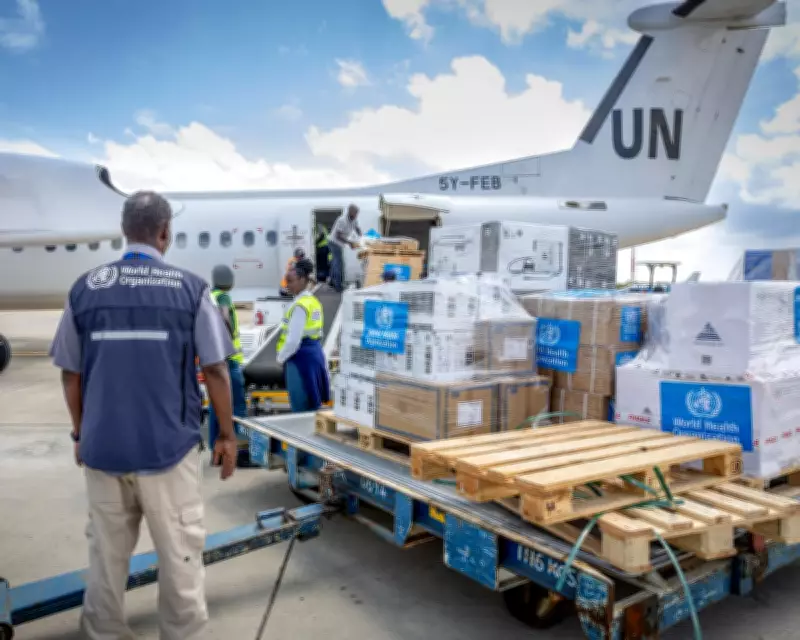
The World Health Organization is deliberating the potential deployment of experimental vaccines and treatments to combat the escalating Ebola outbreak in the Democratic Republic of the Congo. WHO Director-General Dr Tedros Adhanom Ghebreyesus expressed deep concern over the outbreak's speed and scale, reporting at least 500 suspected cases and 130 suspected deaths since the outbreak began. This marks a significant increase from approximately 200 cases and 65 deaths when first announced on Friday.
Bundibugyo Strain Presents Challenges
The current outbreak is caused by the Bundibugyo strain of the Ebola virus, for which no approved vaccine or treatment exists. This complicates response efforts, as existing vaccines are tailored to the Zaire strain. Dr Tedros noted that the number of cases and deaths is expected to change as field operations intensify, including enhanced surveillance, contact tracing, and laboratory testing.
Regional Impact and International Response
Thirty cases in Ituri province have been confirmed through laboratory testing, along with one death and a case in Kampala, Uganda. Additionally, a US citizen has tested positive and has been transferred to Germany. The WHO will convene its emergency committee on Tuesday to advise on control measures for affected countries, their neighbours, and the global community. A technical group is also being assembled to assess potential tests, vaccines, and treatments.

Anne Ancia, the WHO's representative for the DRC, indicated that the outbreak could persist for an extended period, citing a recent Ebola outbreak that lasted two years and claimed nearly 2,300 lives between 2018 and 2020. She noted that international experts are evaluating candidate vaccines and treatments for potential use in this outbreak.
Conflict and Healthcare Access Hinder Response
The response is further complicated by ongoing armed conflict in the affected region, which limits access to healthcare. Dr Maria Guevara, international medical secretary at Médecins Sans Frontières, emphasised that the healthcare system is broken, with communities unable to access basic medical care. She highlighted that routine immunisation has been severely disrupted by conflict, and the region has faced severe cholera outbreaks. The addition of Ebola, she said, overwhelms an already strained system.
Dr Tedros reported that cases among health workers indicate potential spread in clinics and hospitals, and significant population movement due to work and conflict exacerbates the situation. Ituri province is described as highly insecure, with intensified conflict since late 2025 leading to civilian deaths and over 100,000 newly displaced people. He warned that displacement is a known factor in Ebola outbreaks.
Urgent Measures and Supplies Deployed
The WHO has mobilised over 40 experts to the field, alongside national responders, and has sent 12 tonnes of supplies, including personal protective equipment for frontline health workers. This is the 17th Ebola outbreak in the DRC since the virus was discovered. Ebola spreads through direct contact with body fluids from infected people or animals, causing symptoms such as high fever, vomiting, and internal and external bleeding. The average fatality rate is about 50%, varying from 25% to 90% in past outbreaks.
The outbreak was declared a public health emergency of international concern on Sunday, marking the first time a WHO director-general has made such a declaration before convening an emergency committee. The US officially left the WHO in January, a move attributed to former President Donald Trump's criticism of the organisation's handling of the Covid-19 pandemic.