

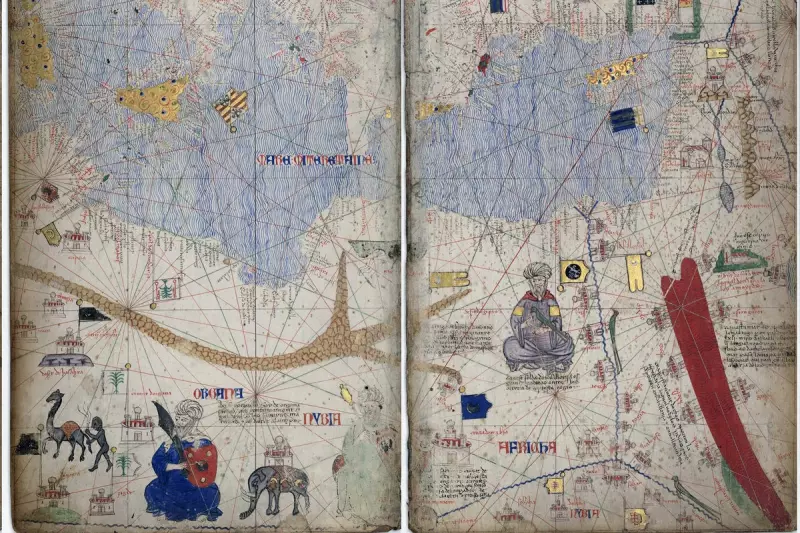
Scientists have finally pieced together the catastrophic chain of events that brought the Black Death to medieval Europe, identifying a series of massive volcanic eruptions as the initial trigger. A groundbreaking study reveals how a climate disaster paved the way for one of history's most devastating pandemics.
The Climate Catastrophe That Preceded the Plague
Research from the University of Cambridge and the Leibniz Institute for the History and Culture of Eastern Europe (GWZO) points to a major volcanic event, or cluster of eruptions, around the year 1345. This event injected vast quantities of ash and gases into the atmosphere, creating a persistent haze that blocked sunlight and caused a significant drop in temperatures across the Northern Hemisphere for several consecutive years.
By analysing tree rings from the Spanish Pyrenees, the team discovered evidence of these extreme conditions. Professor Ulf Büntgen from Cambridge's geography department identified consecutive 'Blue Rings' in the wood samples, indicating unusually cold and wet summers in 1345, 1346, and 1347. This climate data was corroborated by historical accounts of strange cloudiness and dark lunar eclipses, classic signs of high-altitude volcanic aerosols.

A Fatal Trade: From Famine Relief to Pandemic
The resulting climatic shift had an immediate and dire consequence: widespread crop failures across the Mediterranean region. Facing the threat of starvation and potential civil unrest, the powerful Italian city-states activated their established long-distance trade networks.
"For more than a century, these powerful Italian city states had established long-distance trade routes across the Mediterranean and the Black Sea, allowing them to activate a highly efficient system to prevent starvation," explained Dr Martin Bauch, a historian of medieval climate and epidemiology at the GWZO. Their solution was to import grain from producers around the Black Sea.
This life-saving decision, however, had a deadly unintended consequence. The ships carrying precious grain also carried infected rats and fleas harbouring the Yersinia pestis bacterium. This pathogen, which originated in wild rodent populations in central Asia, thus found its way to European ports, unleashing the Black Death between 1347 and 1353.
Modern Relevance of a Medieval 'Perfect Storm'
The study, published in the journal Communications Earth & Environment, provides the most complete picture to date of the 'perfect storm' that led to the pandemic, which killed an estimated 25 to 50 million people in Europe alone.
The researchers emphasise that their findings are alarmingly relevant today. "Although the coincidence of factors that contributed to the Black Death seems rare, the probability of zoonotic diseases emerging under climate change and translating into pandemics is likely to increase in a globalised world," warned Professor Büntgen. "This is especially relevant given our recent experiences with Covid-19."
The research underscores how interconnected climate, ecology, and human society are, and how a disruption in one part of the system can have catastrophic, unforeseen consequences in another—a lesson from the 14th century with profound 21st-century implications.






