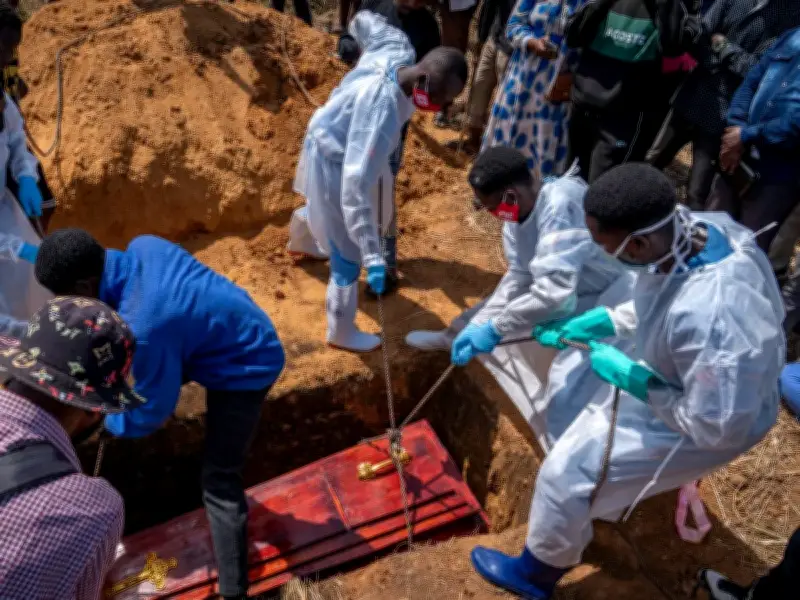
More than 5,000 people have now died in the Ebola outbreak in DR Congo, with fears that authorities have been unable to contain the spread of the virus.
Data from the Congolese Ministry of Health showed that the disease has killed 5,026 people out of 10,351 infected - a fatality rate of just under 50%. The latest outbreak, caused by the Bundibugyo strain of the virus, began in mid-May, and has since spread to 67 out of the country's 178 health zones in eight of 26 provinces.
Second deadliest outbreak in history
It is already the second deadliest Ebola outbreak in history, behind only a two-year-long West Africa outbreak between 2014 and 2016, which killed 11,000 people across multiple countries.
The World Health Organization (WHO) said the outbreak had passed a 'very tragic milestone'. Dr Patrick Otim from the WHO said: "It is a very tragic milestone because it is just not a number. It is families and communities that have been devastated by this outbreak. The number also shows the severity of this outbreak."
Struggles to contain the virus
The Bundibugyo virus has no known vaccine or treatment, with health workers usually treating symptoms, such as dehydration and shock, and co-occurring bacterial infections. Authorities have struggled to keep on top of tracing contacts and testing - two vital tools in containing an outbreak - and have also faced scepticism from locals in many areas.
A nurse was killed while responding to an Ebola alert last week, and a politician from the ruling party was killed in September after advocating for health measures on the radio. Health workers have also gone on multiple strikes, shutting down facilities where they treat infected people, over long delays in payments by the government.
Strikes and spread beyond Congo
One walkout came at a treatment centre in Tchomia, Ituri, yesterday, where health workers demanded four months of unpaid wages. Moise Mugenyi, one of the striking workers, said: "We are tired of requesting our salaries. If they want to pay us, they will. Today, being able to feed our families has become a real problem."
Dr Justin Mukonkole, acting head of response operations in Ituri, urged workers to be patient while authorities respond to their demands. Local government officials have meanwhile decried a lack of fuel and financial resources from the central government.
In October, both Kenya and Nigeria confirmed a small number of cases of Ebola. Kenya has confirmed eight cases and two deaths, while Nigeria's sole confirmed case had been evacuated to Switzerland. It means this outbreak is the first to be recorded in three African regions, making it the most geographically widespread to date.