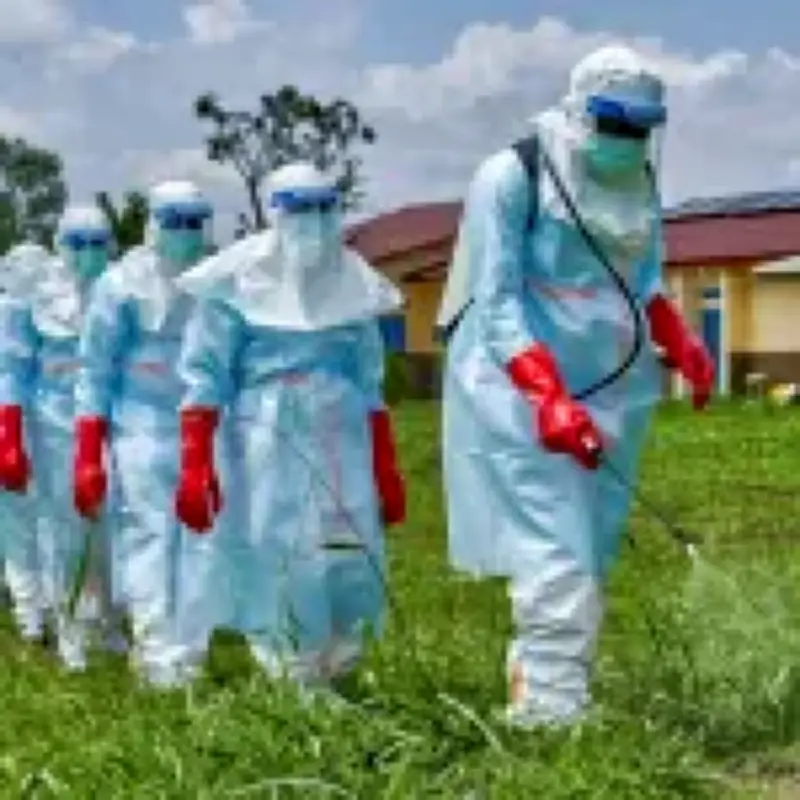
One of Africa's top health officials has warned that the ongoing Ebola outbreak could reach the UK. Dr Jean Kaseya, director general of the Africa Centres for Disease Control and Prevention, compared the rapid spread of the virus to Covid-19, noting that many countries initially assumed there was 'zero risk' of the coronavirus crossing their borders.
Unprecedented geographic spread
Since May, around 10,000 people have been sickened across the Democratic Republic of Congo, with almost 5,000 deaths. Cases have also appeared in Kenya, Nigeria and possibly Uganda, giving the outbreak its widest footprint to date.
Kaseya urged all countries to increase their preparedness. 'We want all countries to know that they are not safe if they don't take appropriate measures,' he said, according to The Guardian. 'Each country, not only in the African region, but all continents, must now increase the preparedness level and the possibility for treatment.'
He added: 'It is the first time three African regions have been affected [by Ebola]. The geographic extension of this outbreak is unprecedented. We don't want to see the UK and other countries become a hotspot.'
UK response and preparedness
Dr Sam Collins, head of guidance, clinical and public health response at the UK Health Security Agency, told Metro that the agency is monitoring the situation. 'The ongoing Ebola outbreak in the DRC and surrounding areas is very serious, but the risk to the general public within the UK remains low,' he said. 'The UK is well prepared to respond safely and effectively to the risk of imported cases arising here.'
Collins said public health officials are screening healthcare and humanitarian workers returning from affected areas. 'UKHSA continues to work with partners including the World Health Organization to monitor the situation closely,' he added.
Fastest-spreading wave on record
The outbreak, Congo's 17th in recent decades, is the fastest-spreading wave of the virus ever recorded, according to the country's health ministry. The previous outbreak, which began in 2018 and was declared over in 2020, took more than 10 months to reach the death toll this one did in three, at more than 1,550 deaths.
No vaccines or treatments exist for the Bundibugyo strain of Ebola behind the outbreak. The virus spreads through direct contact with the bodily fluids of an infected person, and a person cannot spread it until symptoms develop. Bodily fluids from someone who has died of Ebola can also be highly contagious, with transmission occurring during funerals. Unlike Covid, Ebola does not spread through airborne particles.
The outbreak was first detected in Ituri Province in northeastern Congo, which remains the worst-affected area. Experts say the virus spilled over because early surveillance and testing failed to identify the disease's emergence, with deep cuts to aid and attacks on health workers hampering efforts to contain community spread.
Nine cases of Bundibugyo have been reported in Kenya, including two deaths. Nigeria announced its first case of Ebola during the current outbreak last week; the patient had returned from a trip to Uganda and has since been taken to Switzerland for treatment.