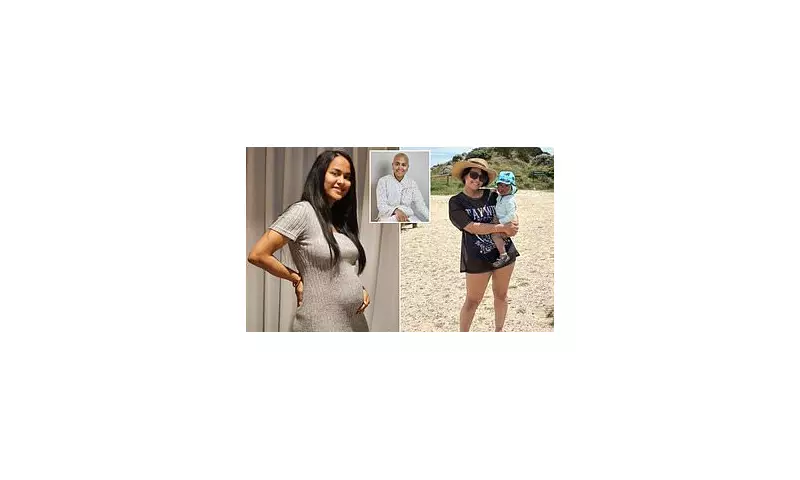
When Reshu Basnyat discovered a small, marble-like lump in her breast in February 2023, the 33-year-old Melbourne finance worker dismissed it as a hormonal change. She had suffered a pregnancy loss earlier that year and assumed the tissue was a temporary side effect.
A Mother's Instinct Leads to a Life-Saving Check
By May, Reshu was pregnant again, but the lump remained unchanged. Although it wasn't visible, a growing concern prompted her and her husband to visit their GP. That decision ultimately saved her life. An ultrasound raised alarms, leading to a swift referral to the Royal Melbourne Hospital for further tests.
Doctors, mindful of her pregnancy, initially reassured her. However, Reshu proceeded with a biopsy. Near the end of her first trimester, she received a devastating diagnosis: an aggressive HER2-positive breast cancer that had already spread to a lymph node.

The Shocking Diagnosis and a Heart-Wrenching Journey
The news was a profound shock. Reshu had been proactive about her health, performing regular self-checks due to a family history of breast cancer and having had a benign lump removed from the same breast in 2011. Back in 2021, she had asked her GP about regular screenings but was told she was ineligible for Australia's free BreastScreen program, which is typically offered to women over 40.
"He said, 'You're healthy, you don't need to do it'," Reshu recalled. "The scans are expensive if you're under 40, and when you're not eligible for the free ones, you just ignore it."
Upon hearing "you have cancer," her immediate fear was for her unborn child, having already endured one loss that year. "I just said, 'I need this baby. I can't survive without him'," she explained.
Treatment Through Pregnancy and a Call for Awareness
Facing the rapid spread of the cancer, Reshu began treatment while pregnant. In August 2023, she had surgery to remove the lump and lymph nodes. This was followed by four rounds of chemotherapy during her second trimester, which brought severe side effects including hair loss, vomiting, and extreme fatigue. Her mother flew from Nepal to help, while her husband balanced work and care.
Doctors delivered her baby boy early, at around 34 weeks. After the birth, Reshu's treatment intensified, involving 14 rounds of chemotherapy, 17 rounds of targeted therapy, and 15 sessions of radiation. She now remains on long-term hormonal therapy, which will continue for five to ten years and currently prevents her from having another child.
Now sharing her story, Reshu hopes to alert other young women. "If my story helps even one person - if it makes someone go and check that lump or get that scan - then I'm happy," she said. She emphasises that breast cancer can affect the young and symptoms can be subtle.
Her experience coincides with a new national initiative, 'The Uncomfortable Cup', launched by the Breast Cancer Network Australia (BCNA) and Tetley tea, to encourage vital conversations about breast health. Tetley is raising funds for BCNA through a limited-edition pink tea pack, with five cents from each sale donated.
For more information or support, visit bcna.org.au or call the free hotline on 1800 500 258.