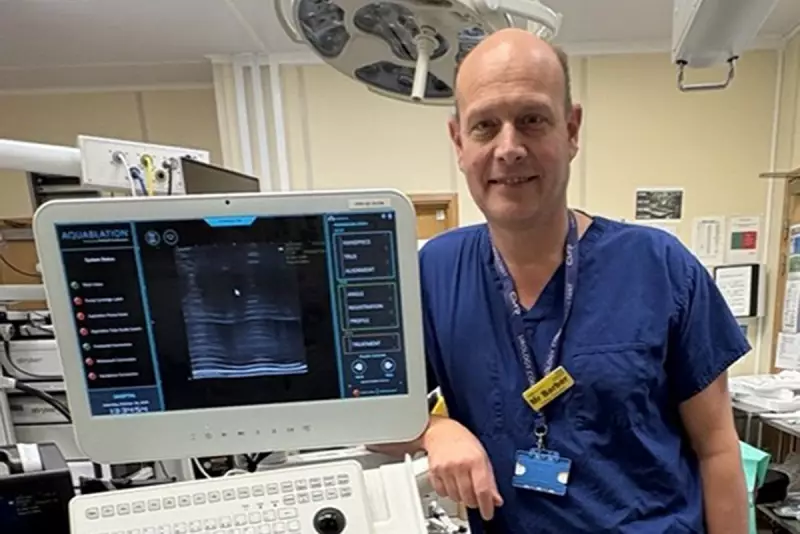
A revolutionary prostate cancer treatment that harnesses the power of water, robotics, and artificial intelligence is now being trialled in the United Kingdom for the first time. This pioneering approach promises a curative option while significantly reducing the risk of life-altering side effects commonly associated with conventional surgery.
How Aquablation Therapy Works
The treatment, known as Aquablation, represents a significant technological leap in oncology. It employs a robotic-assisted, high-pressure waterjet to meticulously ablate, or remove, cancerous tissue from the prostate. Crucially, the system integrates real-time imaging and AI planning to map the prostate with extreme precision. This allows the surgeon to target the diseased cells aggressively while actively preserving the surrounding healthy nerves and muscles responsible for urinary control and sexual function.
A Landmark Trial for European Medicine
The global clinical trial has officially launched in the UK, with The Royal Marsden NHS Foundation Trust in London making history as the first European hospital to recruit a patient. The study, which was announced on Saturday 6 December 2025, will eventually involve a total of 280 patients across seven different nations. The primary goal is to evaluate Aquablation's effectiveness as a curative procedure and directly compare its outcomes against traditional methods.

The motivation for this innovative trial is clear. Standard radical prostatectomy, while often effective, can lead to substantial long-term complications. Patients frequently contend with erectile dysfunction and urinary incontinence, which profoundly impact quality of life. Aquablation therapy is designed to mitigate these risks by offering a more targeted and controlled form of tissue removal.
The Future of Prostate Cancer Care
The arrival of this trial in the UK underscores the nation's role at the forefront of medical innovation. If successful, Aquablation could redefine the standard of care for prostate cancer, offering men a powerful treatment that prioritises both survival and quality of life. The focus on preserving function addresses one of the most significant fears patients face when undergoing treatment.
This development follows increased public awareness of cancer diagnoses, highlighted recently by a Premier League star sharing his own health battle. The work at centres like The Royal Marsden continues to push the boundaries of what is possible, bringing cutting-edge, minimally invasive technology into the clinical setting with the hope of delivering better, more precise care for thousands of patients.