What began as persistent headaches and neck pain that a Doncaster man attributed to his fitness regime turned out to be a devastating and incurable form of brain cancer.
From 'Running Injury' to Seizure and Diagnosis
In January 2022, 31-year-old senior accounts director Sean Ryan Sweeney started experiencing headaches, neck pain, and tingling down his right side. He initially believed it was an injury from his running or weight training. When a physiotherapist could find no cause and discharged him, he was left feeling frustrated and worried as the symptoms lingered and his concentration suffered.
The situation escalated dramatically on July 19, 2022. "I was woken up in the early hours by my partner Lucy after I had a seizure," Mr Sweeney recalled. She immediately called 999, and he was blue-lighted to Doncaster Royal Infirmary within 20 minutes.

A CT scan revealed a concerning anomaly, leading to a referral to specialists at Sheffield Royal Hallamshire Hospital. Further tests uncovered the shocking truth: a grade 3 astrocytoma, an aggressive and incurable brain cancer. Doctors delivered the grim prognosis that he had approximately 10 years left to live.
Awake Surgery, Stroke, and Gruelling Treatment
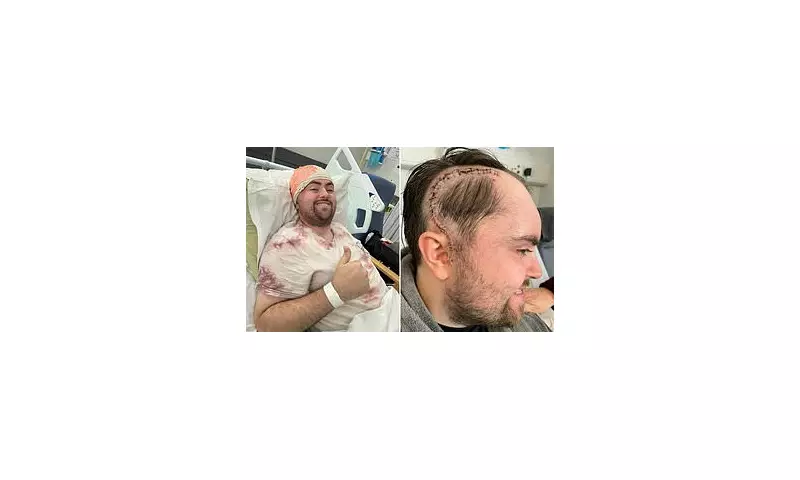
Mr Sweeney's treatment began with an intensive, nearly 10-hour procedure called a craniotomy in November 2022. The surgery was performed while he was awake, a common technique for brain tumour removal that allows surgeons to monitor brain function in real time by having the patient perform tasks.
"When the team explained the awake craniotomy, they said I seemed calm and unfazed, but it was still a huge thing to face," he said. During the operation, he suffered a stroke. "Because I was awake, I remember the exact moment things changed. I could hear the psychologist telling the surgeons my speech was becoming slurred," he described.
Following surgery, he faced a brutal regimen of treatment starting in early 2023: five weeks of radiotherapy and 12 rounds of chemotherapy, which he finished in February 2024. His condition is now stable, but he lives with the ongoing impact. "Finishing treatment doesn't mean everything goes back to normal – you're still living with the impact, and for high-grade tumours like mine there still isn't a cure," he stated.
Raising Awareness and Vital Funds for Research
Now, Mr Sweeney is channelling his experience into raising awareness and funds for the charity Brain Tumour Research. He highlights the stark funding disparity, noting that brain tumours receive far less research investment than many other cancers.
Together with his father-in-law, Carl Hathaway, 59, he completed Sir Chris Hoy's 60KM Tour de 4 cycling challenge, raising over £2,500. The pair plan to tackle the 100km route next year. The challenge was a significant personal milestone for Mr Sweeney, proving his resilience after his arduous medical journey.
Ashley McWilliams, Community Development Manager at Brain Tumour Research, said: "It is only with increased funding and more research that we can find a cure for patients like Sean. His experience highlights the reality that treatment can be gruelling, and recovery can be long, with life-changing consequences even when someone looks well on the outside."
It is estimated that more than 4,500 people in the UK are diagnosed with a malignant brain tumour each year. Symptoms can include headaches, difficulty speaking, vision changes, cognitive issues, and seizures.