Professional Chef Discloses Secret to Perfect Triple-Cooked Chips
Adding a single ingredient to chips during the cooking process will "give them the best flavour you could possibly get," according to a professional chef who has revealed his expert technique. Will Murray, co-owner of Fallow, Roe and FOWL restaurants in London alongside fellow chef Jack Croft, recently demonstrated how to create the "perfect" triple-cooked chips—a dish he claims originated in Britain.
Industrial-Scale Experience and Key Ingredient Revelation
Will Murray explained that he used to prepare triple-cooked chips "a lot" while working at Dinner by Heston Blumenthal, the celebrity chef's namesake restaurant. He shared a detailed step-by-step guide in a video for the Fallow YouTube channel, outlining how he previously made them on an "industrial scale" and noting that "a few things have changed" since then.
The crucial revelation came when Murray stated: "Crucially, I'm going to use beef fat or beef dripping to give them the best flavour you could possibly get. If you wanted to do these at home: patience, a bit of fridge space, you could." He added that most delis and butchers stock beef fat that can be rendered yourself, or alternatively dripping or lard.

Selecting the Right Potato and Preparation Techniques
Murray emphasized that you "can't make good chips" with a potato containing too much starch or sugar. He specified using Agria potatoes, which contain high levels of the enzyme amylase that "contributes to crispiness," helping them remain fluffy inside while turning crisp outside.
During peeling, he highlighted that removing at least 15 percent of the potato is essential for achieving "ruffled edges" and "beautiful little sort of fissures all over your potato." After rinsing the slices to remove excess starch, he explained that finding the right balance is crucial—sufficient starch makes chips crispy, but too much causes them to brown too rapidly.
The Triple-Cooking Process Explained
First stage: Murray added salt to simmering water before placing chips in, advising viewers to leave sufficient space in the pan for movement. After roughly six or seven minutes, ruffled edges begin appearing, requiring gentle stirring "over and over again." At 18 minutes, he switched off the heat and left them to finish cooking while carefully turning with a wooden spoon.
Second stage: After carefully lifting chips onto a tray (noting some might break apart, with smaller pieces becoming the "nice, crispiest bits"), he placed them in the freezer while preparing vegetable oil for the initial fry at 120-140 degrees for approximately eight minutes. He emphasized the need for "gentle heat" and avoiding overcrowding the pan.
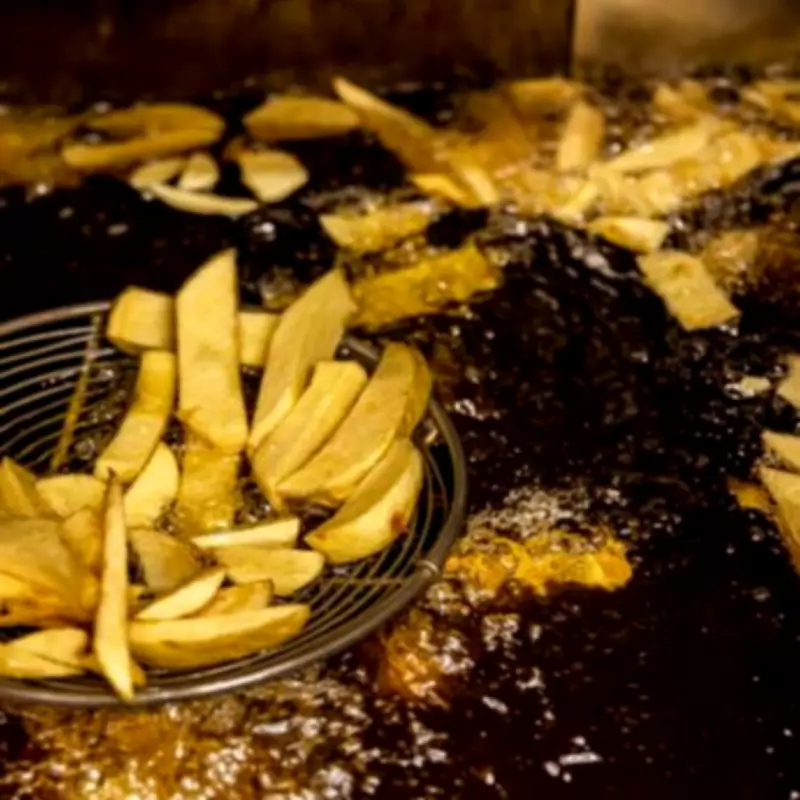
Final stage: Murray introduced beef fat to the oil in a one-to-four ratio (beef fat to oil) and brought it to 180 degrees. After lowering the cooled chips into the pan, the final fry took between four and five minutes. He then removed the chips and seasoned them with fine salt while still hot for optimal flavour absorption.
Practical Tips for Home Cooks
Throughout the demonstration, Murray offered practical advice for recreating the restaurant-quality chips at home. He mentioned that home cooks could use their fridge instead of a freezer for chilling chips between stages, and emphasized checking that chips don't stick to the pan bottom during frying since they're "delicate."
He also revealed they've "found out a better potato to use than the one we used to use," though he maintained that Agria potatoes work exceptionally well for achieving the desired texture and flavour profile.