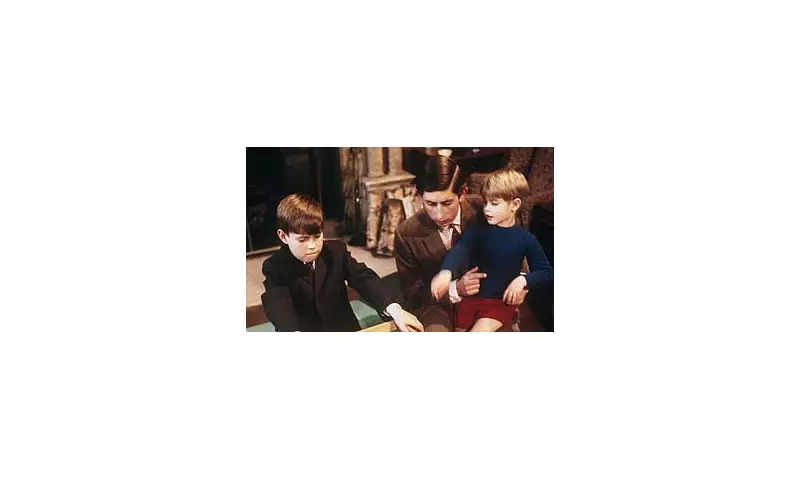
While the economy falters, living costs soar, and global conflicts dominate the news, a more intimate drama is unfolding in a million family WhatsApp groups across the UK: the annual Christmas minefield. Beyond its status as the essential gathering, Christmas Day is the traditional stage where simmering feuds between adult siblings erupt into full-blown conflict.
The Royal Blueprint for Family Discord
First, consider the plight of the commoner a blessing. One man who will not be sharing a mince pie with his brother at Sandringham this year is King Charles. His scandal-embroiled younger brother, the recently renamed Andrew Mountbatten-Windsor, recently precipitated a near constitutional crisis. Simultaneously, Princes William and Harry remain locked in a very public feud they seem unable to resolve. We may envy royal privilege, but at least our own sibling disputes are not played out under the relentless public gaze.
From my perspective as a psychoanalyst, I am consistently struck by how many patients, often well into middle age, remain entangled in battles with a brother or sister. This phenomenon is termed Foundational Rivalry, a deep-seated conflict rooted in early competition for parental attention and love. The unique pain siblings can inflict stems from our long-shared histories; no one can twist the knife quite like a sister or brother. Yet, this intensity also fuels the unparalleled love and unique bond they share.

Understanding the 'Sibling Complex' and Birth Order Beliefs
You may be fortunate and feel unconditional friendship for your siblings. But for those navigating tensions, how can you avoid a festive bust-up that ruins the day and changes nothing? The first step is understanding what being a sibling truly means.
While scientific theory and Freudian analysis have largely debunked the rigid idea of birth order shaping identity, anecdotal beliefs stubbornly persist, especially at Christmas. Eldest siblings often feel anxious to please, middle children may flex their position, and youngest children can be stereotyped as never stacking the dishwasher. What remains true is that all siblings hold strong, often unshakeable, ideas about these roles and ascribe qualities to each other accordingly.
Conflict begins almost as soon as we can raise a chubby fist. We also learn about love from our siblings. Like the King, 83% of the UK population have one or more siblings. Historically, however, psychotherapists overlooked these relationships, prioritising the parent-child dynamic. Freud viewed sibling rivalry as part of the Oedipal Complex. Modern psychoanalytic thinking, however, delves deeper into these 'horizontal' relationships, seeing them not merely as an extension of the fight for a parent's favour but as a complex and crucial developmental journey.
The arrival of a new sibling is profoundly complicated for the elder child. While not classified as a trauma—it is a near-universal experience—it definitively marks the end of babyhood, forcing the elder overnight into childhood. Psychoanalysts now believe these lateral relationships form a 'horizontal axis' that shapes our psyche, social bonds, and our ability to handle adult conflict.
The Sibling Complex describes the powerful identifications siblings have with each other, heightened by the fact they are genetically the closest people to us we will ever meet. All siblings impact each other unconsciously, much like our primary caregivers. Research confirms that serious sibling conflict can lead to anxiety and depression.
A Case Study: Philip, Joe, and a Mother's Will
In my consulting room, I witness how sibling rivalry endures for decades. My patient Philip*, now 59, was 12 when his parents announced with 'great excitement' that a baby brother was coming. Philip recalled his 'horror at this proof my parents were still having sex'. In contrast to Philip's rigid upbringing, baby Joe was indulged from birth. None of the demanding standards Philip faced were applied to Joe.

Despite Joe's poor school performance and refusal to help at home, Philip saw him as their mother's 'golden child'. Joe flunked university and failed in multiple creative careers their mother encouraged. Their mother's death and the revelation of her will brought Philip to therapy. She had bailed Joe out financially multiple times. Philip's fury was visceral. He raged session after session, calling Joe a 'waste of space' and a 'crook'. His triangulated fight for maternal love was laid bare. His rage, half a century later, was deadly.
My role was to help him work through the profound pain of that first 'loss' of his mother, his feeling of replaceability. In therapy, Philip traced these feelings back: returning from school to find his previously busy mother playing on the floor with Joe. She had given up work for this 'surprise' baby. Dutifully nursing her in old age, he always suspected Joe remained her favourite—the will confirmed it.
Gradually, Philip recognised that Joe's life was filled with failure and shame. He realised Joe's attempts at success were partly about idolising his prosperous elder brother. Philip mourned the playful mother he never had but saw how her high expectations had ultimately served him well. He began to empathise with Joe's struggles and understood their mother had a vastly different effect on each of them. Sharing the realisation that parents are imperfectly human is a vital step in maturing sibling relationships. Philip returned in January to report their first Christmas without their mother had been a surprisingly lovely occasion.
Seasonal Survival Tips for a Stress-Free Christmas
Unlike friends and partners, we do not choose our families. Siblings change their parents as they grow, and vice versa. The late Queen was an experienced mother and monarch when Andrew and Edward were born, over a decade after Charles and Anne—here, the impact of birth order is indisputable.
When I listen to patients, I am moved by the passion with which they recount family stories—how fixed their assumptions are about siblings and parents. Membership of that intense, minuscule tribe shapes our formative years and beyond. We care deeply about its survival long after leaving home. Christmas is proof of that yearning, ever more loaded with ghosts of the past and hope over experience.
Follow these rules to ensure a calmer Christmas Day:
- Set personal rules as you might for a child: no name-calling or shouting.
- When a sibling says something annoying, pause. Remember you are independent adults now, not children sharing a room. Ask them why they said it and what was on their mind.
- Apologise if needed. Don't worry about losing face—it's your sibling.
- Model yourself on a great listener you admire.
- Focus on what you share. Lean into shared humour about family stories or habits.
- If all else fails, remember: Christmas will be over soon.