The Independent's journalism is supported by our readers. When you purchase through links on our site, we may earn commission.
‘Let them eat junk’: What ultra-processed food is really doing to our children’s health
As Rachel Reeves announces measures that will make chocolate and biscuits cheaper, Victoria Young talks to nutritionists and health experts about the upside-down logic of making processed snacks even more accessible, while keeping nutritious food still out of reach for many.
Thursday 21 May 2026 18:45 BST

Reeves to cut food costs and offer free children’s bus rides in cost of living package
There will have been a collective sigh of relief from cash-squeezed families around the country at news that Rachel Reeves is planning to cut food costs in a new batch of measures aimed at easing the cost of living crisis and the impact of the Iran war on the UK. On the surface at least, the “Great British Summer Savings” scheme is a well-meaning campaign designed to address the soaring food prices and the astronomical shopping bills. However, with the list of food “staples” set to be cut, including ultra-processed foods (UPFs) such as chocolate and biscuits, many are saying this initiative could do more harm than good. And cost our children dearly in the long run.
Making cheap UPFs even more accessible to people on a budget is not the answer, says Dr Federica Amati, head nutritionist at Tim Spector’s Zoe initiative and nutrition lead at Imperial College School of Medicine. “It is good to see that the government is trying to do something, but from a science point of view the evidence is really clear: we need to be eating a more minimally processed diet high in wholegrains, nuts, seeds, pulses and legumes and omega 3 fatty acids and eat more oily fish.” This is especially important in childhood. “Different stages of childhood have different requirements when it comes to growth, the development of the immune system, and brain structure, but there is an overwhelming window of opportunity before the age of three and another important window of opportunity during puberty, which is the last growth spurt that humans have, when we can help to affect change and build a better body composition for children to become young adults.”
Nutritionists have hit out at the government’s decision to cut the price of biscuits and chocolate (Local Library). “We know that very early in life, UPFs are impacting the formation of a baby’s brains, their growth and early adiposity (fat mass),” says Amati, whose book The Appetite Reset: How to Eat, Drink and Thrive Before, During and After GLP-1s is due out in June. “When you have rapid adiposity in early life, you are more likely to develop diabetes, fatty liver disease – which is on the rise in children – and obesity.”
Childhood obesity is already a major problem, with one in 10 children in reception living with obesity, according to the latest data from the National Child Measurement Programme (NCMP). For 10 to 11-year-olds, the rate is now over a fifth.
Nutritionists and health experts have long been warning that cheap and readily available UPFs are behind this health crisis. While Amati points out that not all UPFs are the same, she does note that it is specifically foods that are nutrient-lacking, like chocolate, biscuits, fruit drinks and fizzy drinks. “They contain lots of calories per bite or gulp, but very little in terms of nutrient density that contribute to the worst health outcomes,” she says.
In a cost of living crisis, she says it would be far more beneficial for a government initiative to create access to foods that are usually out of reach for those on a tight budget – but are actually nutritious. “Some people say: kids just won’t eat healthy food but if we spent time and money reintroducing basic food skills in schools and access to fresh fruit and vegetables it would have a positive outcome.
“A young growing body has pretty high nutritional requirements: the brain is still being built as well as the body itself. And if food delivers energy, but not nutrients, there is a risk of that energy being diverted to fat mass because unfortunately children are more sedentary these days.”

It’s important to separate some ultra-processed foods, like beans, from the more harmful culprits (Getty). Increased adiposity is linked to early puberty and the body’s ability to remain insulin-sensitive. “One of the biggest risks in a nutrient-lacking diet for women under 24 is anaemia; around 40 per cent of women of that age are iron-deficient which can impact on immune function and growth.”
Amati is keen to point out that the occasional sweet treat is not a problem. “This is not about never eating a biscuit again,” she says. “For children eating a nutrient-dense diet, the odd biscuit does not matter because they are hitting nutrient goals”. However, she adds, it's more about the messaging we are giving around food and what we should be promoting as a staple versus an occasional treat: “We should be putting our efforts into exposing kids to the widest variety of whole foods as possible because they are much more likely to consume them.”
We need to facilitate an environment that is not obesogenic by improving access to wholefoods. If you look at France, Spain, Italy, Brazil, Japan, they put much more effort into aiding children’s eating environments to be primarily whole foods. But it is also important to acknowledge some convenient foods are better for you than others.
This is key, says Rob Hobson, an award-winning nutritionist and author of Unprocess Your Family Life, which is aimed at families – who are most vulnerable to the allure of these highly engineered foods. “When we talk about UPFs, I would separate more nutritious UPFs, such as baked beans or simple tomato-based cooking sauces, from biscuits and chocolate. Baked beans may be classed as ultra-processed under some systems, but nutritionally, they are not the same thing. They provide fibre and plant protein and can be a genuinely useful budget food, especially with wholemeal toast or alongside vegetables and give some families a greater ability to eat well.” However, with an average of 66 per cent of the UK’s adolescents’ daily intake now coming from UPFs, it is more important than ever that there is consistent messaging from the government about what we should and shouldn’t be loading into our shopping trolleys.
“I’m sure the intention behind schemes like this is positive, because affordability is a huge issue for many families, but the key question is, what foods are we making cheaper, and what message does that send?” he says. “Biscuits and chocolate are already some of the cheapest and most accessible foods in the supermarket, so while any reduction in food costs may help household budgets, I would much rather see stronger support for the foods children and families are generally under-eating, such as fruit, vegetables, pulses, oats, potatoes, wholegrain bread, tinned fish, eggs, frozen vegetables, tinned tomatoes and other fibre-rich staples.”
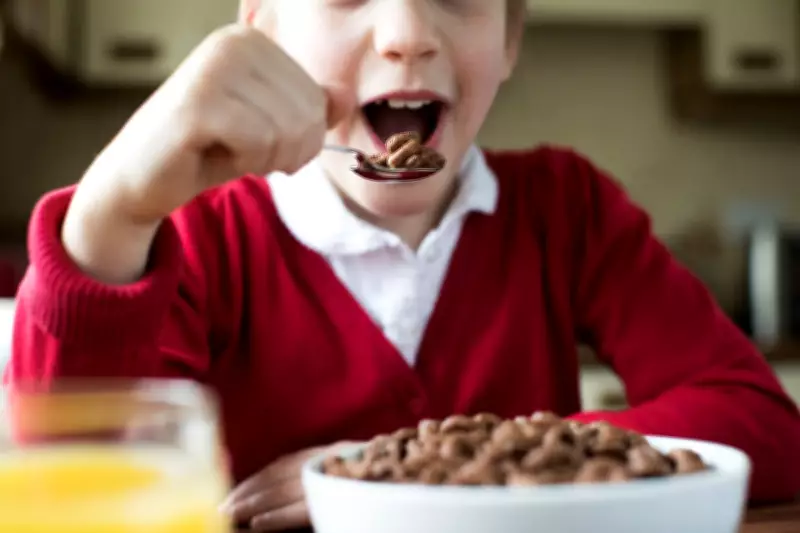
Rachel Reeves announced she would slash import tariffs on ‘staples’ (Parliament TV). The data shows that even in the short-term, a diet heavily based around sugary and highly processed foods can affect appetite regulation, dental health, energy levels, bowel habits and overall diet quality. Diets high in UPFs are also often lower in fibre and plant diversity. “Fibre is important for gut health because bacteria ferment it into short-chain fatty acids, which help support the gut lining, immune function”, says Hobson. “So when children eat fewer fibre-rich foods, there is simply less fuel for those beneficial bacteria. The goal should be reducing reliance on the least nutritious UPFs and building better everyday habits.” A realistic approach could, he says, involve including some healthier UPFs to make mealtimes easier and healthier meals more accessible – think bolognese made with a cook-in sauce. “I don’t think the goal should be perfection, and that message is not helpful for parents,” says Hobson, who points out that a healthy child’s diet can include tinned, frozen and packaged foods. Small changes, Hobson suggests, are swapping sugary cereal for porridge or a lower-sugar cereal with fruit, replacing everyday biscuits after school with toast and peanut butter, yoghurt with fruit, or hummus and pitta. It could also mean adding beans, lentils or frozen vegetables into pasta sauces, keeping fruit visible and easy to grab instead of biscuits and sweet snacks. “A lot of this comes down to what is in the cupboard and what feels normal at home. Children eat what is available, familiar and easy so if we want better habits, we need to make the healthier option the convenient option.”
Dr Dolly van Tulleken is a visiting researcher at Cambridge University's MRC Epidemiology Unit where she completed her PhD on UK government obesity policy, and is the founder of Dolitics, a policy consultancy focused on driving policy change. “All the evidence linking UPFs and the health harms to children are out there from the risk of obesity, diabetes, cardiovascular disease, depression and anxiety as well as attention issues and antisocial behaviour in children,” says van Tulleken. “So while the tariff cut sounds good if it is on products like biscuits and chocolate we risk ending up with an even greater tax bill when dealing with the health consequences that these foods can cause; it is a false economy to cut costs in one place which drive up the financial burden of dealing with the health consequences down the line.”
She points to charity initiatives that are boosting food education. “Trying to feed healthy food to fussy kids who are used to eating UPF can be a challenge. Taste Ed, a charity founded by Bee Wilson, is a parent’s best friend: they do trial taste experiences of fruit and veg in primary schools which makes children more familiar with fruit and vegetables and more open to eating.”
Of course all of these initiatives need funding; something that Van Tulleken believes would be made possible by an even stronger extension on the soft drinks industry levy, which the government has already pledged to do. “I would suggest something much stronger than on one single product – either Henry Dimbleby’s proposed sugar and salt tax, or a UPF food tax like the one introduced in Colombia,” she says. “The soft drinks levy is one of the most successful public health policies to date – we have proof of that. So this is a perfect opportunity to extend that in a way that is aligned with the government food strategy.”
By making food like biscuits even more accessible than they already are, it risks not only sending the wrong message about UPFs but, she says, “having a potentially terrible knock-on effect on increased NHS spending on future health issues.” Something which we will all end up paying for in the end.