Ukrainian Veteran Discovers Peace Through Equine Therapy After Brutal Captivity
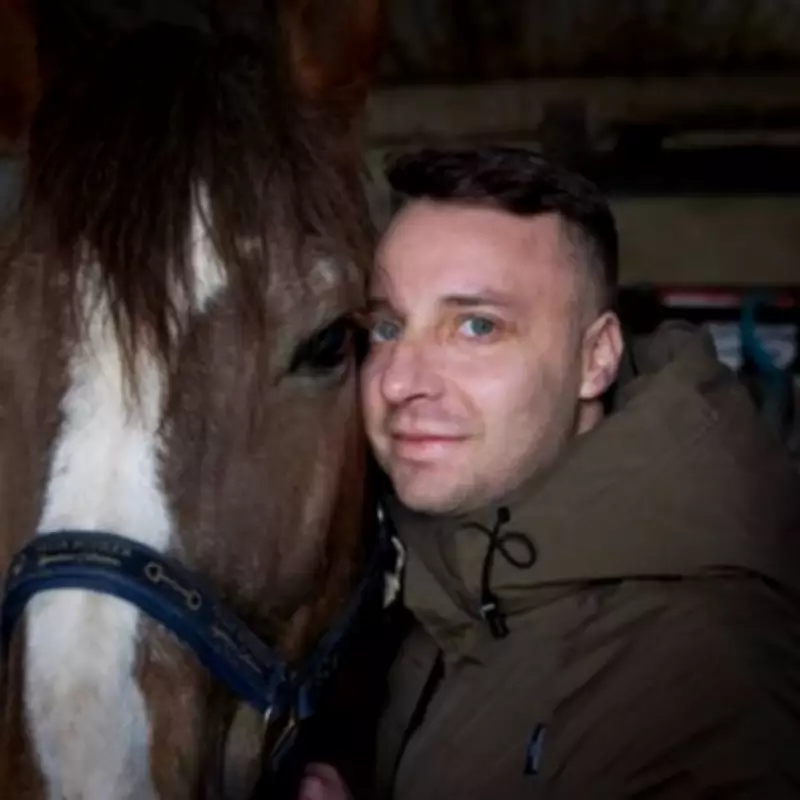
Against a serene snowy landscape, Maksym Ostroushko rides a horse, embodying a hard-won freedom. This Ukrainian military veteran, however, carries the scars of a harrowing past as a prisoner of war. At 27, Maksym was captured by Russian forces after being the sole survivor of his 35-member unit, enduring nearly two years of detention, including a period in Siberia where he faced systematic torture.
A Perilous Mission and Capture
Maksym's ordeal began at the onset of Russia's full-scale invasion four years ago. Serving in eastern Ukraine, he was part of a unit dispatched towards Mariupol, the southeastern port city that fell to Russia in May 2022 after a devastating siege. "We were told our mission was to stop the column of Russian troops riding into Mariupol," he recounts. Stationed in Volnovakha, about 40 miles north, his group sought to engage Kremlin fighters but found themselves trapped. "It was triple encirclement so we could not get through," Maksym recalls. "There were many attacks, and from this group of 35 people, I was the only one left."
In a desperate escape attempt, he was struck but protected by his vest, fleeing to a house. "They started attacking the house, and I was wounded in the head... and I was on fire," he says. Severely injured and with impaired vision, he was captured by Russian troops. This marked the start of a prolonged captivity filled with suffering.

Years of Torture and Survival
After initial treatment for burns and skull surgery, Maksym was transferred to Olenivka in Donetsk oblast, a site for prisoners of war, before being moved to a detention centre in Siberia. There, he spent what he describes as "one year and a half with torture, hunger, cold, and all kinds of humiliation." He details daily abuses: "Every day, sometimes several times a day... they usually just beat or used electro shocks or dogs." Ukrainian language was forbidden, with prisoners forced to speak Russian.
Maksym attributes his survival to fortune and faith. "Maybe God saved me," he reflects. He recalls being drugged and lying on the floor for two days early in his captivity, witnessing extreme violence, including the execution of a fellow prisoner. Later, in a detention centre in Taganrog, southwest Russia, conditions worsened. "It was worse... more violence, beatings, torturing, and every other day interrogations," he says. Falsely accused of terrorism and other crimes, he faced a potential 25-year sentence.
Release and the Road to Recovery
Despite the brutality, Maksym clung to hope of a prisoner exchange. On January 30, 2024, his belief was realized when he was finally freed. "I was extremely happy because I was in such tension for these two years that I could finally breathe freely," he shares. Now living in Kyiv oblast and working in metal processing, he no longer serves in the military but battles post-traumatic stress disorder (PTSD).
Healing Through Hippotherapy
Maksym has found a path to healing through Christian Aid partner, Wings of Victory, a charitable foundation offering hippotherapy—a therapeutic approach using horse riding to aid recovery. During a session in Kyiv oblast, he rode Barcelona, a 10-year-old horse, experiencing the calming effects of the therapy. "I really liked it and I recommend it to all other people, especially those who are in service or have been in service because it really helps," he says. "I feel very quiet, very still, and it's really some kind of satisfaction when you do that."
Viktoria Kramarenko, head of Wings of Victory, explains the benefits: "It's a huge therapeutic effect for your posture, back, and balance because these heavy-weight horses have a very smooth step... it's like a wave." She notes that the horse's body heat provides warming, combined with rhythmic movement, offering a strong rehabilitative impact. The therapy is tailored to individual needs, sometimes involving simply lying on the horse rather than riding.

Looking to the Future
With his trauma gradually easing, Maksym looks ahead to a future he once feared he might never see. He hopes to start a family, expressing a desire for at least two children. His journey from the depths of captivity to the tranquility of equine therapy underscores a resilient spirit and the transformative power of compassionate support.