A close encounter with a great white shark on the New South Wales coast has catalysed a remarkable community-driven safety project, born from one surfer's fight for life and his friend's determination to prevent future tragedies.
A Fateful Day at North Shore Beach
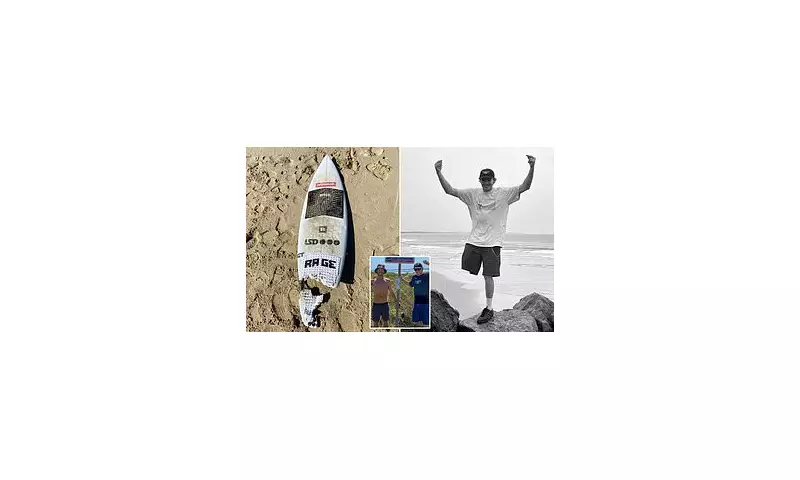
In July 2024, the coastal community of Bonny Hills was shaken when local surfer Kai McKenzie was attacked by a 15-foot great white shark while surfing at the isolated North Shore Beach near Port Macquarie. The young man showed immense bravery, repeatedly kicking the three-metre predator before managing to catch a wave to shore.
Emerging from the water screaming, Kai's survival hinged on an extraordinary stroke of luck. At that precise moment, a retired police officer, trained in controlling life-threatening bleeds, had just arrived to walk his dog on the nearly deserted beach. The officer's quick thinking was pivotal. He used his dog leash to fashion a makeshift tourniquet, effectively stemming the catastrophic bleeding until emergency services could arrive.

"Kai was saved by a retired police officer who was the only man on the beach that day," recounts Danny Schouten, Kai's close friend. "The chances of that guy being there at that precise moment were unbelievable - like winning Powerball."
The Road to Recovery and a Spark of Inspiration
Kai spent two months in Newcastle's John Hunter Hospital. Sadly, his severed leg, which washed ashore, could not be reattached. Yet, displaying incredible resilience, Kai was determined to return to the ocean. By October 2024, just months after the attack, he was back in the water with a supportive group of friends, including Danny.
Witnessing his friend's harrowing experience ignited a mission for Danny Schouten, a high school woodwork teacher and surf lifeguard. He was struck by the stark reality that while countless Australians enjoy the ocean daily, beaches often lack immediate, life-saving resources for traumatic injuries like shark bites.
"It just made me think, how is it that we don't have these resources available?" Danny said. "We know there's a chance this can happen. Why are we not prepared?" The incident echoed a similar event from a year earlier in nearby Port Macquarie, where another surfer, Toby Begg, was saved using a tourniquet made from surfboard leg ropes.
Building the Community SBK: Simplicity Saves Lives
Danny's core realisation was that access to a tourniquet within seconds is crucial to survival, as it prolongs life until professional help arrives. He embarked on creating the Community SBK (Shark Bite Kit), designed specifically for public use at beaches.
Consulting local lifeguards, he devised a simple, effective kit. "I didn't want there to be heaps of parts, because that's going to confuse someone in that situation," he explained. Each kit contains:
- A tourniquet
- Compression bandages and dressings
- An emergency thermal blanket
- An emergency whistle and gloves
- An easy-to-read instruction card
"Kai was fortunate because the person who saved him was trained," Danny noted. "The goal with these kits and the instructions is that hopefully anyone can use them to save a life, even if they aren't trained."
From Local Project to Growing Movement
In a powerful full-circle moment in October 2024, Kai and Danny together installed the very first Community SBK at North Shore Beach—the site of the attack. What began as a local initiative quickly gained momentum. Demand for the not-for-profit kits surged from community groups, surf clubs, and private individuals across Australia.
Danny initially handmade every kit, but growing requests necessitated recruiting local volunteers, including Kai's parents. The project has attracted significant attention, with preliminary discussions held with a NSW government department about a potential order of 150 kits for state beaches.
Funding the effort relies on donations and a GoFundMe campaign, allowing Danny to keep the kits accessible without high costs. "Doing the kits takes up most of my spare time now. But it's all for a good cause," he said. "Ultimately, I really do pray these kits never need to be used. But if they are needed, I hope it makes the difference that saves somebody's life."

A New Paradigm for Ocean Safety
Statistics from the Australian Shark Incident Database show an average of 20 injury-causing shark incidents annually over the last decade. While fatalities remain low, partly due to improved emergency responses, Danny's initiative represents a proactive, community-led layer of preparedness.
As a lifelong surfer, Danny understands the inherent risk. "It's part of Australian culture to swim at the beach, and many of us are never going to stop... The only thing you can do is have respect for sharks in the ocean and be prepared to act if it does happen," he argues. "In a car, you put your seat belt on. In the ocean, you can prepare by having a shark bite kit installed at the local beach."
Every Community SBK is installed in a highly visible and accessible spot near the shore, ensuring it can be reached within those critical first moments after an incident. This story of trauma, friendship, and innovation underscores a powerful shift towards empowering communities to become their own first responders in the face of rare but devastating ocean emergencies.