RAF Veteran's Life Transformed After Parachuting Accident Leaves Him Quadriplegic
Rob Bugden, a former Royal Air Force physical training instructor, experienced a life-altering event that reshaped his entire existence following a catastrophic parachuting accident. Now aged 40, Rob was just 31 years old when a mid-air collision during a training exercise left him with devastating injuries that rendered him quadriplegic.
The Fateful Day That Changed Everything
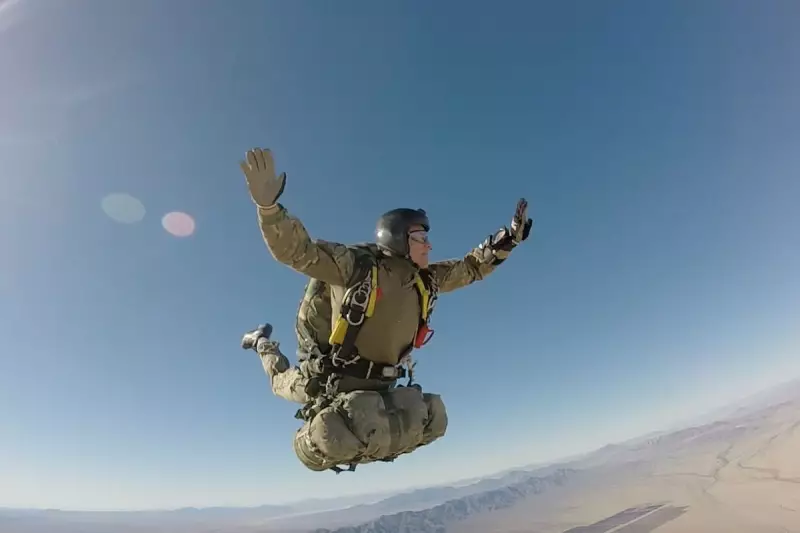
On January 21, 2016, Rob was participating in a parachuting training session in California as part of his role as a newly qualified parachute jumping instructor. Having joined the RAF in 2008 and served as a physical training instructor, he had recently specialised to work with what he described as "the best in the business" while confronting his fear of heights directly.
During what should have been a routine canopy control training exercise, Rob jumped from an aircraft at 5,000 feet alongside six other parachutists in formation. At approximately 1,000 feet above ground – just two minutes from what should have been a safe landing – a collision occurred between Rob and a teammate during their descent.

"That collision breaks my neck," Rob explained about the incident of which he has no memory. "The canopies collapse, and we fall roughly about 900 feet. Fortunately for us, we landed on sand, and I, unfortunately, came off second best."
Immediate Aftermath and Medical Response
The accident resulted in Rob sustaining a C5 and C6 spinal cord injury that left him completely paralysed from the neck down. His friend involved in the collision remained conscious but suffered significant injuries including broken tibia and fibula and a torn kidney.
Remarkably, there were UK special forces personnel, paramedics, and a Royal Navy doctor on the ground who witnessed the collision and provided immediate assistance. Rob credits these individuals with saving his life, stating: "Without them, I don't think I'd be alive."
Rob was transported to St Joseph's Hospital in Phoenix, Arizona, where he underwent multiple operations including a tracheostomy to assist his breathing, a stomach peg for feeding, and the fitting of a pacemaker as his heart rate dropped dangerously low. He also required reconstruction of his eye socket and fixations in his neck.
The Long Road to Adaptation
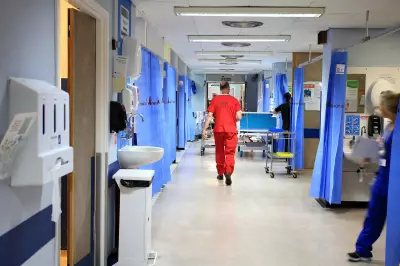
After approximately three weeks in American medical care, Rob was transferred back to the United Kingdom and admitted to the Queen Elizabeth Hospital in Birmingham. It was here that he began to fully comprehend the extent of his injuries and the permanent changes to his life.
"Basically, all four of my limbs don't work," Rob explained about his condition. "My legs don't work at all, my arms work a little bit in terms of biceps and shoulders, but then it's all the neurological problems that go with it."
Rob described how his injury affects numerous bodily functions including bladder and bowel control, temperature regulation, and respiratory function. Despite these challenges, he maintains a remarkably positive outlook, joking: "But other than that, I'm fine!"
Remarkable Recovery and Daily Life
Rob's journey toward adaptation has been marked by significant milestones achieved through sheer determination. After a year of intensive rehabilitation, he regained enough movement in his shoulders to feed himself, even if initially much of the food ended up on his T-shirt.
His stubborn nature, which he acknowledges freely, became an asset in his recovery. "I'm very stubborn. I think I'm always right, but actually, flipping that on its head, it also meant that I was not going to give up," he reflected.
Today, Rob requires round-the-clock live-in care but has achieved considerable independence within his limitations. He enjoys going to the gym, spending time with his cocker spaniel/golden retriever cross named Denzel (whom he affectionately calls his "lack of assistance dog"), and socialising at his local pub where he proudly claims he can "down a bottle of Peroni with no hands in under six seconds!"

Vital Support from the RAF Benevolent Fund
Throughout his recovery and ongoing adaptation, Rob has received crucial support from the RAF Benevolent Fund, the longest-standing Royal Air Force charity dedicated to supporting serving and former RAF personnel and their families.
The organisation provided immediate assistance following the accident by flying Rob's family to Arizona and offering grants to cover their expenses during their hospital visits. They also connected him with another veteran who had experienced a similar parachuting accident, providing Rob with a confidant who truly understood his situation.
Perhaps most significantly, the fund's housing trust purchased and adapted a home for Rob in the Vale of Glamorgan in Wales. The property features full accessibility with wet rooms, hoists in both bedroom and living areas, and is located conveniently next to a pub.
"It is my dream home, it really is," Rob said of his adapted residence. "I love it. I live in a lovely part of the world, a lovely community."
Embracing a New Reality
While Rob has had to confront difficult realities including leaving the RAF, adapting to a completely different way of life than he had envisioned, and accepting that he is unlikely to have children, he maintains a perspective of gratitude.
Supported by a strong network of friends and family who ensure he is never alone, Rob has found ways to build a fulfilling life despite his physical limitations. His story stands as a testament to human resilience in the face of catastrophic injury and the importance of support networks in navigating life-altering circumstances.
The RAF Benevolent Fund continues its vital work supporting current and former RAF personnel and their families through challenging times, demonstrating the enduring bonds within the military community that provide crucial lifelines when they are needed most.