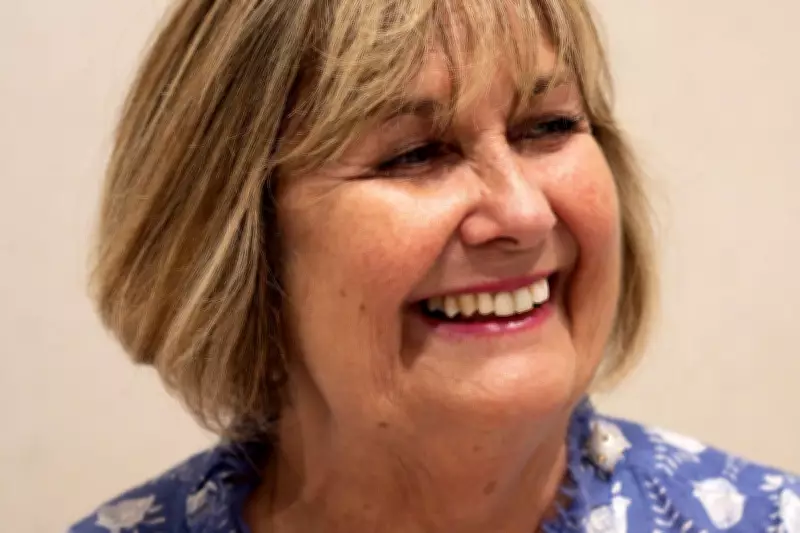
An opera singer who concealed her deafness for over three decades has hailed the "life-changing" surgery that could revolutionise care for thousands of NHS patients. Janine Roebuck, 72, from London, received double cochlear implants, a procedure now undergoing a nationwide trial to assess its potential to transform the lives of many more individuals.
Current National Institute for Health and Care Excellence (Nice) guidelines largely limit deaf adults to a single cochlear implant. This policy is based on cost-effectiveness concerns for the NHS and a perceived lack of evidence. To address this, the government-funded National Institute for Health and Care Research (NIHR) is now backing a new study into double implants for adults, led by Addenbrooke's Hospital and the University of Cambridge.
Ms Roebuck lives with sensorineural hearing loss, an inherited condition responsible for approximately 70 per cent of all genetic hearing loss cases. The condition has been carried down through generations of her family. In 2019, she underwent cochlear implant surgery on the NHS for one ear, as per the guidelines, but decided to pay to have the other ear done at the same time using her own money.

For over 30 years, she had hid her deteriorating hearing, despite being a mezzo-soprano, performing in operas, operettas and musicals, including at the Royal Opera House in London. She said: "Having two implants is light years away from just one. Sound quality is so much better, sounds are fuller, clearer, louder and more natural. It's much easier to tell where sounds are coming from, especially in busy spaces. If you're out in public, it can be hard to follow who is speaking, making joining in with conversations almost impossible. As a result, you have debilitating concentration fatigue at the end of every day."
She described how the surgery has dramatically improved her life, adding: "With bilateral implants, I no longer consider myself to be deaf. They have been utterly life-changing and, for me, have broken a generational curse. I am excited that this trial will offer the same opportunity to others. Struggling to hear can be extremely isolating and many people experience anxiety or depression as a result. The implants are life-changing. They reconnect you to the world and, most importantly, people. Communication is surely the longing of every human heart. I also feel safer and more secure having the two implants. I am more aware of and connected to what's happening in the world around me. And, if anything goes wrong with one of the implants, I'm not suddenly plunged into a world of total silence."
The new trial will run in 14 hospitals and includes more than 250 adults. They will receive either one (unilateral) or two (bilateral) implants so results can be compared. Those in the trial will need to have become deaf later in life and cannot already have an implant. Matthew Smith, an ear, nose and throat (ENT) surgeon at Addenbrooke's Hospital, and Professor Debi Vickers, a speech and hearing scientist in the department of clinical neurosciences, University of Cambridge, are leading the study.
Mr Smith said: "We know from giving bilateral implants to children that it can have a transformative effect on their quality of life and interactions with other people. Through this study, we can offer the same opportunity to adults who have become deaf, and understand the potential added value of bilateral cochlear implants, not just in terms of hearing, but also how they enrich quality of life."
Prof Vickers said: "Children routinely receive bilateral cochlear implants. These can provide three-dimensional hearing, enabling them to hear more naturally than unilateral, with improved access to sound and better engagement with society. Adults tell us, and I agree, that they should be given the same hearing opportunities as children. In turn, these will result in reduced social isolation, enriched communication, improved mental health, and better overall quality of life."
Professor Anthony Gordon, programme director for the NIHR health technology assessment programme, which funded the trial, said: "This study offers real hope to people with severe hearing loss and the chance of a significant improvement in their quality of life." Once the trial finishes, it will be submitted to Nice who can review it.

Ralph Holme, director of research at the RNID, said: "It's wonderful to hear just how life-changing this experience has been for Janine, and the impact it's had on her quality of life. Cochlear implants can be truly transformative for people with hearing loss, helping them reconnect with the world around them, and with friends, family and colleagues. The added benefits bilateral implants could bring are particularly exciting, and this study will play a vital role in building the evidence needed so that many more people can benefit, just as Janine has. Hearing loss and tinnitus affect 18 million people in the UK, and trials like this offer genuine hope for a future in which effective treatments are available to everyone who wants them."