NHS England Implements Major Bowel Cancer Screening Overhaul to Improve Early Diagnosis Rates
NHS England has announced a significant enhancement to its national bowel cancer screening programme, with the primary objective of detecting thousands more cases at an earlier and more treatable stage. This strategic move involves lowering the detection threshold for home-screening stool kits, bringing England into alignment with the established protocols already operational in Scotland and Wales.
Key Changes and Projected Impact of the Revised Screening Protocol
From next month, the faecal immunochemical test (FIT) threshold in England will be reduced from 120µg Hb/g to 80µg Hb/g. This adjustment is projected to yield substantial benefits for public health and NHS resources.
- The change is expected to identify an additional 600 bowel cancer cases early each year, representing an 11 per cent increase on current detection figures.
- Approximately 2,000 more individuals with high-risk polyps – growths that can develop into cancer – are anticipated to be identified annually.
- Consequently, the NHS foresees carrying out 35 per cent more colonoscopies, equating to around 34,000 additional diagnostic procedures each year.
Understanding the Faecal Immunochemical Test (FIT) and Threshold Adjustments
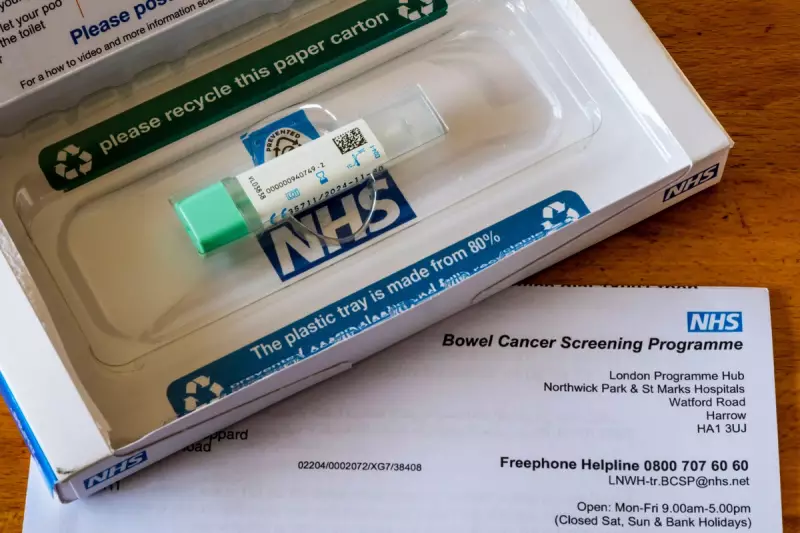
The home-testing FIT kit is offered to everyone aged 50 and over in England. It works by detecting microscopic traces of blood in a stool sample, measured in micrograms of human haemoglobin per gram of faeces (µg Hb/g). Participants simply provide a sample at home and return it by post for NHS analysis.

The definition of a positive result, which triggers further investigation like a colonoscopy, is directly influenced by the threshold setting. While Scotland and Wales have operated at an 80µg/g threshold, England and Northern Ireland have previously used a higher 120µg/g benchmark. This new policy harmonises England's approach with its devolved neighbours.
Long-Term Benefits and Strategic Goals for Cancer Care
Once fully implemented, testing at the lower 80µg/g threshold is forecast to deliver significant long-term advantages.
- It is projected to reduce late-stage diagnoses and deaths from bowel cancer in England by approximately 6 per cent.
- The initiative could generate annual savings of around £32 million for the NHS through earlier, less intensive interventions.
- NHS England will also launch new digital alerts to notify people when their screening kits are dispatched, aiming to boost participation rates.
It is noteworthy that the UK National Screening Committee (NSC) recommends an optimal threshold of 20µg/g. However, due to the substantial increased demand this would place on colonoscopy and pathology services, the NSC has advised a phased approach towards this target over time.
Expert Endorsement and Public Health Advocacy
Leading health figures have welcomed the policy shift. Professor Peter Johnson, National Clinical Director for Cancer at NHS England, emphasised the life-saving potential, stating the change provides a "better early-warning system for bowel cancer" and can help treat problems before symptoms even appear.
Genevieve Edwards, Chief Executive of Bowel Cancer UK, hailed the decision as "great news" that will prevent more cancers and save lives from the UK's fourth most common cancer. Michelle Mitchell, Chief Executive of Cancer Research UK, reinforced this, calling it a "vital step" that will make treatment more likely to succeed by catching the disease earlier.
The Government's comprehensive National Cancer Plan, detailing its strategy for transforming cancer care by 2035, is scheduled for publication next week. Currently, about 2 per cent of people taking the FIT test require further investigation; this figure is now expected to rise to 3 per cent following the threshold reduction. In Northern Ireland, the FIT threshold will remain at 120µg for the time being.