
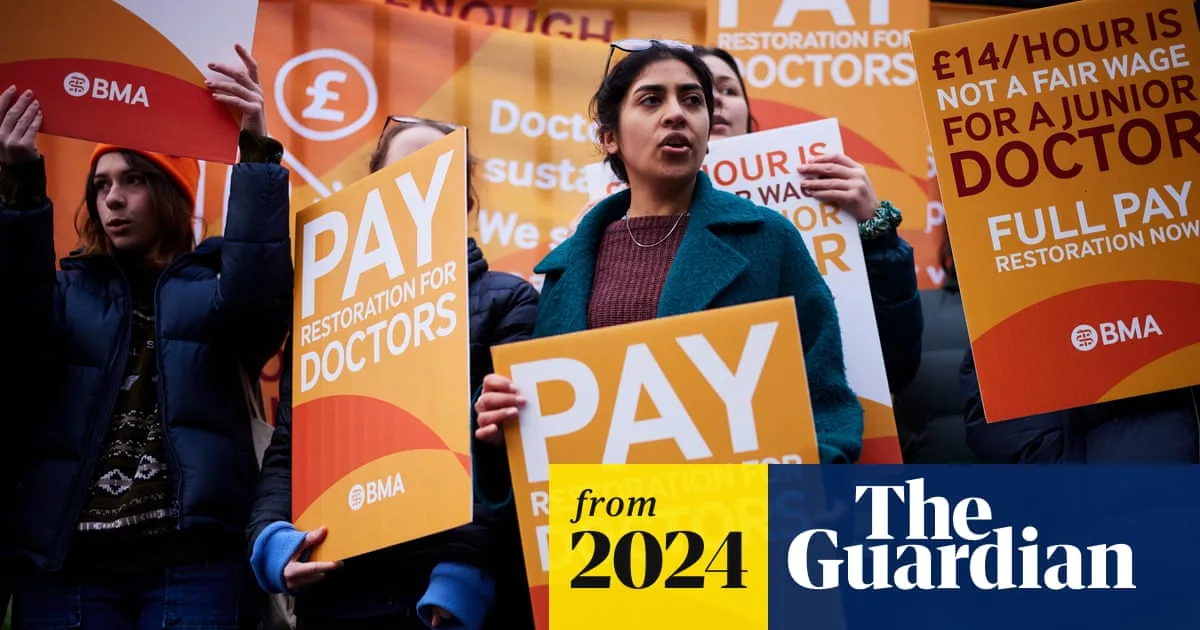
The longest strike in the history of the NHS began on Wednesday as junior doctors in England launched a six-day walkout over pay, causing tens of thousands of patient appointments to be cancelled. Health charities warned that patient safety could be compromised, with concerns raised about people with cancer and sight problems facing delays in care.
The Patients Association said patient safety might be at risk because hospitals had too few staff to cope with the industrial action. The charity urged ministers and the British Medical Association (BMA) to bring in mediators to resolve the dispute after pre-Christmas talks ended in deadlock. Julie Thallon, acting chair of the Patients Association, said: "Patients should have access to safe and effective care when they need it. Strike action imposes barriers to care over and above the long waits many patients are already experiencing."
Prof Sir Stephen Powis, NHS England's national medical director, said "many, many thousands" of appointments would be cancelled or rescheduled, adding to the 1.2 million already affected during more than a year of industrial action. He noted that this week's strike, the 10th by junior doctors since March, would bring their total days of action to 34. Previous stoppages have led to almost one million outpatient appointments and operations being rescheduled.
The Royal National Institute of Blind People expressed concern that blind and partially sighted patients may not learn of cancellations because letters were sent rather than braille or electronic notices. Macmillan Cancer Support's director of advocacy, Sarah Ruane, said uncertainty from strike action would cause "real worry and anxiety" for people living with cancer awaiting appointments or results.
The BMA is seeking a 35% pay rise, which it describes as "full pay restoration" after the real-terms value of junior doctors' pay fell by 26% since 2008-09. Doctors Robert Laurenson and Vivek Trevedi, co-chairs of the BMA's junior doctors committee, urged Health Secretary Victoria Atkins to make a "credible offer". Ministers have imposed an average 8.8% uplift for 2023-24 and offered a further 3%. Atkins said the NHS had "robust contingency plans" in place to protect patient safety during the busiest time of year.




