NHS Embraces AI and Robotics in Revolutionary Lung Cancer Detection Pilot
The National Health Service has embarked on a transformative pilot programme that harnesses cutting-edge artificial intelligence and robotic technology to revolutionise the diagnosis of lung cancer. This trailblazing initiative promises to deliver faster, more accurate diagnoses for patients, potentially saving thousands of lives through earlier detection and intervention.
How the Groundbreaking Technology Works
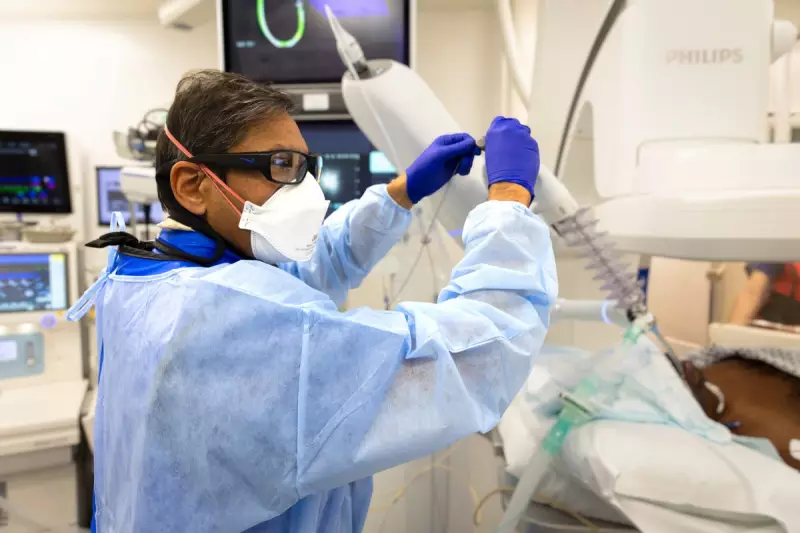
The innovative procedure employs sophisticated AI software to meticulously analyse lung scans, identifying abnormal spots or nodules that might indicate cancerous growth. Following this initial detection phase, medical professionals utilise advanced robotic catheters to obtain precise biopsies directly from the identified nodules. These tissue samples are then subjected to laboratory analysis to either confirm or rule out cancer diagnoses with remarkable accuracy.
Current Implementation and Future Expansion
Guy's and St Thomas's NHS Foundation Trust is currently spearheading this pioneering programme, having already tested the methodology on approximately 300 patients. Of these individuals, 215 have subsequently received targeted cancer treatment following their diagnoses. The current pilot phase is expected to involve an additional 250 patients, with ambitious plans already formulated to extend the procedure to King's College Hospital NHS Foundation Trust and Lewisham and Greenwich NHS Trust in the near future.

Health Secretary Wes Streeting, who personally experienced the benefits of robotic technology during his own kidney cancer treatment, expressed strong support for the initiative. "When I was diagnosed with kidney cancer, the NHS saved my life using robotic technology," Mr Streeting revealed. "Lung cancer remains one of the biggest killers in the UK, and this pilot will help to catch it earlier, replacing weeks of invasive testing with a single targeted procedure. For patients waiting anxiously for answers, this speed and precision can be life-changing."
The Critical Need for Improved Lung Cancer Detection
Lung cancer represents the third most prevalent cancer diagnosis in the United Kingdom, with statistics indicating more than 49,000 new cases and approximately 33,000 deaths annually. Traditional detection methods have often struggled to identify certain nodules during initial screenings, and medical professionals have frequently encountered difficulties accessing these nodules for biopsy procedures. This technological advancement addresses these challenges directly, potentially eliminating the need for patients to endure prolonged waiting periods for repeat scans to monitor potential growth.
Broader Context and Government Ambitions
This pilot programme forms part of a comprehensive national effort to expand lung cancer screening across the country. Targeted screening initiatives commenced in 2019, with nationwide rollout achieved in 2023. Since implementation began, more than 1.5 million people have undergone screening, with plans to invite an additional 1.4 million individuals next year alone. Health officials estimate that by 2035, expanded screening could diagnose up to 50,000 cancers, with at least 23,000 detected at earlier, more treatable stages.
The government has articulated ambitious plans to position the NHS as "the most AI-enabled health system in the world." Professor Peter Johnson, NHS England's national clinical director for cancer, emphasised the programme's significance: "Our lung cancer screening programme means that we are picking up more cancers at an early stage than ever, and by bringing AI and robotics together in this trailblazing NHS pilot, we're bringing in the very latest technology to give clinicians a clearer look inside the lungs and support faster, more accurate biopsies. This is a glimpse of the future of cancer detection."
Mr Streeting further elaborated on the government's technological vision last September, stating: "The AI revolution is here, and we are arming staff with the latest ground-breaking technology, so patients get faster and smarter care. This government is reinstating the UK's position as a technology superpower - driving vital investment and economic growth as we build an NHS fit for the 21st century."

The wider availability of this innovative diagnostic procedure is anticipated by 2030, marking a significant milestone in the NHS's ongoing transformation towards technologically enhanced healthcare delivery that prioritises patient outcomes, efficiency, and precision medicine.