A groundbreaking new NHS pilot programme is harnessing the combined power of artificial intelligence and robotic technology to dramatically speed up the diagnosis of lung cancer. The initiative, described by officials as "a glimpse of the future of cancer detection," could transform the anxious waiting period for patients with suspected lung cancer into a much swifter process.
How the Trailblazing Technology Works
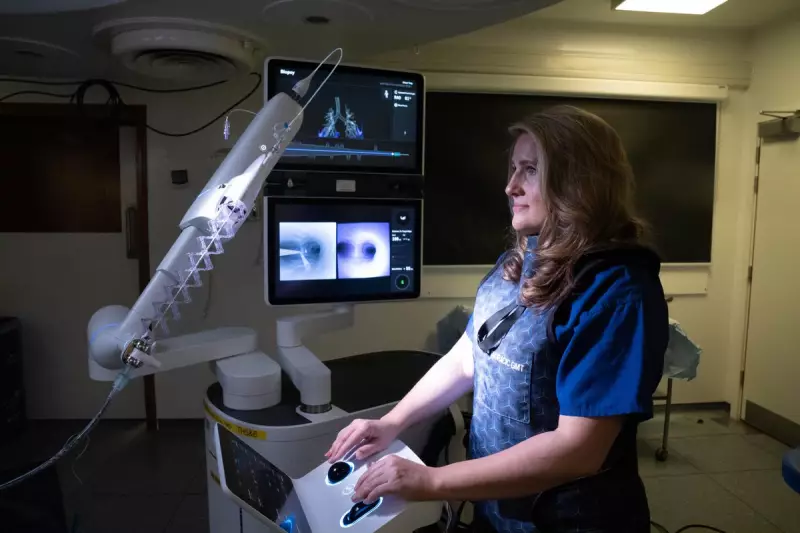
The pilot, spearheaded by Guy's and St Thomas' NHS Foundation Trust in London, employs a sophisticated two-step approach. First, AI software meticulously analyses lung scans, flagging suspicious spots known as nodules. Following this, doctors utilise a robotic catheter—a remarkably thin tube inserted via the patient's throat—to take precise biopsies directly from the identified nodule.
These tissue samples are then sent to a laboratory for analysis, providing a definitive diagnosis or ruling out cancer altogether. The robotic system's precision is a key advantage, enabling it to reach nodules as small as 6mm that are often hidden deep within the lung tissue. Such tiny spots can sometimes evade detection during standard screening and are notoriously difficult for clinicians to access for traditional biopsies.

Transforming Patient Experience and Outcomes
Health Secretary Wes Streeting, who himself underwent robotic surgery for kidney cancer, emphasised the pilot's potential. He stated it will help catch cancer earlier and replace "weeks of invasive testing with a single targeted procedure." This sentiment was echoed by Professor Peter Johnson, NHS England's national clinical director for cancer, who highlighted the immense stress patients face while waiting for results.
"Our lung cancer screening programme means that we are picking up more cancers at an early stage than ever," Professor Johnson said. "By bringing AI and robotics together in this trailblazing NHS pilot, we're bringing in the very latest technology to give clinicians a clearer look inside the lungs and support faster, more accurate biopsies."
Proven Results and Expansion Plans
The method is not entirely untested. Specialists at Guy's and St Thomas' have already used it on hundreds of patients. Of 300 robotic biopsy procedures performed, 215 individuals subsequently proceeded to cancer treatment. The new formal pilot will involve a further 250 patients, with plans to expand the procedure to King's College Hospital NHS Foundation Trust and Lewisham and Greenwich NHS Trust.
This technological advancement coincides with the NHS's broader ambition to expand lung cancer screening. The national screening programme, which began trials in 2019 and was rolled out fully in 2023, invites people aged 55 to 74 who have ever smoked for a lung health check. Since its inception, over 1.5 million people have been screened.
The programme's expansion is set to invite an additional 1.4 million people next year alone. Officials estimate that by 2035, screening could diagnose up to 50,000 cancers, with at least 23,000 of those detected at an earlier, more treatable stage.
A Patient's Perspective
David Lindsay from Streatham is a testament to the procedure's effectiveness. Initially referred to Guy's Hospital in September 2025 for a suspected blood clot, scans unexpectedly revealed a lung nodule. Using the robotic system, medics took a sample, leading to a diagnosis of stage one lung cancer. Mr Lindsay then had a successful operation to remove the disease.
"It was quick and painless," Mr Lindsay recalled. "I wasn't worried because all the staff made me feel comfortable and assured." He reflected that the blood clot "was a blessing in disguise," as it led to the scan that discovered the cancer early. "Who knows when I would have had another check-up? And the next time, the cancer may have reached stage four."
The announcements regarding this innovative pilot and the screening expansion come as the Government prepares to publish its National Cancer Plan. This comprehensive strategy aims to significantly boost the prevention, diagnosis, and treatment of cancer across the United Kingdom, with technological innovation playing a central role.