Health leaders have issued a stark warning that accident and emergency departments across England are being placed under severe and unnecessary strain by patients arriving with minor complaints such as hiccups, sniffles, and ingrowing toenails.
A Surge in Non-Urgent A&E Visits
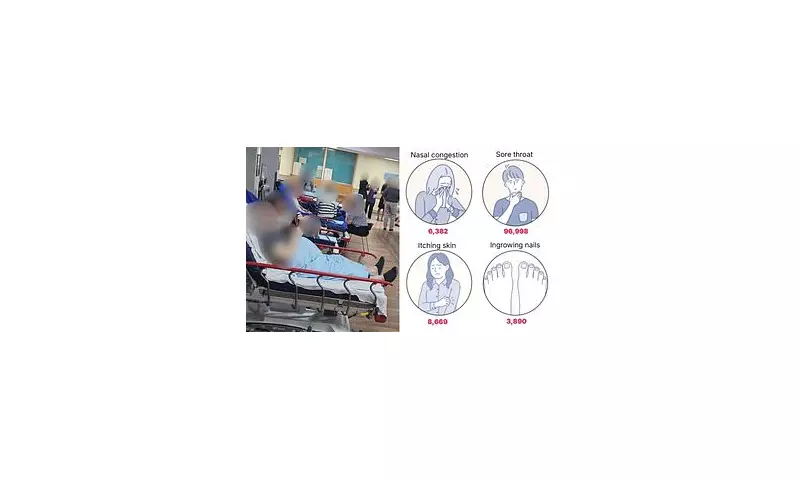
Official NHS data reveals the startling scale of the issue. Between November 2024 and March 2025, emergency departments dealt with over 6,300 cases of blocked noses, nearly 400 people with hiccups, and more than 3,800 cases of ingrown toenails. In total, the health service estimates that more than 200,000 A&E attendances last winter could have been handled by alternative services.
The latest monthly performance figures show that in October alone, A&Es treated 8,669 cases of itchy skin and 96,998 patients with sore throats. These attendances come on top of what was already the busiest October on record for emergency departments and ambulance services, with demand fuelled by soaring flu cases reaching levels typically only seen on New Year's Eve.

Perfect Storm of Pressure Ahead
The situation is set to deteriorate further later this month. Thousands of junior doctors are planning to strike for five consecutive days from December 17 to December 22, marking their 14th walkout in three years amid an ongoing dispute over pay and conditions.
Health Secretary Wes Streeting criticised the timing, stating: 'This winter will be one of the busiest ever for our hard-working NHS staff... That will be made even harder by the BMA's dangerously reckless decision to strike in the run-up to Christmas, causing real anxiety for patients.' He urged the public to use A&E only for genuine accidents and emergencies.
The underlying data paints a grim picture of systemic strain. In October, over 54,000 people waited at least 12 hours in A&E to be admitted, transferred, or discharged. Furthermore, under three-quarters of attendees (74.1%) were seen within the four-hour target. The Government aims to reach a 78% target by March 2026.
Root Causes and Political Failures
While officials urge people to use GP surgeries and pharmacies for minor issues, research consistently points to difficulty accessing primary care as a key driver of unnecessary A&E visits. Latest figures indicate more than a fifth of patients cannot get through to their GP on the day they try.
Ian Higginson, President of the Royal College of Emergency Medicine, argues that patients turning up at A&E for minor ailments 'aren't the problem'. Many are directed there by the NHS 111 service or fall ill when other services are reduced, such as evenings and weekends.
He identifies the core issue as a lack of hospital beds and social care support. 'The problem is that there aren't enough beds in our hospitals... We also know that there are loads and loads of patients in our hospital beds who don't need to be there. But they can't go home either because the services aren't there to support them,' he told Times Radio. He accused politicians of failing to act on these long-standing problems.
The crisis has forced extreme measures, with hospitals like the William Harvey in Ashford, Kent, turning its café into a makeshift ward in September. A damning investigation this week also found a record number of patients face 'degrading' 12-hour trolley waits, with some trusts seeing increases exceeding 100,000% since 2016.