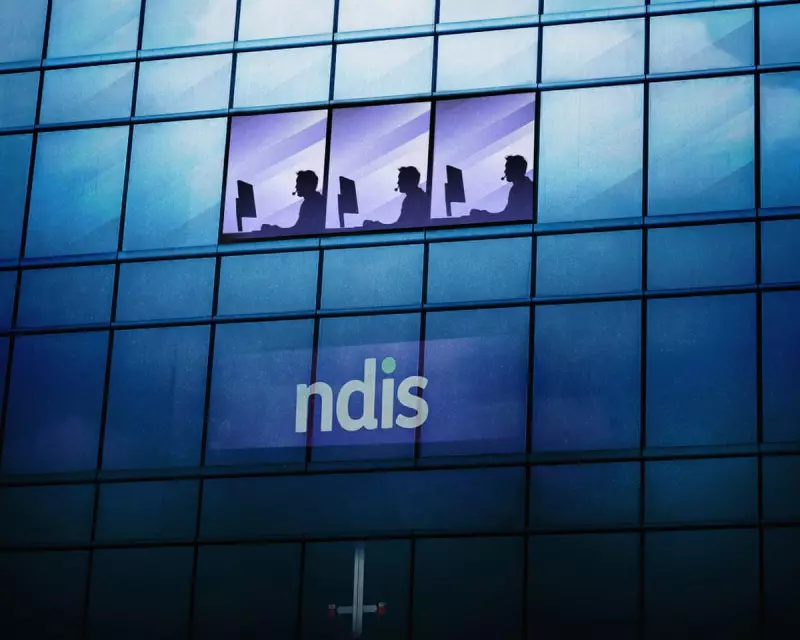
Outsourced call centre staff handling National Disability Insurance Scheme (NDIS) phone lines have disclosed that they are required to pretend to be public servants, according to reports from workers. These employees, who lack specialised welfare training, are also tasked with deciding which funding requests should be prioritised, sparking significant concerns over the quality and integrity of support for vulnerable Australians.
Workers Issued Government Email Addresses to Mask Identity
Employees at Serco, a major private contractor for the Australian government, have been provided with email addresses identical to those used by direct public servants. This practice makes it virtually impossible for members of the public to distinguish between outsourced workers and government employees, despite stark differences in pay, conditions, training, and support structures.
A Serco call centre employee, who wished to remain anonymous, revealed to Guardian Australia that staff are kept at a distance from the public service while the government effectively outsources its duty of care to contractors. "The fact is that we're representing the government and we have to pretend that we're public servants and we're not allowed to say we're Serco," the worker stated, highlighting the deceptive nature of the arrangement.

Inadequate Training and Low Pay Undermine Service Quality
Workers describe a system where inadequate training and low wages are prevalent, with profit often prioritised over both employee wellbeing and the quality of service provided to NDIS participants. Starting pay rates at these outsourced centres are approximately $52,800 per year, compared to over $72,000 for many public servants performing similar roles on the same phone lines.
Serco team leaders, who are not trained in welfare or disability support, nor equipped with financial qualifications to understand participant budgets, are responsible for screening and determining priority cases. This includes distressing situations where individuals may be bedridden with broken equipment, such as hoists, and unable to access necessary funds promptly.
Government Moves to Curb Outsourcing Have Stalled
Efforts by the government to reduce reliance on external consultants and outsourced workers have stalled, just two years after Labor directed agencies to bring skills back in-house. This stagnation occurs amidst broader concerns about the widespread use of private call centres by government agencies, including the Australian Taxation Office and Centrelink.
Serco's most recent contract with the NDIA commenced in September 2024 for a three-year term, with options for up to two additional three-year extensions. The company boasts a team of around 1,200 staff in its contact centre, yet experts warn that the illusion of private operators delivering the same quality at lower costs while making a profit is misleading.
Union and Experts Call for Urgent Reform
Beth Vincent-Pietsch, deputy national secretary at the Community and Public Sector Union, emphasised that Australians contacting the NDIS deserve to speak with trained, supported, and accountable public servants, rather than labour hire workers in for-profit call centres. "This is a model that is failing Australians who need sometimes urgent help from the NDIA, and it is failing the workers who are asked to carry it," she asserted.
Vincent-Pietsch further argued that providing NDIS support is core government work that should be performed by Australian public service employees. The NDIA's reliance on outsourcing is seen as undermining service quality and public trust across the scheme, necessitating urgent attention and reform.
A Serco spokesperson denied that staff are directed to make any misrepresentations, stating that the company works in seamless collaboration with the NDIA. Conversely, an NDIA spokesperson clarified that only public service staff with appropriate delegation can action and progress priority plan change requests, raising questions about the transparency and effectiveness of the current outsourcing model.