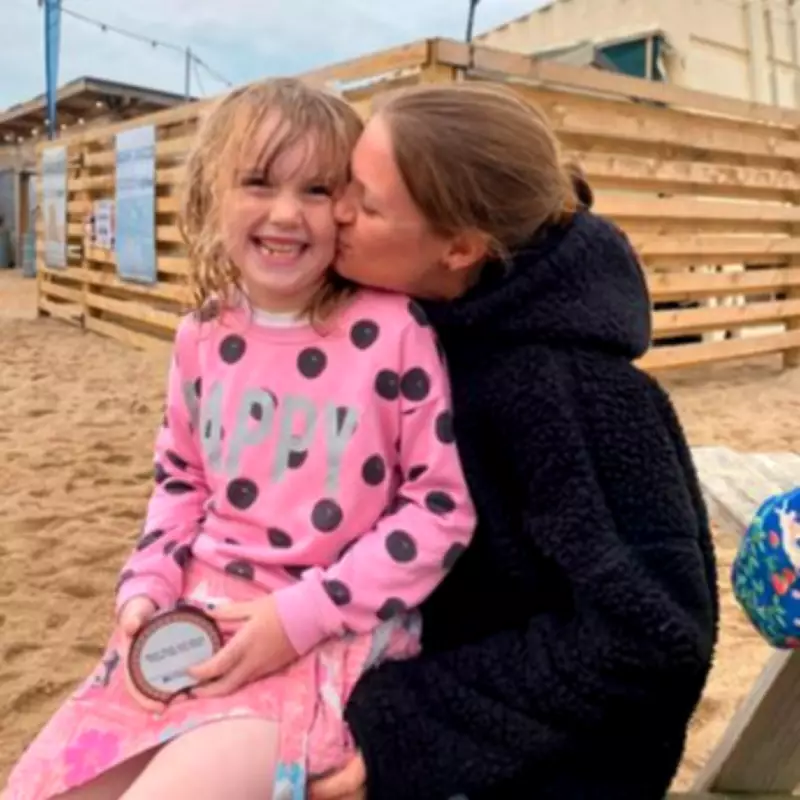
A mother has declared that her family will never set foot in the sea again after her seven-year-old daughter contracted a severe parasitic infection during what should have been a joyful seaside holiday in Cornwall. The incident has reignited fears about the health risks posed by polluted seawater, particularly linked to sewage discharges by water companies.
A Seaside Break Turns into a Nightmare
Alice Clarke, a single parent from Silverton, Devon, had eagerly anticipated a summer getaway with her daughter Willow last August. Their destination was Carlyon Bay near St Austell in Cornwall, a picturesque coastal spot. However, within hours of a brief twenty-minute paddle in the sea, Willow began exhibiting alarming symptoms.
"She was really, really tired and just wanted to go to bed, which was completely unlike her," Alice recalled. "That night, she developed a high fever and was sweating profusely." By the following morning, violent vomiting commenced, prompting Alice to cut the holiday short and rush home—an eighty-mile journey that took two hours.

Twelve Days of Agony and Trauma
What ensued was a harrowing twelve-day ordeal during which Willow vomited every one to two hours, day and night, with only brief respites. "It was awful and traumatising," Alice described. "She became severely dehydrated and lost a significant amount of weight." The young girl's condition was so dire that she missed serving as a bridesmaid at her aunt's wedding, an event she had been eagerly anticipating.
After initial medical advice from a walk-in clinic proved ineffective, Willow's GP suspected cryptosporidium—a parasite commonly found in human and animal faeces that contaminates waterways, swimming pools, and raw produce. Laboratory tests later confirmed the diagnosis. Fortunately, Willow began to recover on the twelfth day, narrowly avoiding hospitalisation.
Lasting Psychological Scars
While Willow has physically recovered, the psychological impact remains profound. "She will go onto the sand but won't go near the sea—she won't even paddle," Alice explained. "And she forbids me from doing so as well. She is terrified because of her experience." The mother added that even discussing the incident distresses Willow, indicating that the trauma may persist indefinitely.
Willow herself expressed her fear during her recovery, telling her mother, "I was really scared because I didn't know if this was ever going to end, and I was scared I might have actually died." This statement underscores the severity of the ordeal from a child's perspective.
Financial and Emotional Toll
The crisis extended beyond health, imposing significant financial strain on the family. As a self-employed cleaner at the time (now a special needs teaching assistant), Alice was unable to work for three weeks while caring for Willow. "No family should go through this," she asserted, highlighting the broader implications of such incidents.
Broader Concerns About Seawater Pollution
This personal tragedy occurs amidst growing public and campaigner concerns about the health hazards of swimming in UK coastal waters, largely attributed to raw sewage discharges by water companies. The issue gained prominence through Channel 4's docu-drama Dirty Business, which featured the heart-wrenching story of eight-year-old Heather Preen, who died after contracting E. coli during a 1999 beach trip in Devon—a case her family links to sewage contamination.
Alice is convinced that seawater was the source of Willow's illness, stating, "There is no other possible way she could have got it. We were in a campervan and took bottled water with us." She hypothesises that the cryptosporidium bacteria may have entered Willow's system via her hands after sea contact, subsequently being ingested.
Official Responses and Scientific Context
South West Water responded to the incident by expressing regret but denying responsibility, noting, "We are sorry to hear that someone has been unwell, however, we do not have a storm overflow on Carlyon Bay." This leaves open the possibility that the parasite originated from other sources.

The UK Health Security Agency has indicated that cryptosporidium can survive for at least twelve weeks in seawater, based on studies using artificial seawater. This longevity underscores the persistent risks even in the absence of immediate sewage discharges.
Alice Clarke's vow to avoid the sea entirely reflects a deep-seated caution that may resonate with many families, as debates over water quality and corporate accountability continue to intensify across the United Kingdom.